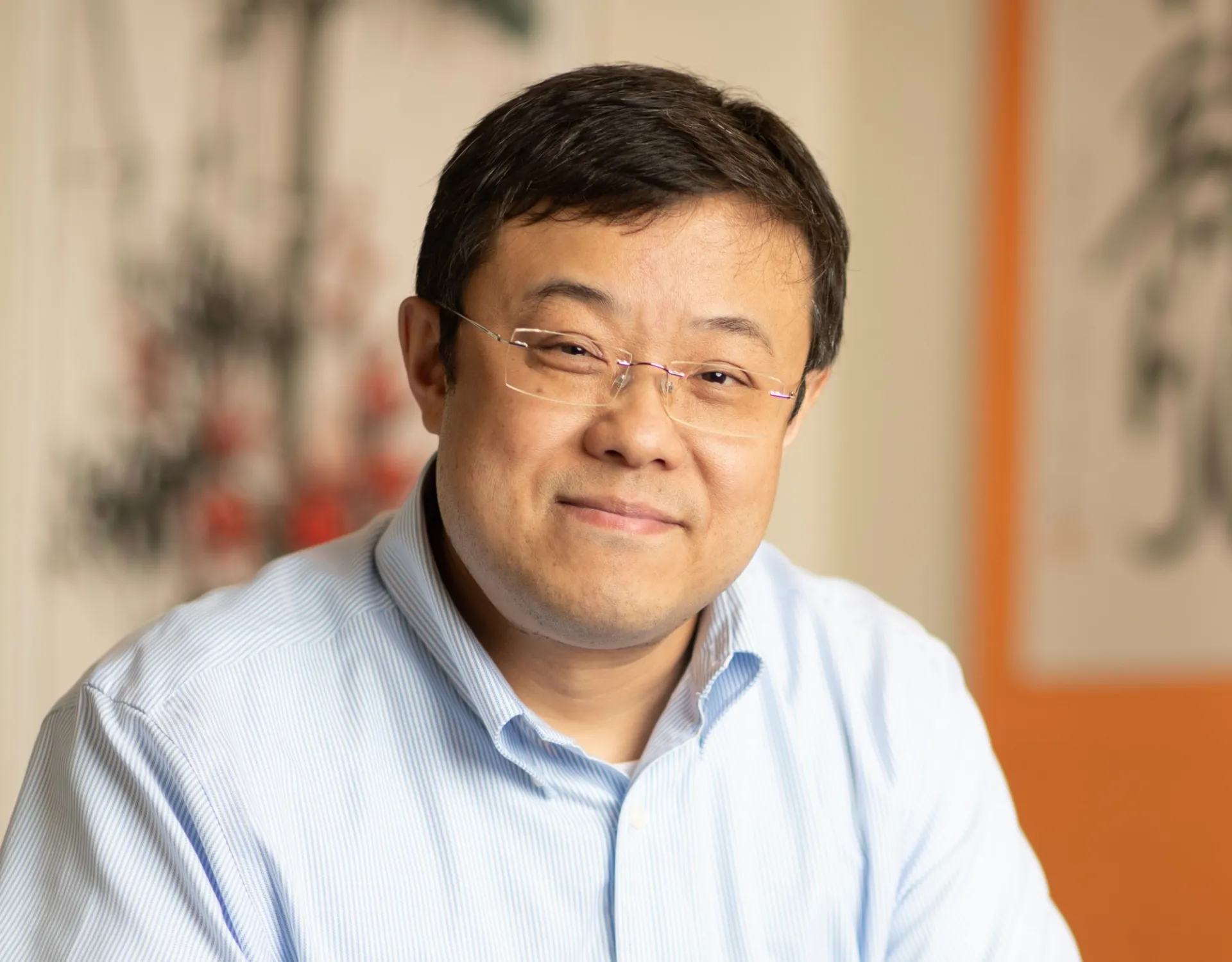
"The Upside of US-Chinese Strategic Competition" - by CWP alum Kai He

US–Chinese strategic competition is a defining factor in world politics. The prevailing narrative on US–China relations predicts inevitable conflicts between these two giants, potentially leading to a self-fulfilling prophecy. While fully acknowledging the inherent dangers of potential wars or military conflicts between the two powers, this book shows that competition is not necessarily detrimental. By systematically examining US–China institutional balancing across security, economic and political domains, particularly in the aftermath of the 2008 global financial crisis, this book highlights three positive externalities or unintended consequences: the revitalisation of regional institutions to address emerging challenges, unexpected collaborations between great powers (the US and China) and regional actors, and the provision of public goods by both nations. The book argues that constructive and institutionalised competition between the US and China, if managed with strategic foresight and restraint, could inadvertently lead to positive outcomes – institutional peace – in the Asia-Pacific region.
- Offers a fresh, positive perspective on US–Chinese strategic competition
- Shows why US-China competition could actually lead to more stability in the Asia-Pacific
- Helps policymakers rethink the management of US–Chinese competition
Author: Kai He, Griffith University, Queensl and Huiyun Feng, Griffith University, Queensland
Published: June 2025 - ISBN: 9781009584890
Kai He is Professor of International Relations and Director of the Centre for Governance and Public Policy, Griffith University, Australia. He was an Australian Research Council (ARC) Future Fellow (2017-2020). He is the author of "Institutional Balancing in the Asia Pacific: Economic Interdependence and China's Rise" (Routledge, 2009) and "China’s Crisis Behavior: Political Survival and Foreign Policy" (Cambridge, 2016). He is a co-author of "Prospect Theory and Foreign Policy Analysis in the Asia Pacific: Rational Leaders and Risky Behavior" (with Huiyun Feng, Routledge, 2013), and "How China Sees the World: Insights from Chinese International Relations Scholars" (with Huiyun Feng and Xiaojun Li, Palgrave, 2019). He is an editor/co-editor of "Contested Multilateralism 2.0 and Asian Security Dynamics" (Routledge 2020), "China’s Challenges and International Order Transition: Beyond 'Thucydides’s Trap'" (co-edited with Huiyun Feng, University of Michigan Press, 2020), "Chinese Scholars and Foreign Policy: Debating International Relations" (with Huiyun Feng and Xuetong Yan, Routledge, 2019), and "US-China Competition and the South China Sea Disputes" (with Huiyun Feng, Routledge, 2018). His forthcoming book includes "Contesting Revisionism: the United States, China, and Transformation of International Order" (with Steve Chan, Huiyun Feng, Weixing Hu, Oxford, 2021).
His peer-refereed articles have appeared in European Journal of International Relations, European Political Science Review, International Affairs, International Studies Review, International Politics, Political Science Quarterly, Review of International Studies, Security Studies, Cooperation and Conflict, Contemporary Politics, Ethics & International Affairs, Asian Survey, The Pacific Review, Journal of Contemporary China, The Chinese Journal of International Politics, Asian Security, Asian Perspective, Australian Journal of Political Science, Australian Journal of International Relations, International Relations of the Asia Pacific, Issues and Studies, Strategic Studies Quarterly, East Asia, Asia Policy, Cambridge Review of International Affairs, and Journal of Contemporary East Asian Studies.
He received several internationally competitive fellowships and grants, including the Princeton-Harvard China and the World Program Postdoctoral Fellowship (2009-2010), a Lynde and Harry Bradley Foundation Research Fellowship (2009-2010), an EAI fellowship (2011-2012) from the East Asia Institute in Seoul, an Asia Studies Fellowship (2012) from the East-West Center in Washington D.C., and visiting fellowships (2014/2017) from the S. Rajaratnam School of International Studies, Nanyang Technological University, Singapore, and policy-oriented research grants from the Korea Foundation, South Korea (2016/ 2019). His research projects are funded by the MacArthur Foundation, USA (2016-2018) and the Australian Research Council (2017-2020; 2021-2023).
Photo Credit: By Dilaudid - Own work; modified from Image:Go_board.jpg, which was made by user:donarreiskoffer, CC BY-SA 3.0, https://commons.wikimedia.org/w/index.php?curid=765289