'Mixed Signals: Strategic Dualities in Chinese Foreign and Security Policy' - by CWP alum Xiaoyu Pu
China often sends mixed signals in its foreign and security policy. In maritime disputes, Beijing combines coercive pressure with diplomatic reassurance. In economic statecraft, it promises openness while tightening controls over data, critical minerals, and advanced technologies. In response to the Russia–Ukraine war, it maintains strategic alignment with Russia while preserving diplomatic distance on sovereignty, escalation, and global credibility. This Element explains these patterns through strategic dualities: enduring tensions between indispensable yet partially incompatible imperatives that leaders must manage rather than resolve. It argues that mixed signals are not simply signs of policy incoherence or bureaucratic fragmentation, but patterned responses to international pressures filtered through domestic politics and elite perceptions. Through three cases, the Element shows how Beijing uses mixed signaling to manage tensions between sovereignty and stability, openness and security, and partnership and credibility. It also clarifies the relationship among mixed signals, noise, and domestic fragmentation.
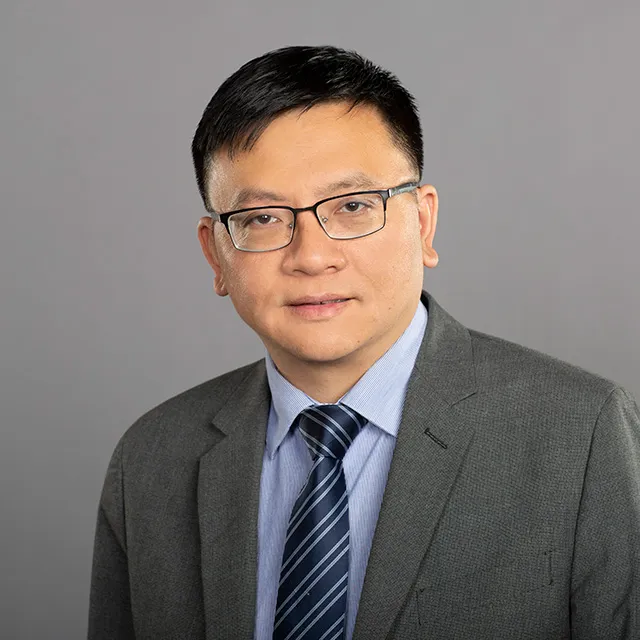
Xiaoyu Pu is an associate professor of political science at the University of Nevada, Reno. He is a member of the Public Intellectuals Program of the National Committee on United States-China Relations (NCUSCR). He has also received fellowships from the Inter-American Dialogue in Washington D.C., Fundação Getulio Vargas (FGV) in Brazil and the China and the World Program at Princeton University. He is the author of Rebranding China: Contested Status Signaling in the Changing Global Order (The Studies in Asian Security Series, Stanford University Press, 2019). His research has appeared in International Security, International Affairs, The China Quarterly, and The Chinese Journal of International Politics. He serves on the editorial boards of The Chinese Journal of International Politics (Oxford University Press) and Foreign Affairs Review (China).
Photo Credit: https://www.cambridge.org/core/elements/mixed-signals/DDC71090113A73223DBF3B5F1100BA31