
"Trump’s Greenland Obsession Will Not Secure America" - by CWP alum Isaac Kardon
One of U.S. President Donald Trump’s most frequent fixations during his first 100 days in office has been his desire to “get Greenland.” When rationalizing this radical impulse, the president and his aides have cited a need to “counterbalance” growing collaboration in the Arctic between the United States’ most consequential adversaries—Russia and China.
“You have Russian ships all over the place. You have Chinese ships all over the place. They are sailing all over Canada, they are sailing right next to Greenland. We’re not going to let that happen,” Trump said in an interview. He is right that expanding Beijing-Moscow cooperation in the High North challenges U.S. national security. But checking this emerging threat to the Western Hemisphere requires Washington to cooperate with its Arctic allies, not alienate or annex them. Policymakers and strategists should focus American attention and resources on the United States’ position in Alaska, particularly near the Bering Strait, which is the chokepoint for Chinese access to the Arctic Ocean.
Isaac B. Kardon, Ph.D. (孔适海博士) is senior fellow for China studies at the Carnegie Endowment for International Peace. He is an international security scholar, specializing in Chinese foreign policy and maritime strategy. Dr. Kardon’s work has been published in the New York Times, International Security, Security Studies, Foreign Affairs, Foreign Policy, and the Naval War College Review, delivered as congressional testimony, and briefed across the joint force and interagency. His first book, China’s Law of the Sea: The New Rules of Maritime Order was published by Yale University Press in 2023 and has been reviewed in Foreign Affairs, The Economist, and Foreign Policy.
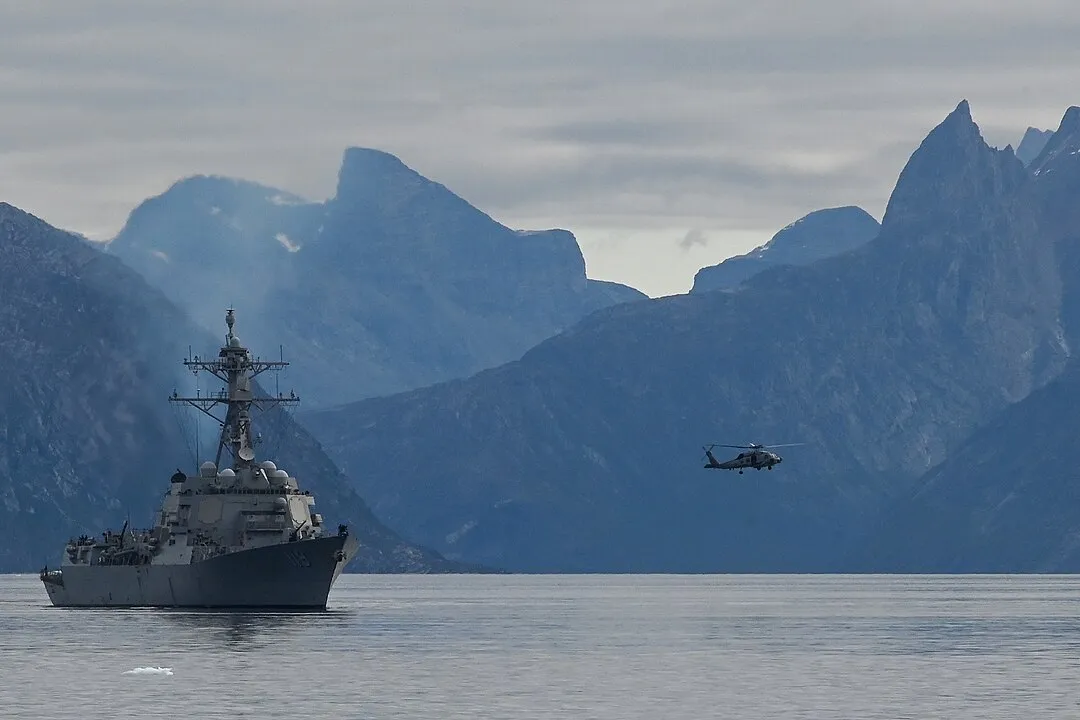
Photo Credit: By U.S. Government - https://www.dvidshub.net/image/8624317/us-coast-guard-cutter-northland-arctic-partners-transit-greenland, Public Domain, https://commons.wikimedia.org/w/index.php?curid=163068775