'Strategic Ambiguity and Middle Power Agency' a YouTube interview with Manjari Miller
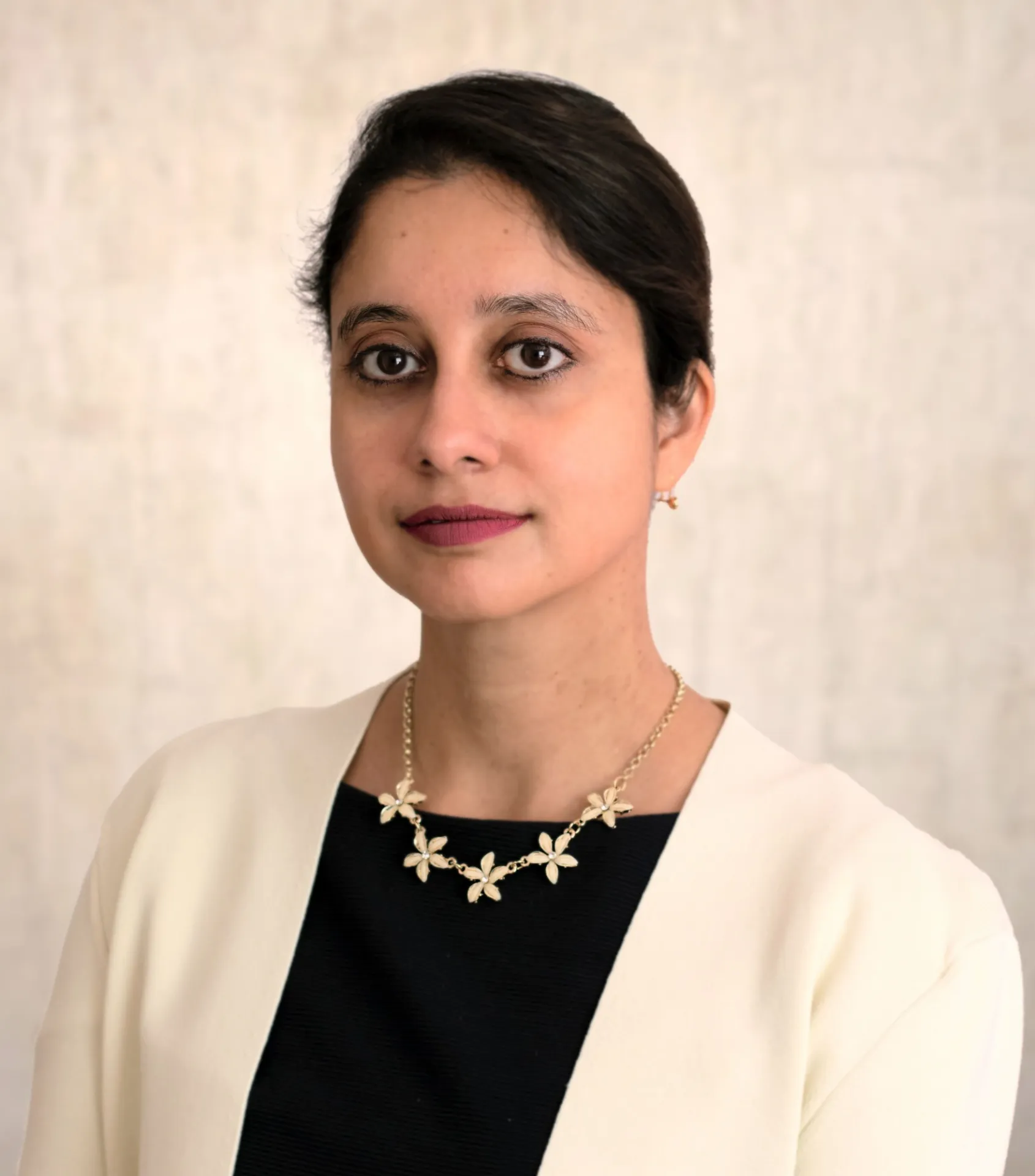
Professor Manjari Miller of the University of Toronto offers a nuanced perspective on the evolving international order, focusing on India's strategic autonomy and the dynamics among major and middle powers. The speaker discusses the significance of the India-EU trade agreement, the complexities of U.S.-India relations, and the growing potential for middle power cooperation in a multipolar world. Drawing on India’s case, Professor Miller emphasizes that strategic ambiguity and new alliances may empower middle powers to exert greater influence in global affairs.
[Timeline] 00:00 Significance of the recent EU-India FTA and security pact 03:39 Has India's approach shifted from strategic autonomy to a more transactional or multi-aligned relationship with the U.S.? 06:38 Have President Trump's announcements influenced India's cooperation with the EU or its stance on Russian oil imports? 10:03 Does India's reluctance to fully commit to any bloc limit its leadership, or does its strategic ambiguity actually enhance its influence? 11:36 How can we theoretically explain the U.S. applying different strategic logics in various regions, and what does this mean for the international order? 16:06 What key factors or variables do you think will shape the future international order amid recent U.S. foreign policy experiments and global fragmentation? 22:07 Do middle powers have the capacity to shape a new international order, especially through cooperation?
Manjari Chatterjee Miller is Professor of international relations, and the inaugural Munk Chair in Global India at the Munk School. She is a Senior Fellow at the Council of Foreign Relations. She is also an associate at the Asia Center, Harvard University. An expert on India, China, and rising powers, she is the author of Why Nations Rise: Narratives and the Path to Great Power (2021, shortlisted for the 2022 Hedley Bull Prize in International Relations), Wronged by Empire: Post-Imperial Ideology and Foreign Policy in India and China (2013), and the co-editor of the Routledge Handbook of China-India Relations (2020).
Previously, Miller was a tenured associate professor of international relations at the Pardee School of Global Studies, and the director of the Rising Powers Initiative at the Pardee Center, Boston University. She has also been a non-resident fellow at the Atlantic Council, a fellow at the Belfer Center of Science and International Affairs at Harvard University, a visiting associate professor at the Lee Kuan Yew School of Public Policy at the National University of Singapore, and a visiting scholar at the Chinese Academy of Social Sciences, and the Crawford School of Public Policy at Australian National University. She has published numerous articles in peer-reviewed and policy journals, and chapters in edited books. She serves on the international advisory board of Chatham House's International Affairs journal and the editorial board of the National Bureau of Asian Research's Asia Policy journal, and her research has been supported by grants and fellowships from multiple institutions. A frequent contributor to media and policy outlets in the United States and abroad, from 2020-2024 Miller was a columnist for the Hindustan Times. Miller received a BA from the University of Delhi, an MSc from the University of London, and a PhD from Harvard University. She was a post-doctoral fellow in the China and the World Program at Princeton University.
Photo Credit: https://www.youtube.com/watch?v=i6-xVfmYog4