"Rethinking UN peace and security engagements in a changing world" - by CWP alum Courtney Fung
December 04, 2025

- World politics is changing. The post-Cold War unipolar system is being replaced by a multipolar world order that is characterized by increased geopolitical competition and contestation of the liberal international order.
- Authored by a combination of International Relations and peace scholars, policy-makers, and practitioners, this policy paper identifies four main processes through which this shifting context influences United Nations peace operations:
- A diversification of security and peace actors;
- A challenge to the authority of UN operations from domestic interlocutors;
- A weakening of the norm of political settlements; and
- A move in terms of objectives from conflict resolution to conflict management.
- The paper proposes four broad roles that the UN can bolster through its peace operations by building on its unique asset of universality, its wealth of capacities, and its unmatched ability to link global legitimacy with a concrete impact in conflict contexts:
- Providing good offices;
- Maintaining and promoting universal norms;
- Offering expertise for capacity-building; and
- Performing as the ‘conductor of the orchestra’ of different peace and security actors.
- The paper concludes that the UN's role remains unparalleled, but adaptations are required so that peace operations continue to benefit the people they are mandated to serve.
- Sara Hellmüller , Fanny Badache , Corinne Bara , Richard Caplan , Cedric de Coning , Marco Donati , Allard Duursma , Tânia Felicio , Ibrahim Fraihat , Courtney J Fung
- International Affairs, iiaf190, https://doi.org/10.1093/ia/iiaf190 - Published: 01 December 2025
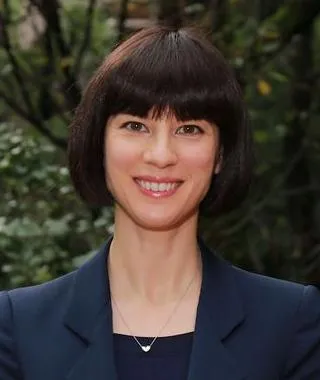
- Courtney J. Fung is Associate Professor in the Department of Security Studies & Criminology at Macquarie University. She is concurrently Non-Resident Fellow at the Fairbank Center for Chinese Studies, Harvard University; Asia Society Australia; LSE IDEAS, and the Lowy Institute. Courtney is on the editorial board of Contemporary Security Policy, the Australian Journal of International Affairs and H-DIPLO ISSF. Her research examines how rising powers address the norms and provisions for global governance and international security, with an empirical focus on China.
- Courtney was previously an associate professor with tenure in the Department of Politics and Public Administration at the University of Hong Kong; a research fellow with the East Asia Institute (Seoul) in their Program on Peace, Governance, and Development in East Asia, and a post-doctoral research fellow with the now Columbia-Harvard China and the World Program.
- Courtney is author of China and Intervention at the UN Security Council: Reconciling Status (Oxford: Oxford University Press, 2019), which explains the effects of status on China's varied response to intervention and foreign-imposed regime change at the United Nations. Her book was shortlisted for the BISA LHM Ling Outstanding First Book Prize and received the 2019 - 2020 HKU Research Output Prize for the Faculty of Social Sciences. Her work appears or is forthcoming in Contemporary Security Policy, Cooperation and Conflict, Global Governance, International Affairs, Journal of Cyber Policy, Journal of Global Security Studies, Journal of Contemporary China, PS: Political Science & Politics, The China Quarterly, Third World Quarterly, International Relations of the Asia-Pacific, and International Peacekeeping.
- Courtney holds a PhD in International Relations from the Fletcher School of Law and Diplomacy, Tufts University. She serves on The Fletcher School Board of Advisors and the National Foundation for Australia-China Relations. She will be a a Fulbright Scholar at Georgetown University in 2024/Q2 through the DFAT-funded Professional Scholarship in Australian-American Alliance Studies.
- Photo Credit: https://academic.oup.com/ia/advance-article/doi/10.1093/ia/iiaf190/8355991