"Personnel power shift? Unpacking China's attempts to enter the UN civil service" - by CWP alum Courtney Fung

The People's Republic of China views dispatching Chinese talent to international organisations as a key global governance contribution and a means to shape these institutions from within. International posts are competitive to secure, requiring China's concerted effort to place candidates for entry-level professional staff positions. However, less is known about how China is preparing to compete for these international civil service positions. This article examines United Nations (UN) staffing data, as well as Chinese-language academic, policy and media reports to address this research gap and thereby understand better how China is attempting to facilitate an increase in its staffing levels within UN entities. We find China's efforts emphasise preparation of ‘patriots’ who can bring ‘Chinese wisdom’ into the UN, but that efforts to increase staff numbers are still in development. We also note that deploying patriots in the UN civil service is potentially to the detriment of securing posts: patriotism may not translate into bureaucratic skill or expertise and also attracts the attention of other states willing to counter China's staffing efforts. It remains to be seen whether staffing power shifts will be successful and, if so, the extent to which increased representation will benefit China's interests.
Shing-hon Lam, Courtney J. Fung
First published: 23 May 2024 - https://doi.org/10.1111/1758-5899.13371
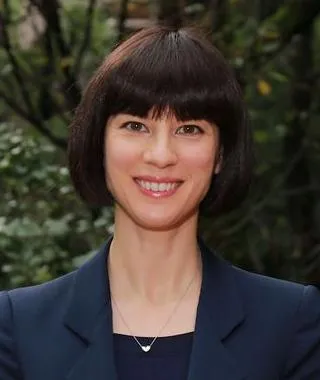
Courtney J. Fung is Associate Professor in the Department of Security Studies & Criminology at Macquarie University. She is concurrently Associate in Research at the Fairbank Center for Chinese Studies, Harvard University, Scholar in Residence at Asia Society Australia, and also Associate Fellow at the Lowy Institute. Courtney is on the editorial board of Contemporary Security Policy, the Australian Journal of International Affairs and H-DIPLO ISSF. Her research examines how rising powers address the norms and provisions for global governance and international security, with an empirical focus on China.
Courtney was previously an associate professor with tenure in the Department of Politics and Public Administration at the University of Hong Kong; a research fellow with the East Asia Institute (Seoul) in their Program on Peace, Governance, and Development in East Asia, and a post-doctoral research fellow with the now Columbia-Harvard China and the World Program.
Courtney is author of China and Intervention at the UN Security Council: Reconciling Status (Oxford: Oxford University Press, 2019), which explains the effects of status on China's varied response to intervention and foreign-imposed regime change at the United Nations. Her book was shortlisted for the BISA LHM Ling Outstanding First Book Prize and received the 2019 - 2020 HKU Research Output Prize for the Faculty of Social Sciences. Her work appears or is forthcoming in Contemporary Security Policy, Cooperation and Conflict, Global Governance, International Affairs, Journal of Cyber Policy, Journal of Global Security Studies, Journal of Contemporary China, PS: Political Science & Politics, The China Quarterly, Third World Quarterly, International Relations of the Asia-Pacific, and International Peacekeeping.
Courtney holds a PhD in International Relations from the Fletcher School of Law and Diplomacy, Tufts University. She serves on The Fletcher School Board of Advisors and the National Foundation for Australia-China Relations. She will be a a Fulbright Scholar at Georgetown University in 2024/Q2 through the DFAT-funded Professional Scholarship in Australian-American Alliance Studies.
Photo Credit: https://pixabay.com/users/chickenonline-616783/