"The Missing Strategy for Preventing a US-China War" - by CWP alum Kai He
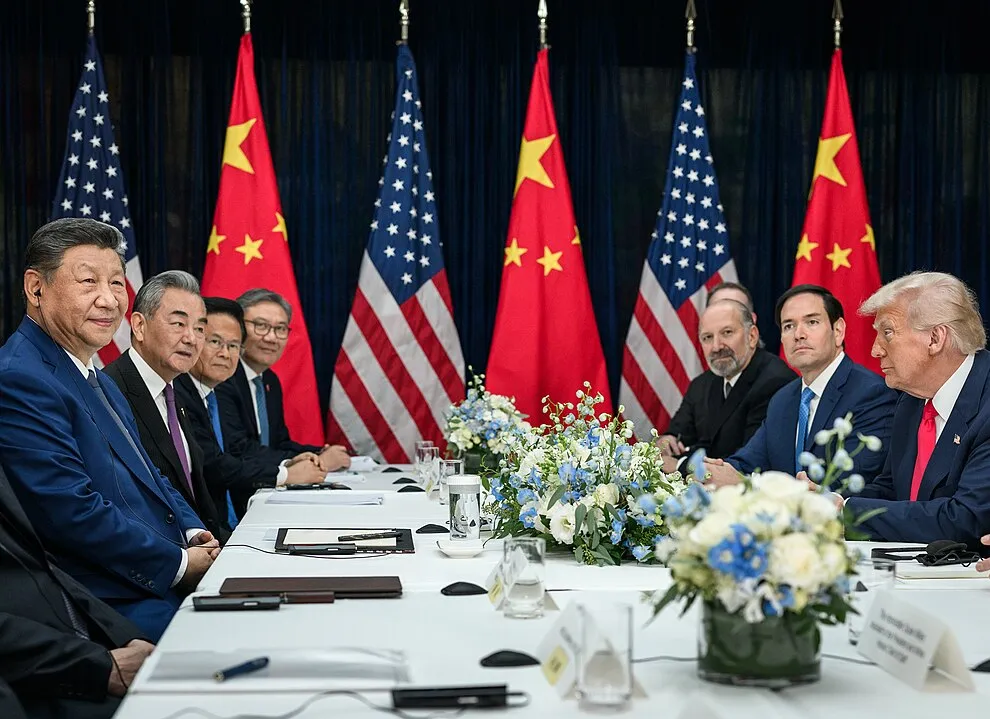
THE WORLD TODAY faces a polycrisis. The ongoing war in Ukraine threatens to bring about the first major redrawing of Europe’s national borders since the Second World War, while the fragile ceasefire in Gaza risks plunging the Middle East into renewed instability. At the same time, peace in the Asia-Pacific is under growing strain as strategic competition between the United States and China intensifies, with a trade war escalating between them, despite the recent apparent truce between Donald Trump and Xi Jinping. Because both Washington and Beijing are nuclear powers and central to the stability of the Indo-Pacific, any military clash between them would be catastrophic for the world.
In this volatile landscape, reassurance has become an indispensable yet overlooked strategy for preventing a war between great powers. Like deterrence, reassurance is a tool for managing rivalry. But whereas deterrence seeks to prevent aggression through the threat of punishment, reassurance aims to prevent it through the demonstration of peaceful intent and the reduction of misunderstanding. It is the other half of the stability equation and the one that has been dangerously neglected.
Today, both Washington and Beijing rely almost exclusively on deterrence to manage their relationship. The US has strengthened its web of alliances and security partnerships across the Indo-Pacific, from Japan and the Philippines to Australia. China, meanwhile, has pressed ahead with military modernization by testing new intercontinental ballistic missiles, rolling out stealth fighters and launching the world’s first amphibious assault ship with an electromagnetic catapult system. In February 2025, Washington conducted its own test of a Minuteman III ICBM, reaffirming its land-based nuclear deterrent. In late October, President Trump directed the resumption of nuclear weapons testing for the first time in more than 30 years, seeking to keep pace with countries such as Russia and China.
https://www.globalasia.org/v20no4/cover/the-missing-strategy-for-preventing-a-us-china-war_kai-he
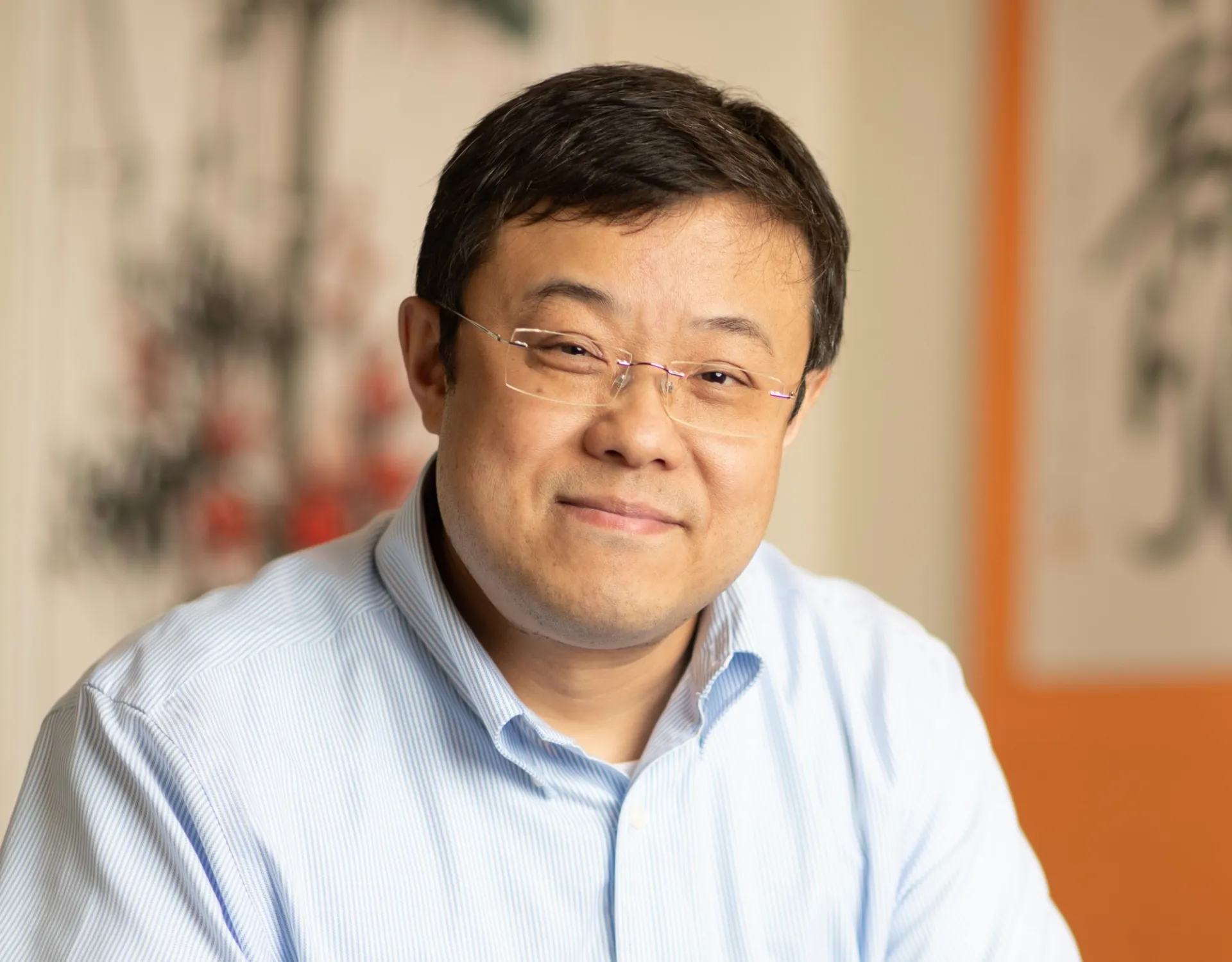
Kai He is Professor of International Relations at the School of Government and International Relations, Griffith University, Australia. He served as a non-resident Senior Scholar at the United States Institute of Peace (2022-2023), an Australian Research Council (ARC) Future Fellow (2017-2020), and a postdoctoral fellow in the Princeton-Harvard China and the World Program (2009-2010). He is a co-editor of “Cambridge Elements in Indo-Pacific Security,” a short-book series published by Cambridge University Press. He has authored or co-authored seven books and edited or co-edited eight volumes. His new books include The Upside of U.S.-Chinese Strategic Competition: Institutional Balancing and Order Transition in the Asia Pacific (co-authored with Huiyun Feng, Cambridge University Press, 2025) and International Organizations and Peaceful Change in World Politics (co-edited with T.V. Paul and Anders Wivel, Cambridge, 2025). He received the 2025 James Rosenau Award from the International Studies Association.
His peer-refereed articles have appeared in European Journal of International Relations, European Political Science Review, International Affairs, International Studies Review, International Politics, Political Science Quarterly, Review of International Studies, Security Studies, Cooperation and Conflict, Contemporary Politics, Ethics & International Affairs, Asian Survey, The Pacific Review, Journal of Contemporary China, The Chinese Journal of International Politics, Asian Security, Asian Perspective, Australian Journal of Political Science, Australian Journal of International Relations, International Relations of the Asia Pacific, Issues and Studies, Strategic Studies Quarterly, East Asia, Asia Policy, Cambridge Review of International Affairs, and Journal of Contemporary East Asian Studies.
He received several internationally competitive fellowships and grants, including the Princeton-Harvard China and the World Program Postdoctoral Fellowship (2009-2010), a Lynde and Harry Bradley Foundation Research Fellowship (2009-2010), an EAI fellowship (2011-2012) from the East Asia Institute in Seoul, an Asia Studies Fellowship (2012) from the East-West Center in Washington D.C., and visiting fellowships (2014/2017) from the S. Rajaratnam School of International Studies, Nanyang Technological University, Singapore, and policy-oriented research grants from the Korea Foundation, South Korea (2016/ 2019). His research projects are funded by the MacArthur Foundation, USA (2016-2018) and the Australian Research Council (2017-2020; 2021-2023).
Photo Credit: https://www.globalasia.org/v20no4/cover/the-missing-strategy-for-preventing-a-us-china-war_kai-he