"Green BRI as the New BRI" - Min Ye
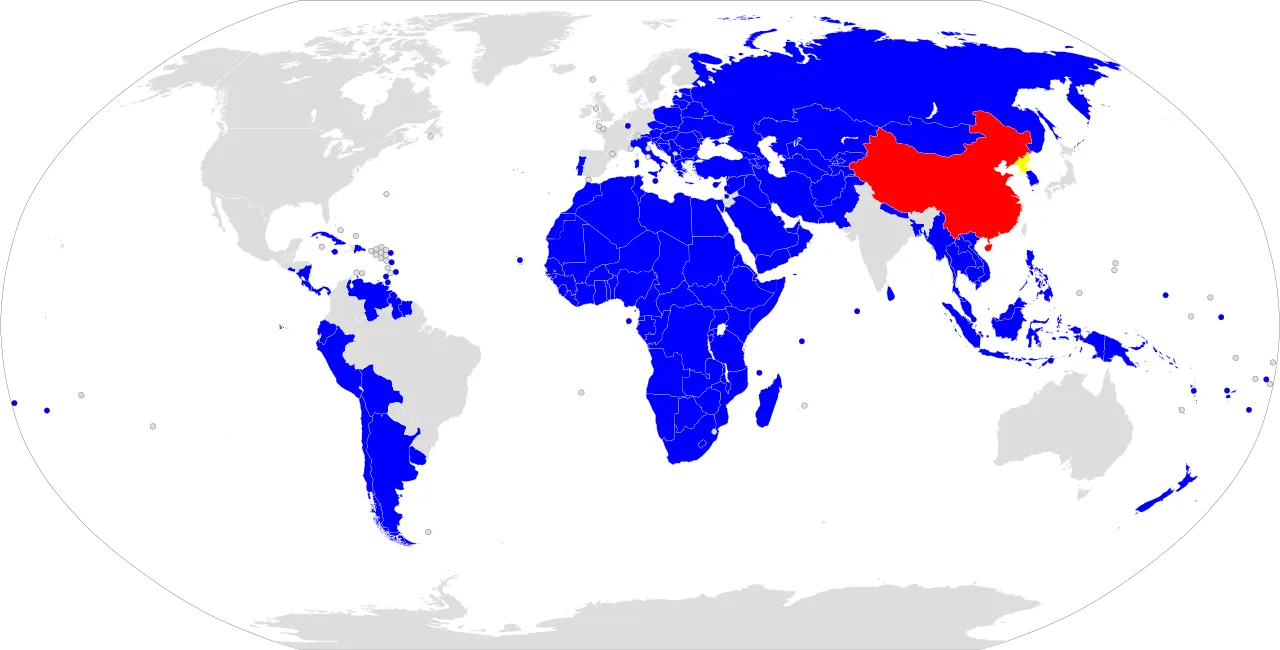
Xi Jinping’s signature global strategy – the Belt and Road Initiative (BRI) – was launched in late 2013 and has since sparked a prolific body of studies in the US and elsewhere. Framing it as a grand strategy for empire building, researchers have emphasized the BRI’s geopolitical ambitions and economic statecraft (Economy, 2018; Hillman, Reference Hillman2020; Doshi, Reference Doshi2021). Representing a domestic perspective within China, other works have highlighted the role of Chinese enterprises and local governments in pursuing uncoordinated, commercially motivated investments under the BRI banner (Jones & Zeng, Reference Jones and Zeng2019; Li, Reference Li2020; Ye, Reference Ye2020; Kong & Gallagher, Reference Kong and Gallagher2021; Yin et al., Reference Yin2021). Just as important, many scholars have examined recipient nations and demonstrated the surprising agency of host governments in shaping the BRI’s implementation (Liu & Lim, Reference Liu and Lim2019; Lampton, Ho & Kuik, Reference Lampton, Ho and Kuik2020; Yan, Reference Yan2021). Shaped by institutional and strategic conditions in host countries, the BRI has also showcased different dynamics across South Asia, Latin America, and Africa (Downs, Reference Downs2019; Moramudali, Reference Moramudali2020; Carrai, Reference Carrai2021; Kaplan, Reference Kaplan2021; Ye et al., Reference 90Ye2026).
From the outset, polarization has characterized the discourse on the BRI, with pushback and concerns particularly focused on its environmental and social risks. Supporters portray the BRI as China’s “gift” to the world, not only in terms of loans and investments but also the developmental lessons on infrastructure and industrialization (Heine, Reference Heine2021). Critics, by contrast, highlight the BRI’s costly and unsustainable projects worldwide (Economy, 2024). Recipient countries have raised concerns about environmental damage, including coal-powered plants, deforestation, and ecosystem disruption caused by poorly designed projects. Economic benefits, such as job creation and industrial growth, have also fallen short of expectations (Wu & Ye, Reference Wu and Ye2024). Domestic challenges have accumulated in recent years as well. As financial resources have become increasingly constrained and overcapacity in earlier infrastructure industries has eased, BRI projects appear to have peaked in 2017.
Min Ye is a Professor of International Relations at the Pardee School of Global Studies at Boston University. Her research situates in the nexus between domestic and global politics and the intersection of economics and security, with a focus on China, India, and regional relations.
Her publications include The Belt, Road and Beyond: State-Mobilized Globalization in China 1998 — 2018 (Cambridge University Press, 2020), Diasporas and Foreign Direct Investment in China and India (Cambridge University Press, 2014), and The Making of Northeast Asia (with Kent Calder, Stanford University Press, 2010). Among her journal articles, there are “Adapting or Atrophying: China’s Belt and Road after the Covid Pandemic,” (Asia Policy 24.1 2021), “Thucydides’s Trap, Clash of Civilizations or Divided Peace? Great Power Politics from TPP to BRI to FOIP” (JPWS 2, 2020); “Fragmentation and Mobilization: Domestic Politics of China’s Belt and Road Initiative” (JCC 28.119, 2019); “The Utility and Conditions of Diffusion by Diasporas: Exploring Foreign Direct Investment in China and India” (JEAS 12.2, 2016); “China and Competing Cooperation in Asia Pacific: TPP, RCEP and the New Silk Road” (Asian Security 11.3, 2015). In addition, she has published policy briefs on China’s BRI, nationalism, economic planning, Asian regionalism, and China-India comparison, etc.
Photo Credit: https://www.cambridge.org/core/elements/green-bri-as-the-new-bri/8E8B4D49EF9C8F87C8906F2FF107B677