"Grand Strategy’s Domestic Underpinnings" - by CWP alum Min Ye
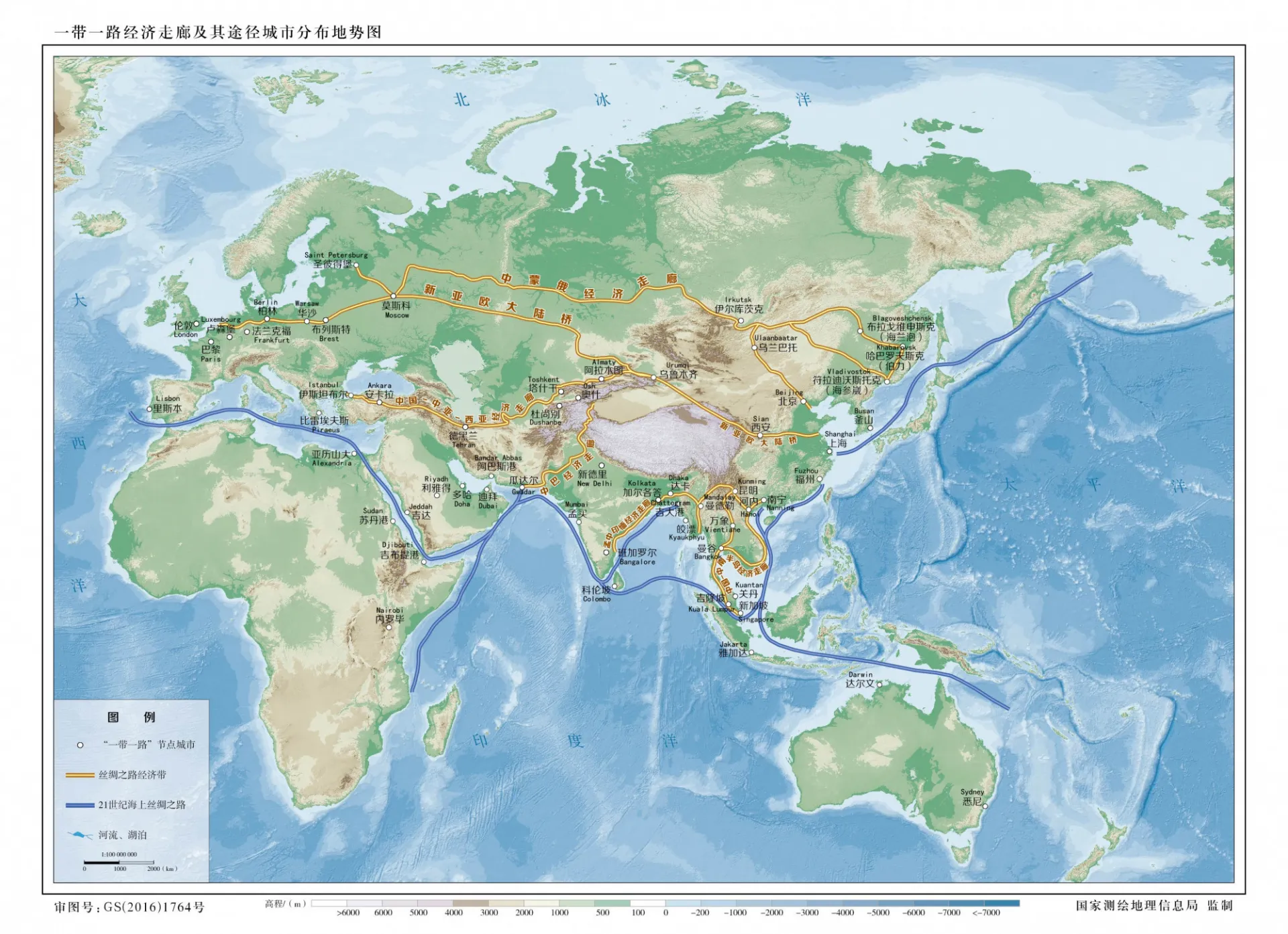
The Belt and Road Initiative (BRI) marked its tenth anniversary in 2023. Over the past decade, extensive research has been conducted on Beijing’s motivations and the BRI’s influence on both the global and regional scales.1 Perspectives on the BRI vary: some regard it as a valuable fix to the “rigged” Western neoliberal order, while others criticize it as an attempt by China to establish a neo-statist order.2 Research highlights the BRI’s development impacts, including improvements in both “hard” and “soft” infrastructure within the economies of the Global South.3 Furthermore, studies point out China’s “reputation deficit” in developing countries4 and sustained suspicion in developed democracies.5 The BRI has also experienced significant changes, from the Chinese leadership’s rhetoric, to policy guidelines, to actual investment patterns. These developments present opportunities to explore China’s changing role in the international arena.
A Dynamic Approach to China’s Belt and Road Initiative - Min Ye
Min Ye is a Professor of International Relations at the Pardee School of Global Studies at Boston University. Her research situates in the nexus between domestic and global politics and the intersection of economics and security, with a focus on China, India, and regional relations.
Her publications include The Belt, Road and Beyond: State-Mobilized Globalization in China 1998 — 2018 (Cambridge University Press, 2020), Diasporas and Foreign Direct Investment in China and India (Cambridge University Press, 2014), and The Making of Northeast Asia (with Kent Calder, Stanford University Press, 2010). Among her journal articles, there are “Adapting or Atrophying: China’s Belt and Road after the Covid Pandemic,” (Asia Policy 24.1 2021), “Thucydides’s Trap, Clash of Civilizations or Divided Peace? Great Power Politics from TPP to BRI to FOIP” (JPWS 2, 2020); “Fragmentation and Mobilization: Domestic Politics of China’s Belt and Road Initiative” (JCC 28.119, 2019); “The Utility and Conditions of Diffusion by Diasporas: Exploring Foreign Direct Investment in China and India” (JEAS 12.2, 2016); “China and Competing Cooperation in Asia Pacific: TPP, RCEP and the New Silk Road” (Asian Security 11.3, 2015). In addition, she has published policy briefs on China’s BRI, nationalism, economic planning, Asian regionalism, and China-India comparison, etc.
Min Ye has received grants and fellowship in the U.S and Asia, including a Smith Richardson Foundation grant (2016-2018), East Asia Peace, Prosperity, and Governance Fellowship (2013), Princeton-Harvard China and the World Program post-doctoral fellowship (2009-2010), and Millennium Education Scholarship in Japan (2006). In 2014-2016, the National Committee on the U.S-China Relations selects Min Ye as a Public Intellectual Program fellow. In 2020, Ye is selected as the Rosenberg Scholar of East Asian Studies at Suffolk University.
Professor Ye’s areas of expertise include Chinese political economy, China and India comparison, East Asian international relations, and globalization with focuses on transnational immigration and foreign investment.
Photo Credit: https://www.bu.edu/pardeeschool/profile/min-ye/
By 未来智者 - Own work, CC BY-SA 4.0, https://commons.wikimedia.org/w/index.php?curid=139119606