"Explaining Hedging: The Case of Malaysian Equidistance" by CWP alum Cheng-Chwee Kuik

For decades, Malaysia has positioned itself as being “equidistant” between the United States and China. But being equidistant does not mean being equally distant or equally close. Instead, it means maintaining a neutral position at the macro level while seeking inclusive but selective multilayered partnerships with all competing powers across micro-level domains. While the Malaysia-US defence partnership is much closer than that between Malaysia and China, Malaysia-China diplomatic and developmental ties are more multifaceted than those between Malaysia and the United States. Therefore, Malaysia’s equidistant stance entails several puzzling contradictions emblematic of hedging. This article theorizes hedging by unpacking the two-level determinants of Malaysia’s inclusive but prudently selective and contradictory policy of equidistance. It argues that while the smaller state’s macro-level neutrality is driven primarily by the structural imperative of insuring against the danger of entrapment and other systemic risks, the inclusive and contradictory elements in Malaysia’s micro-level, multilayered alignments are primarily due to domestic reasons. Chief among these is the governing elites’ necessity to optimize the different pathways of legitimation in a multiethnic society. This intersects with other domestic processes, prompting the state to hedge by pursuing seemingly paradoxical approaches to offset risks while maximizing benefits with politically acceptable trade-offs under conditions of uncertainties.
-
Explaining Hedging:The Case of Malaysian Equidistance - Kuik Cheng-Chwee
- Contemporary Southeast Asia: A Journal of International and Strategic Affairs
- Volume 46, Number 1, April 2024
- ISEAS–Yusof Ishak Institute
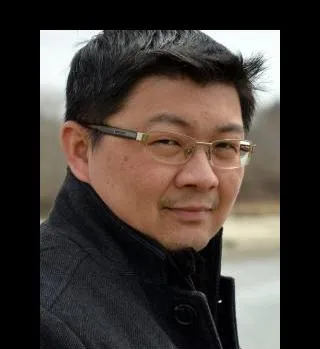
Dr. Kuik Cheng-Chwee is Professor of International Relations at the Institute of Malaysian and International Studies (IKMAS), National University of Malaysia (UKM). He is concurrently a non-resident Senior Fellow at Johns Hopkins University’s Foreign Policy Institute (FPI). Previously, he was a Postdoctoral Research Associate at the Princeton-Harvard “China and the World” (CWP) Program and a Visiting Research Fellow at Oxford University. Professor Kuik’s research focuses on smaller-state foreign and defence policies, Asian security, and international relations. He serves as a member of the Consultative Council on Foreign Policy, Malaysian Ministry of Foreign Affairs. Cheng-Chwee is a regular invited speaker to international conferences and closed-door policy roundtables. Cheng-Chwee’s publications have appeared in such peer-reviewed journals as International Affairs, Pacific Review, Journal of Contemporary China, Chinese Journal of International Politics, and Contemporary Southeast Asia. His essay, “The Essence of Hedging”, won the Michael Leifer Memorial Prize awarded by the Institute of Southeast Asian Studies. He is co-author (with David Lampton and Selina Ho) of Rivers of Iron: Railroads and Chinese Power in Southeast Asia (2020) and co-editor (with Alice Ba and Sueo Sudo) of Institutionalizing East Asia (2016). His current projects include: hedging in international relations, domestic politics and foreign policy choices, and the geopolitics of connectivity cooperation. Cheng-Chwee serves on the editorial boards of Contemporary Southeast Asia, Australian Journal of International Affairs, Asian Politics and Policy, International Journal of Asian Studies, and East Asian Policy. He holds an M.Litt. from the University of St. Andrews, and a PhD from the Johns Hopkins University’s School of Advanced International Studies.
Photo Credit: https://pixabay.com/users/behyad-148709/