"Digital Media May Be Easing China-US Tensions, Not Fueling Them" - by CWP alum Xiaojun LI

When the United States moved closer to banning TikTok in early 2025, something unexpected happened: hundreds of thousands of American users flocked to another Chinese platform, Xiaohongshu (also known as RedNote), in search of alternatives. Around the same time, popular YouTuber IShowSpeed livestreamed his visit to China, drawing millions of viewers into unscripted, often humorous encounters with everyday life there.
These viral moments offered something rare in the current geopolitical climate: Americans saw unfiltered glimpses of China that sparked curiosity, cultural exchange, and even moments of friendship, rather than fear, stereotyping, and suspicion.
They also point to a broader dynamic: the type of media Americans consume can dramatically shape how they view China.
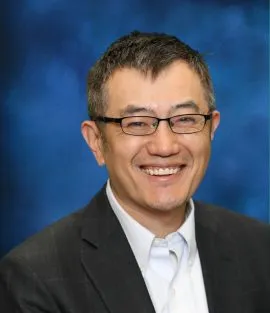
He received his Ph.D. in Political Science from Stanford University and joined the department in 2013. He is currently Professor of Political Science at UBC and faculty affiliate with the Centre for Chinese Research and Centre for Migration Studies. He is also the President-elect (2025-2027) and President (2027-2029) of the Association of Chinese Political Studies, a non-resident scholar at the 21st Century China Centre at UC San Diego School of Global Policy and Strategy, and the political economy field editor of Journal of Public Policy.
Previously, he was a Princeton-Harvard China and the World Fellow at Harvard University’s Fairbank Center for Chinese Studies, a POSCO Visiting Scholar at the East-West Center in Honolulu, and an inaugural Wang Gungwu Fellow at the ISEAS–Yusof Ishak Institute in Singapore. During 2022-2023, he was on the faculty of NYU Shanghai and affiliated with NYU Department of Politics.
His research lies at the intersection of international relations and comparative politics. Some of his previous and ongoing projects have explored the impact of domestic politics on the process and content of foreign economic and security policies and how global supply chains reshape politics of trade and investment. Using China as the primary case of inquiry and employing a variety of methods, including interviews, archival research, survey experiment, and large-N analysis, his research aims to shed light on China’s multifaceted global engagements and impacts as well as the domestic drivers behind them.
His recent books include Token Forces: How Tiny Troop Deployments became Ubiquitous in UN Peacekeeping (Cambridge University Press 2022), Fragmenting Globalization: The Politics of Preferential Trade Liberalization in China and the United States (University of Michigan Press 2021), and How China Sees the World: Insights from China’s International Relations Scholars (Palgrave 2019). He has published over 40 articles in general political science journals such as Journal of Politics and Political Science Research and Methods, internatioanl relations journals such as International Affairs and International Studies Quarterly, area studies journals such as Asian Survey, China Quarterly, and Pacific Affairs, as well as interdisciplinary journals such as Business and Politics, Regulation and Governance, and Studies in Comparative International Development. His research has received grants and awards from such organizations as the Social Science and Humanities Research Council of Canada, the National Science Foundation of the United States, the American Political Science Association, the International Studies Association, the Association of Chinese Political Studies, and the Chiang Ching-Kuo Foundation.
Photo Credit: https://thediplomat.com/2025/05/digital-media-may-be-easing-china-us-tensions-not-fueling-them/