
"The Malacca Myth: Why the United States Should Be Wary of a Distant Blockade Against China " - by CWP alum Eyck Freymann
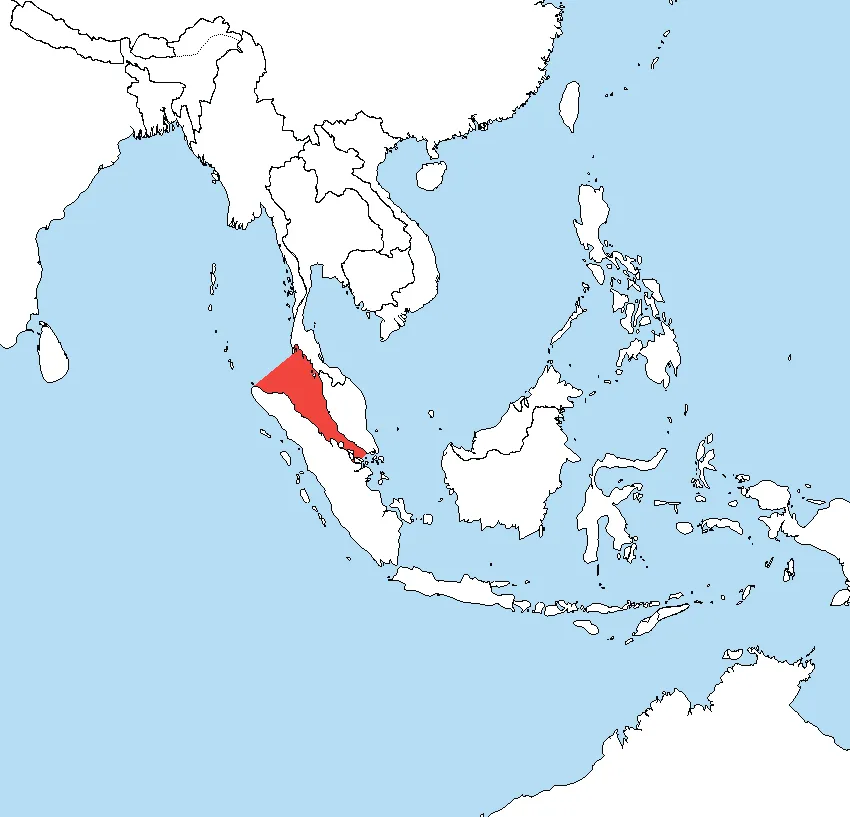
Hugo Bromley and Eyck Freymann argue that the United States should be cautious about threatening or imposing a distant naval blockade against China through the Strait of Malacca. Although such a blockade might restrict China’s oil imports and create short-term economic pressure, its broader political and economic effects could undermine U.S. strategic interests. The authors situate blockades in a broader typology of economic coercion and develop a theory centered on “arbitrage”: blockades create price differences that encourage neutral states and private firms to reroute, reflag, transship, or smuggle goods through or around the blockade. The more economically significant the neutral community, the more costly and difficult enforcement becomes for the blockader. Historical studies of British blockades against France during the revolutionary and Napoleonic Wars and against Germany in the two world wars support this argument. Britain repeatedly had to compromise with neutral powers because aggressive enforcement threatened diplomatic coalitions and sometimes provoked conflict with important states. A Malacca blockade would confront an even larger and more economically integrated neutral community than Britain faced. China could also rely on stockpiles, domestic production, overland routes, substitution, and food reserves to withstand the blockade. The authors conclude that Washington should favor economic measures that encourage cooperation with neutral actors rather than coercive blockade enforcement, which could fracture the global economy and strengthen China diplomatically.
Hugo Bromley, Eyck Freymann; The Malacca Myth: Why the United States Should Be Wary of a Distant Blockade Against China. International Security 2026; 51 (2): 157–203. doi: https://doi.org/10.1162/ISEC.a.428
Eyck Freymann works on strategies to preserve peace and protect U.S. interests and values in an era of systemic competition with China. He is the author of several books, including Defending Taiwan, The Arsenal of Democracy, and One Belt One Road.
Dr. Freymann is a Hoover Fellow at Stanford University, where he directs the Allied Coordination Working Group. He is also a Non-Resident Fellow at the U.S. Naval War College, China Maritime Studies Institute; the Columbia University Center on Global Energy Policy; and the Institute of Geoeconomics in Tokyo. He also advises businesses and asset managers at Greenmantle, a consultancy.
He writes the Integrated Strategy newsletter and comments frequently in The Wall Street Journal, TheNew York Times, Foreign Affairs, The Economist, War on the Rocks, The Wire China, and The Atlantic, among other venues, focusing on bipartisan approaches to pressing national security issues. His scholarly work on these topics has appeared in The China Quarterly and Texas National Security Review and is forthcoming in International Security.
Before Hoover, Dr. Freymann held fellowships at Harvard and Columbia. He holds four degrees in history and China Studies from Oxford, Cambridge, and Harvard.
Photo Credit: https://direct.mit.edu/isec/article/51/2/157/139765/The-Malacca-Myth-Why-the-United-States-Should-Be
By Derives from png uploaded by User:Wolrd blank map - File:A_large_blank_world_map_with_oceans_marked_in_blue.PNG, CC BY-SA 3.0, https://commons.wikimedia.org/w/index.php?curid=130792497