"Convergent Flexibility: How International Law Keeps Pace with Technological Change" by CWP alum Justin Canfil
If change is the only constant, how does the law keep pace with technology? Without a centralized judiciary, international law should be especially susceptible to disruption, yet it can be remarkably resilient in practice. I argue that efforts to minimize legal ambiguity, long seen as integral to compliance, can hinder its application to new technologies. Drawing on first principles from psycholinguistics, my theory differentiates between what I call convergent and divergent forms of flexibility. Unlike divergent flexibility, which gives rise to contestation, convergent flexibility tends to promote consensus, even when (1) technology is unprecedented and (2) regulatory interests sharply diverge. To test the theory, trained legal professionals were commissioned to take part in a randomized controlled trial (RCT) that varied technological novelty, legal precision, and political incentives. Participants collectively contributed 280,000 words over 10,000 hours in defense of their professional legal opinions, offering a novel (agent-subjective) measure of compliance. To establish external validity, the experiment is complemented with research into the legal impact of two breakthrough chemical weapons technologies: “super tear gas” and novichok. The findings contribute a general theoretical framework for understanding when and why emerging technologies are legally disruptive.
Canfil JK. Convergent Flexibility: How International Law Keeps Pace with Technological Change. International Organization. Published online 2026:1-44. doi:10.1017/S0020818326101295
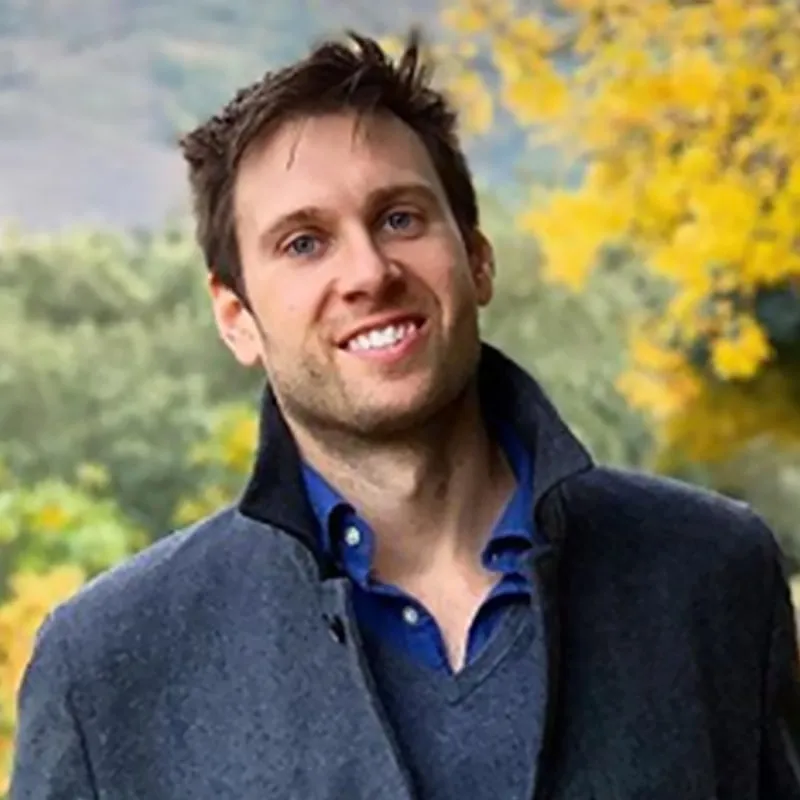
Justin K. Canfil is an Assistant Professor at the Carnegie Mellon Institute for Strategy & Technology (CMIST). A political scientist by training, Professor Canfil's research concerns international security, international law, innovation theory, and science and technology competition. His research has appeared or is forthcoming in International Organization (IO), the Journal of Peace Research (JPR), the Journal of Cybersecurity, the Bulletin of the Atomic Scientists, and other outlets. His book project explains how arms controllers engineer against the future---and what happens when they fail. Professor Canfil has held fellowships at Princeton's Center on Contemporary China, the Harvard Kennedy School, the Columbia-Harvard China and the World Program, and the Council on Foreign Relations. An exaugural US Fulbright Scholar to China, he received his PhD from Columbia University, with a specialization in International Law via Columbia Law School.