"China’s Farmland Is In Serious Trouble" - By CWP Alum Zongyuan Zoe Liu,
Former U.S. President Ronald Reagan offered his “lesson number one about America” in his farewell address to the nation: “All great change in America begins at the dinner table.” The same is true in China. One of the first steps of the Maoist revolution was forced collective dining, but reform and opening up of the country revolutionized Chinese households’ dinner options with an array of diverse delicacies from Dutch cheese and Norwegian salmon to Mexican avocados and Rainier cherries.
Tang Renjian, China’s minister of agriculture and rural affairs, accounted that, every day, China’s 1.4 billion people consume a staggering 700,000 tons of grain, 98,000 tons of edible oil, 1.92 million tons of vegetables, and 230,000 tons of meat. The leaders of the Chinese Communist Party (CCP) understand that “to the emperor, the people is heaven; to the people, food is heaven,” as the traditional saying goes, and they have prioritized food security as a prerequisite to maintaining power, especially after the calamitous famines of the Maoist era. For decades, coupons were necessary to buy any food—a system not fully ended until 1995, although largely dead in the cities by the mid-1980s. Despite China’s emergence as the world’s factory, the country’s No. 1 central document, the first policy statement issued by the top authorities each year, has centered on food security and the three issues of agriculture, the countryside, and farmers since 2004.
By Zongyuan Zoe Liu, a columnist at Foreign Policy and a fellow for international political economy at the Council on Foreign Relations.
Zongyuan Zoe Liu is a fellow for international political economy at the Council on Foreign Relations (CFR). Her work focuses on international political economy, global financial markets, sovereign wealth funds, supply chains of critical minerals, development finance, emerging markets, energy and climate change policy, and East Asia-Middle East relations. Dr. Liu’s regional expertise is in East Asia, specifically China and Japan, and the Middle East, specifically Gulf Cooperation Council countries. Dr. Liu is the author of Can BRICS De-dollarize the Global Financial System? (Cambridge University Press) and Sovereign Funds: How the Communist Party of China Finances its Global Ambitions (Harvard University Press, forthcoming 2023).
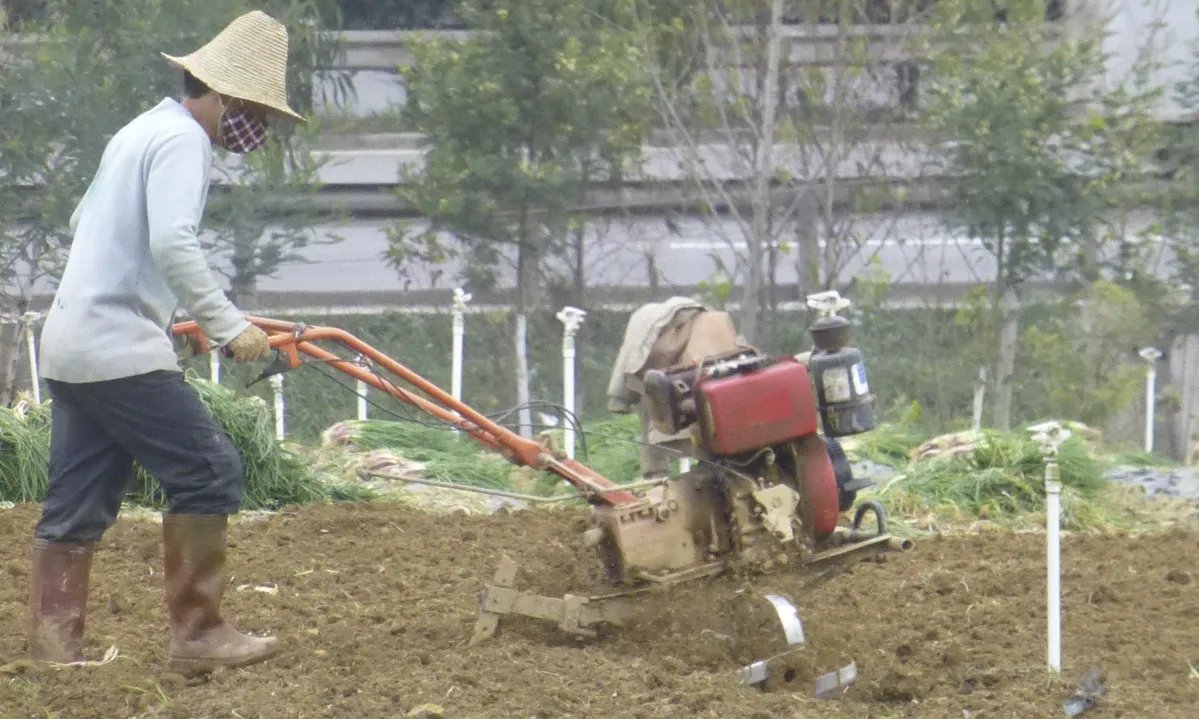
Photo Credit: By User:Vmenkov - Own work, CC BY-SA 3.0, https://commons.wikimedia.org/w/index.php?curid=57289420