"ASEAN GOES BRICS" by CWP alum Cheng-Chwee Kuik
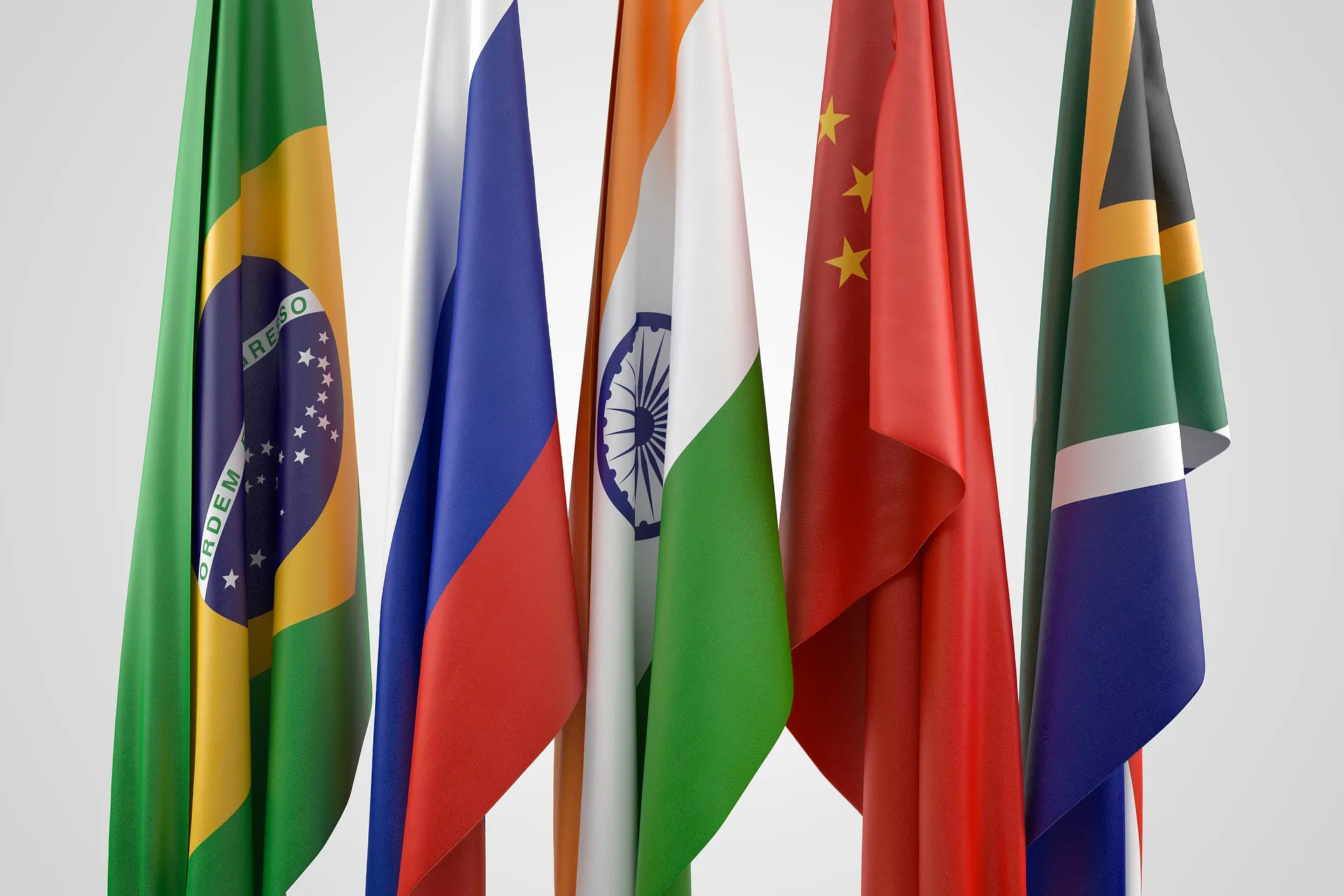
BRICS has evolved from a loose acronym of large emerging economies to a more visible platform for economic and political cooperation. By many in the West, it is perceived as a Sino-Russian-led project to reshape international norms and institutions. The expansion of BRICS to ten member countries and ten partner countries has added urgency to the question of what drives countries and their leaders to seek association with the grouping.
When Indonesia, Thailand, Malaysia and Vietnam opened their economies in the late 1980s, foreign direct investment from and trade with liberal democracies like the US, Europe, Australia, Japan and South Korea were instrumental. Tens of millions were lifted out of poverty, developing countries turned into modern middle-income states with vibrant economies. Today, their ties with the West are still strong and friendly. At the same time, these four ASEAN states have all turned to BRICS. Malaysia and Thailand were granted partnership status at the Kazan Summit in 2024. Indonesia joined as a full member in January 2025. Vietnam received partner status in June 2025.
This paper explores why these four ASEAN member states are attracted to BRICS and what their engagement might imply for their Western partners. Experts from Indonesia, Malaysia, Thailand and Vietnam have each written a chapter. They see geoeconomic diversification, status/voice-seeking in global governance or domestic political legitimation as drivers of interest in BRICS.
Krisna Gupta and Radityo Dharmaputra from Indonesia argue that their country´s BRICS membership links hopes for economic diversification and market access with President Prabowo Subianto’s agenda to elevate Indonesia on the world stage. Malaysia´s Cheng-Chwee Kuik writes that Prime Minister Anwar Ibrahim´s BRICS bid is a hedge amid major-power rivalry, which also supports the domestic legitimacy of Anwar´s Unity Government. Pongphisoot Busbarat from Thailand sees the kingdom’s BRICS interest through the lens of “bamboo diplomacy” - a pragmatic balancing act that also aims to restore international visibility after a period of passivity in foreign policy. Vietnam´s Nguyen Ngoc Manh writes that his country´s BRICS partner status is aimed at boosting autonomy under Vietnam´s defence doctrine, deepening Global South ties and diversifying development
EDITOR: FELIX JANTZ
AUTHORS:
PONGPHISOOT BUSBARAT
KUIK CHENG-CHWEE
RADITYO DHARMAPUTRA
KRISNA GUPTA
NGUYEN NGOC MANH
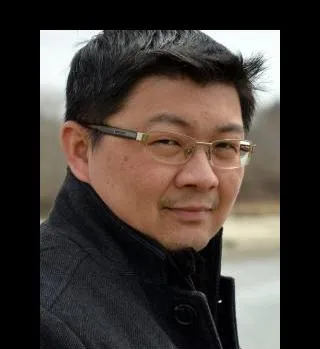
Cheng-Chwee Kuik is a Senior Fellow at the Foreign Policy Institute of the Johns Hopkins University School of Advanced International Studies (SAIS). He is Professor of International Relations at the National University of Malaysia (UKM)’s Institute of Malaysian and International Studies (IKMAS) and concurrently a Nonresident Scholar at Carnegie China. He is Co-Founder of the East Asian International Relations (EAIR) Caucus, a research platform for exchange, engagement, and empowerment among foreign affairs professionals in Malaysia. He served as Head of the Writing Team for the Government of Malaysia’s inaugural Defence White Paper (2019-2020) and a member of the Consultative Council on Foreign Policy, Malaysian Ministry of Foreign Affairs (2023-2024). Previously he was a postdoctoral research associate at the Princeton-Harvard “China and the World” Program (CWP) and a visiting research fellow at the University of Oxford's Department of Politics and International Relations.
Professor Kuik’s research focuses on small-state foreign and defence policies, Asian security, and international relations. Cheng-Chwee’s publications have appeared in such peer-reviewed journals as International Affairs, Pacific Review, Journal of Contemporary China, Chinese Journal of International Politics, Journal of Chinese Political Science, and Contemporary Southeast Asia. He is co-author with David M. Lampton and Selina Ho of Rivers of Iron: Railroads and Chinese Power in Southeast Asia (University of California Press, October 2020), and co-editor with Alice Ba and Sueo Sudo of Institutionalizing East Asia: Mapping and Reconfiguring Regional Cooperation (Routledge 2016). Kuik's essay, “The Essence of Hedging” was awarded the biennial 2009 Michael Leifer Memorial Prize by the Institute of Southeast Asian Studies for best article published in any of the three ISEAS journals.
Kuik is a regular invited speaker to international conferences and closed-door policy roundtables. His current projects include: hedging in international relations, elite legitimation and foreign policy choices, and the host-country agency in connectivity cooperation. Cheng-Chwee serves on the editorial boards/committees of Contemporary Southeast Asia, Australian Journal of International Affairs, Asian Perspective, Asian Politics and Policy, International Journal of Asian Studies, and East Asian Policy. He holds an M.Litt. from the University of St. Andrews and a PhD from Johns Hopkins University.
Photo Credit: Regional Office Asia
Friedrich-Naumann-Stiftung für die Freiheit
25th Floor, BBC Tower 29, Soi 63 Sukhumvit Road Bangkok 10110
Thailand