"After Xi" by CWP alum Tyler Jost
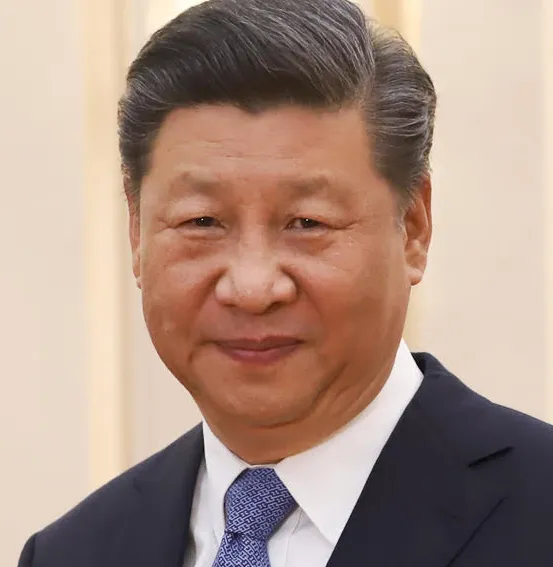
For more than a decade, Chinese politics has been defined by one man: Xi Jinping. Since Xi assumed leadership of the Chinese Communist Party in 2012, he has made himself into a strongman ruler. He has remade the CCP elite through a wide-ranging purge and corruption crackdown. He has curbed civil society and suppressed dissent. He has reorganized and modernized the military. And he has reinvigorated the role of the state in the economy.
Xi’s rise has also redefined China’s relationship with the rest of the world. He has pursued a more muscular foreign policy, including by increasing the tempo of military drills in the Taiwan Strait and overseeing a growing military presence in the South China Sea. He has encouraged (and then later reined in) a battalion of “wolf warrior” diplomats who engaged in a harsh war of words with foreign critics. And he has pushed China closer to Russia, even after Russian President Vladimir Putin launched a war in Ukraine. In short, it has been a new era for China. It has been Xi’s era.
Soon, however, everything will start to change. As the CCP elite begins the search for a leader to replace the 72-year-old Xi, China is transitioning from a phase defined by power consolidation to one defined by the question of succession. For any authoritarian regime, political succession is a moment of peril, and for all its strengths, the CCP is no exception. The last time the party dealt with the problem of political succession—when Xi took over from Hu Jintao—rumors swirled in Beijing of coup attempts, failed assassinations, and tanks on the streets. The rumors may have been unfounded, but the political drama at the top was real.
After Xi: The Succession Question Obscuring China’s Future—and Unsettling Its Present - Tyler Jost and Daniel C. Mattingly September/October 2025Published on August 4, 2025
Tyler Jost is Assistant Professor of Political Science, International & Public Affairs and Watson Institute Assistant Professor of China Studies. His research focuses on national security decision-making, bureaucratic politics, and Chinese foreign policy. Dr. Jost’s current book project examines domestic institutions designed to decide and coordinate national security policy, such as the U.S. National Security Council. Dr. Jost completed his doctoral degree in the Department of Government at Harvard University. He has held postdoctoral fellowships in the International Security Program at the Kennedy School of Government, as well as in the China and the World Program at Columbia University. His research has been supported by the Smith Richardson Foundation, the U.S. Institute of Peace, and the Fairbank Center for Chinese Studies.
Photo Credit: https://www.foreignaffairs.com/china/after-xi-jinping-jost-mattingly