"02 China: Balancing the US, increasing global influence" - by CWP alum M. Taylor Fravel

Over the near to medium term, China’s vision for the future of international order is one in which the material power of the United States and the role of the liberal ideas it has championed are diminished relative to their position today. China’s vision, as held by China’s top leaders, contains three core elements. First, China articulates a Westphalian vision of order based on the primacy of states and on principles such as sovereignty, territorial integrity and non-intervention. In China’s vision, a state’s international influence should be commensurate with its capabilities – the logic of which confers special prerogatives on great powers with the greatest capabilities, such as China today. This vision bolsters China’s internal regime security and legitimates its own efforts to increase its international influence and occupy a leading position in the international system as it rises in power. Second, the main purpose of China’s vision of order since the end of the Cold War has been to reduce the influence of the US in an era in which liberal ideas along with US power have been ascendant. This enables Beijing both to decrease the ability of the US to harm or constrain China and to maximize its own freedom of manoeuvre and influence internationally. Third, China has pursued this vision of order much more actively and vigorously in the past decade, as its national capabilities have grown substantially and as its rivalry with the US has intensified.
Competing visions of international order Responses to US power in a fracturing world
Published 27 March 2025 - Updated 28 March 2025 - ISBN: 978 1 78413 638 3
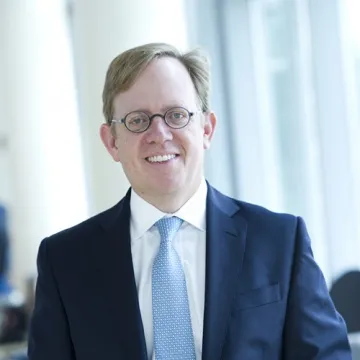
M. Taylor Fravel is the Arthur and Ruth Sloan Professor of Political Science and Director of the Security Studies Program at the Massachusetts Institute of Technology. Taylor studies international relations, with a focus on international security, China, and East Asia. His books include Strong Borders, Secure Nation: Cooperation and Conflict in China’s Territorial Disputes, (Princeton University Press, 2008) and Active Defense: China's Military Strategy Since 1949 (Princeton University Press, 2019). His other publications have appeared in International Security, Foreign Affairs, Security Studies, International Studies Review, The China Quarterly, The Washington Quarterly, Journal of Strategic Studies, Armed Forces & Society, Current History, Asian Survey, Asian Security, China Leadership Monitor, and Contemporary Southeast Asia.
Taylor is a graduate of Middlebury College and Stanford University, where he received his PhD. He also has graduate degrees from the London School of Economics and Oxford University, where he was a Rhodes Scholar. In 2016, he was named an Andrew Carnegie Fellow by the Carnegie Corporation. Taylor is a member of the board of directors of the National Committee on U.S.-China Relations and serves as the Principal Investigator for the Maritime Awareness Project.
Photo Credit: https://www.chathamhouse.org/sites/default/files/2025-03/2025-03-27-competing-visions-international-order-vinjamuri-et-al.pdf