"Strategic desecuritization under asymmetry: from security opportunity to security trap" by CWP alum Kai He

Why do actors that use security framing to elevate an urgent issue later soften, narrow, or recalibrate that framing, even when the threat remains acute? This article develops a theory of strategic desecuritization under asymmetry. We argue that securitizing moves can generate both security opportunities and security traps. They create opportunities by raising salience, securing recognition, and attracting resources. Yet under power asymmetry and geopolitical competition, they may also draw in stronger external actors whose security logics reshape governance and erode initiators’ agenda control. Security opportunities can thereby become security traps. To mitigate these traps, weaker actors may pursue strategic desecuritization: a discursive and institutional strategy that preserves urgency while narrowing security framing, limiting external strategic intrusion, and reasserting authority over issue governance. The article illustrates this mechanism through Pacific climate diplomacy, tracing the trajectory from the 2018 Boe Declaration to the 2025 Blue Pacific Ocean of Peace Declaration and the Pacific Resilience Facility. The argument contributes to securitization theory by distinguishing securitizing moves, full securitization, and security effects; reconceptualizing desecuritization as a strategic response to security framing’s autonomy-eroding consequences; and showing how institutional substitution enables weaker actors to reassert agency under geopolitical competition.
He K, Feng H. Strategic desecuritization under asymmetry: from security opportunity to security trap. International Theory. Published online 2026:1-24. doi:10.1017/S1752971926100347
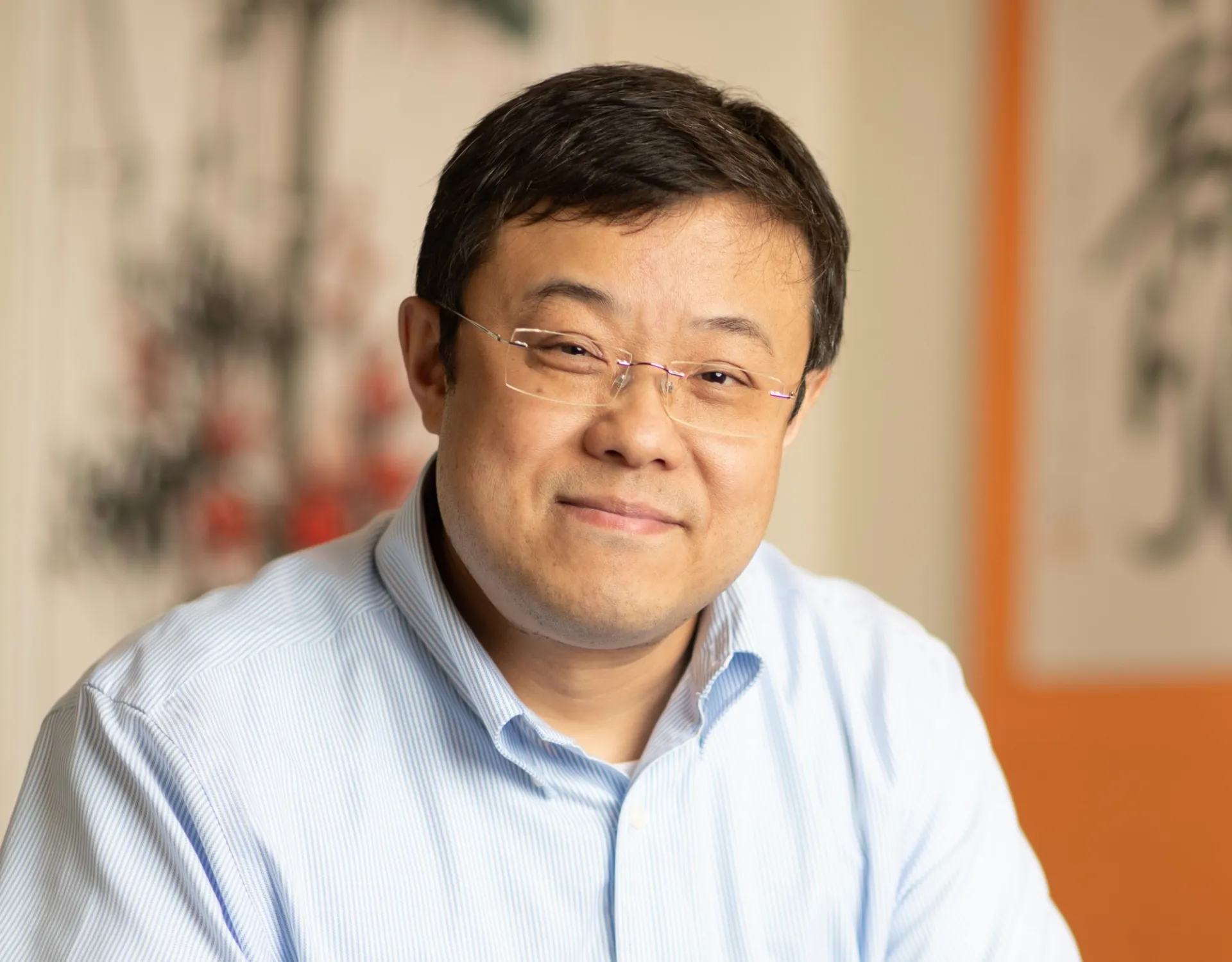
Kai He is Professor of International Relations at the School of Government and International Relations, Griffith University, Australia. He served as a non-resident Senior Scholar at the United States Institute of Peace (2022-2023), an Australian Research Council (ARC) Future Fellow (2017-2020), and a postdoctoral fellow in the Princeton-Harvard China and the World Program (2009-2010). He is a co-editor of “Cambridge Elements in Indo-Pacific Security,” a short-book series published by Cambridge University Press. He has authored or co-authored seven books and edited or co-edited eight volumes. His new books include The Upside of U.S.-Chinese Strategic Competition: Institutional Balancing and Order Transition in the Asia Pacific (co-authored with Huiyun Feng, Cambridge University Press, 2025) and International Organizations and Peaceful Change in World Politics (co-edited with T.V. Paul and Anders Wivel, Cambridge, 2025). He received the 2025 James Rosenau Award from the International Studies Association.
His peer-refereed articles have appeared in European Journal of International Relations, European Political Science Review, International Affairs, International Studies Review, International Politics, Political Science Quarterly, Review of International Studies, Security Studies, Cooperation and Conflict, Contemporary Politics, Ethics & International Affairs, Asian Survey, The Pacific Review, Journal of Contemporary China, The Chinese Journal of International Politics, Asian Security, Asian Perspective, Australian Journal of Political Science, Australian Journal of International Relations, International Relations of the Asia Pacific, Issues and Studies, Strategic Studies Quarterly, East Asia, Asia Policy, Cambridge Review of International Affairs, and Journal of Contemporary East Asian Studies.
He received several internationally competitive fellowships and grants, including the Princeton-Harvard China and the World Program Postdoctoral Fellowship (2009-2010), a Lynde and Harry Bradley Foundation Research Fellowship (2009-2010), an EAI fellowship (2011-2012) from the East Asia Institute in Seoul, an Asia Studies Fellowship (2012) from the East-West Center in Washington D.C., and visiting fellowships (2014/2017) from the S. Rajaratnam School of International Studies, Nanyang Technological University, Singapore, and policy-oriented research grants from the Korea Foundation, South Korea (2016/ 2019). His research projects are funded by the MacArthur Foundation, USA (2016-2018) and the Australian Research Council (2017-2020; 2021-2023).
Photo Credit: https://www.cambridge.org/core/journals/international-theory/article/strategic-desecuritization-under-asymmetry-from-security-opportunity-to-security-trap/1CA6FFB87AF9AE81685EA73E575B186C