"Not Just an Island: Why Geography Should Not Drive U.S. Taiwan Policy" - by CWPs Thomas Christensen
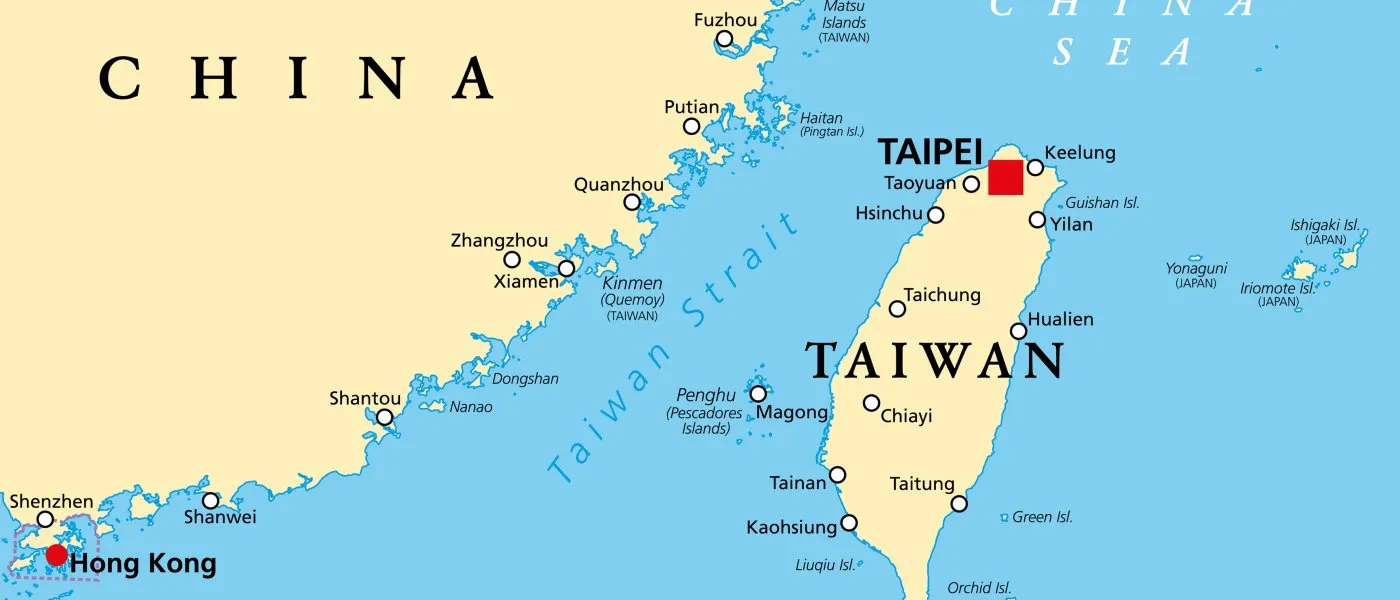
Geography always matters in international politics, as Iran has reminded us in the Strait of Hormuz. In the Western Pacific, Taiwan’s geographic status as an island 100 nautical miles off of mainland China is clearly important. After all, if Taiwan were a peninsula rather than an island, would we be discussing it today as anything but a fully integrated province of the People’s Republic of China (PRC)? It is undeniable that Taiwan’s island status has been a critical enabler of U.S. efforts to deter the PRC from attempting to forcibly absorb Taiwan. But Taiwan’s geographic position in Asia’s first island chain should not become the main reason why the United States supports Taiwan’s security. Emphasizing geographic interests in Taiwan in U.S. policy over other political and economic factors will do more to undermine what have been very successful U.S. deterrent efforts than to bolster them.
Preventing a PRC attack on Taiwan and the regional and global catastrophe it would cause should be the main focus of U.S. policy toward cross-strait relations. It should also be the foundation of Taiwan’s own defense strategy. But how the United States explains why deterrence of a PRC attack is vitally important to U.S. national interests has important implications for deterrence itself. Recently, senior U.S. officials, government strategy reports, and expert commentators have emphasized Taiwan’s strategic geographic location in the first island chain in the Western Pacific as the key reason why the United States should care about the island’s protection from hostile takeover by the PRC. Because Taiwan lies in the middle of the first island chain in the Western Pacific, control of the island by the PRC would, all things being equal, allow China to more easily project military power toward the second island chain and toward U.S. allies in the region. For example, Biden administration Assistant Secretary of Defense Ely Ratner suggested in Senate testimony that PRC control of Taiwan would gravely threaten the security of Japan and the Philippines: “Taiwan is located at a critical node within the first island chain, anchoring a network of U.S. allies and partners—stretching from the Japanese archipelago down to the Philippines and into the South China Sea—that is critical to the region’s security and critical to the defense of vital U.S. interests in the Indo-Pacific.” The Trump administration’s 2025 National Security Strategy Report similarly states that Taiwan’s security is of great concern “mostly because Taiwan provides direct access to the Second Island Chain and splits Northeast and Southeast Asia into two distinct theaters.”
Published October 21, 2026 - https://www.csis.org/analysis/not-just-island-why-geography-should-not-drive-us-taiwan-policy
Thomas J. Christensen is Professor of Public and International Affairs and Director of the China and the World Program at Columbia University. He arrived in 2018 from Princeton University where he was William P. Boswell Professor of World Politics of Peace and War, Director of the Princeton-Harvard China and the World Program, and faculty director of the Masters of Public Policy Program and the Truman Scholars Program. From 2006-2008 he served as Deputy Assistant Secretary of State for East Asian and Pacific Affairs with responsibility for relations with China, Taiwan, and Mongolia. His research and teaching focus on China’s foreign relations, the international relations of East Asia, and international security. His most recent book is Lost in the Cold War: The Story of Jack Downey, America’s Longest-Held POW (Columbia Univ. Press, 2022). His earlier book, The China Challenge: Shaping the Choices of a Rising Power (W.W. Norton) was an editors’ choice at the New York Times Book Review, a “Book of the Week” on CNN”s Fareed Zakaria GPS, and the Arthur Ross Book Award Silver Medalist for 2016 at the Council on Foreign Relations. Professor Christensen has also taught at Cornell University and MIT. He received his B.A. with honors in History from Haverford College, M.A. in International Relations from the University of Pennsylvania, and Ph.D. in Political Science from Columbia University. He has served on the Board of Directors and the Executive Committee of the National Committee on U.S.-China Relations, as co-editor of the International History and Politics series at Princeton University Press, and as a member of the Academic Advisory Committee for the Schwarzman Scholars Program. He is currently the Chair of the Editorial Board of the Nancy B. Tucker and Warren I. Cohen Book Series on the United States in Asia at Columbia University Press. Professor Christensen is a life member of the Council on Foreign Relations and a Non-Resident Senior Scholar at the Brookings Institution. He was presented with a Distinguished Public Service Award by the United States Department of State.
Photo Credit: Peter Hermes Furian/Adobe Stock