
"China’s Foreign Police Training: A Global Footprint" - by CWP alum Isaac B. Kardon
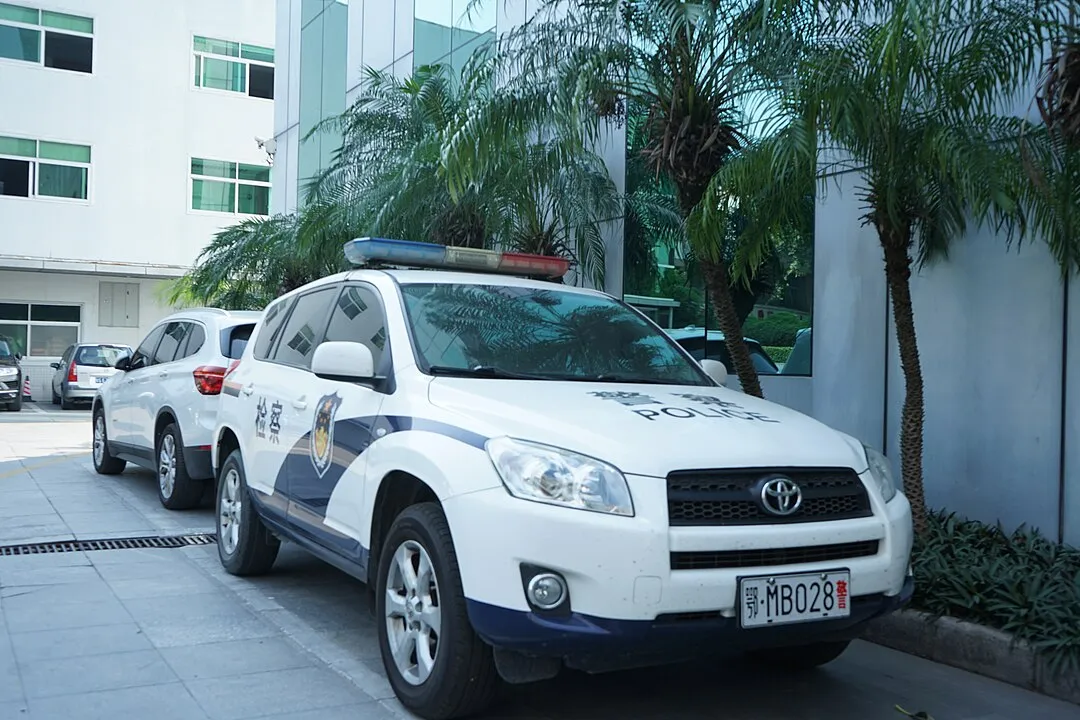
Global outreach by China’s internal security agencies is expanding. As China’s Global Security Initiative externalizes a concept of security focused on domestic stability and regime protection, the People’s Republic of China (PRC) has increased its efforts to train and build capacity among foreign law enforcement and internal security forces around the world, including across Asia, Africa, and Latin America. Foreign police training is one of the most concrete and measurable outcomes associated with the Global Security Initiative, as President Xi Jinping and other Chinese leaders have publicly committed to training thousands of foreign security officers in multiple high-profile appearances.
This paper examines China’s foreign police, security, and paramilitary training from 2000 to 2025. It draws on an original new dataset of nearly 900 trainings provided to at least 138 countries and places these trainings in the wider context of Chinese soft power, foreign policy objectives and projects such as the Global Security Initiative, broader patterns of Chinese security engagement, and Beijing’s narratives about China’s role as a global security provider.
The dataset highlights the scale, growth, breadth of regional and topical coverage, and functional intensity of China’s foreign police training efforts. A majority of the world’s countries have received police and domestic security training from China, giving Beijing a role in the internal security organs and policing practices of countries around the world. China’s provision of foreign police training increased before the COVID-19 pandemic, then paused, and has now begun to expand again, though publicly documented trainee numbers fall well short of China’s public commitments. Countries bordering China receive more police trainings, and a wide range of institutions inside the PRC are involved in providing such trainings, including some with clear regional specializations. Although China’s foreign police training efforts are most concentrated on its regional periphery, they increasingly extend to encompass most of the world, accumulating regional variations in emphasis that reflect the ways that regional security challenges mix with Chinese interests abroad.
China’s police training efforts mix relatively apolitical law enforcement capacity building and anti-crime training (such as counter-drug investigation) with more controversial training for forces involved in regime security and authoritarian repression, such as the Central African Republic’s presidential guard and the Black Berets in Cuba. Chinese writings emphasize the ability of foreign police training programs to improve the negative image of China’s police abroad; much of this work is generically described as capacity building, but there is also evidence that China may be deliberately downplaying or concealing aspects of its foreign police training work that might create political controversy or provide a basis for external criticism.
China’s foreign police training forms one of the major pillars of Beijing’s narrative that China has emerged as a major global security provider. Through these training programs, China’s internal security outreach shapes security institutions, practices, norms, technology use, and overall capabilities in recipient countries—thereby shaping those countries’ capacity both to enforce the rule of law and to carry out repression and state violence. Foreign police training programs are concrete lines of action that bolster the PRC’s diplomatic efforts to build new mechanisms of global law enforcement cooperation and to promote Chinese rhetoric about the PRC’s attractiveness as an exemplar of public safety. Foreign police training programs also help embed new, Chinese-led standards of security cooperation and policing tools into the practices of domestic security forces around the world—and in doing so, such activities bolster China’s narrative about what security is in today’s world, and who is best at providing it.
by Sheena Chestnut Greitens, Isaac B. Kardon, and Cameron Waltz
Published on November 13, 2025
Isaac B. Kardon, Ph.D., (孔适海博士) is a senior fellow for China studies at the Carnegie Endowment for International Peace. He is concurrently adjunct professor at Johns Hopkins SAIS, and was formerly assistant professor at the U.S. Naval War College (NWC), where he served as a research faculty member in the China Maritime Studies Institute.
Isaac’s research centers on the People’s Republic of China’s maritime power, with specialization in maritime disputes and the international law of the sea, Chinese global port development, China-Pakistan relations, and the People’s Liberation Army’s overseas basing. His writing appears in International Security, Security Studies, Foreign Affairs, the New York Times, the Naval War College Review, as well as other scholarly and policy publications. Isaac’s book, China’s Law of the Sea: The New Rules of Maritime Order (Yale, 2023) analyzes whether and how China is “making the rules” of regional and global order.
At Carnegie, Isaac is building on his foundation of research on China in the maritime domain to explore China’s role in the wider global commons. High seas, deep seabed, polar regions, and orbital space are among the “strategic frontier issues” prioritized by China’s leadership—and thus key sites to observe China’s interests in and influence on vital global rules, norms, and standards. China’s interest in leading the nascent regime for deep sea mining is a particular area of research focus. He is also continuing “past the pier” on his existing stream of research on PRC ports to further study China’s development of transport and communications infrastructure networks with dual civilian and military functions.
Isaac earned a Ph.D. in government from Cornell University, an M.Phil in modern Chinese studies from Oxford University, and a B.A. in history from Dartmouth College. He was a China & the World post-doctoral fellow at Princeton University, and has held visiting appointments at NYU School of Law, Academia Sinica, and the PRC National Institute for South China Sea Studies. He studied Chinese (Mandarin) at Peking University, Tsinghua University, Hainan University, and National Taiwan Normal University.
Photo Credit: By 廣九直通車 - Own work, CC BY-SA 4.0, https://commons.wikimedia.org/w/index.php?curid=63712548