"Xi Jinping’s Regime Maintenance Paradigm" - by CWP alum Yan Bennett
![Xi Jinping[a] (born 15 June 1953) is a Chinese politician who has been the general secretary of the Chinese Communist Party (CCP) and chairman of the Central Military Commission (CMC), and thus the paramount leader of China, since 2012. Xi has been serving as the seventh president of China since 2013. As a member of the fifth generation of Chinese leadership, Xi is the first CCP general secretary born after the establishment of the People's Republic of China (PRC).](/sites/cwp.sipa.columbia.edu/files/styles/cu_crop/public/content/News%20Articles%20Images/Xi_Jinping_2019.jpg.webp?itok=K7HGVuAp "Xi Jinping[a] (born 15 June 1953) is a Chinese politician who has been the general secretary of the Chinese Communist Party (CCP) and chairman of the Central Military Commission (CMC), and thus the paramount leader of China, since 2012. Xi has been serving as the seventh president of China since 2013. As a member of the fifth generation of Chinese leadership, Xi is the first CCP general secretary born after the establishment of the People's Republic of China (PRC).")
With Xi Jinping Thought (XJPT) now incorporated into the Chinese Communist Party’s Constitution, many questions have been raised on how this alters Party ideology, if at all, and what consequences this may have on the direction of the Party and the future of the nation. Derided in the West as ‘a personality cult without the personality,’ XJPT is often dismissed by Western observers because it appears to lack charisma of China’s greatest ideologues, Mao Zedong and Deng Xiaoping, and contains much less ideals that motivate or cultivate the development of a national ethos. International observers miss the point on XJPT, however, by insisting on comparative analysis that merely offers to explain how XJPT is different, if not inferior to existing political philosophies or previous Chinese political theories. We often want to compare XJPT as an ideology to other ideologies and find where it fails to meet our standards. Instead, we first need to examine XJPT without comparison to understand its purpose and effects before making value-laden normative statements. This also refers to making comparisons in general. How Xi is different or similar to Mao, how XJPT is different or similar to Confucianism, Marxism, or Western political traditions; these are unimportant at this stage of analysis. Once we acknowledge it as a novel paradigm, we can begin to understand its purpose and goals. This chapter proposes that XJPT is actually a novel, highly syncretic paradigm for the purpose of regime maintenance that acts as unifying and totalizing discourse leading the Chinese people into the 22nd century. This paradigm carefully curates domestic support and legitimacy through totalization of Party members and the Chinese people in order to achieve a triumphalist vision of China.
Chapter 2 Xi Jinping’s Regime Maintenance Paradigm - In: China under Xi Jinping Author: Yan Chang Bennett - Type: Chapter -- Pages: 36–60 - DOI: https://doi.org/10.1163/9789004691087_004
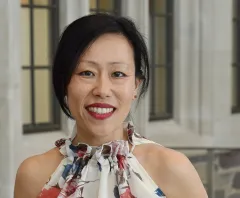
Yan Bennett teaches at the Elliott School of International Affairs at George Washington University where she instructs students on constitutional law, international law, diplomacy studies, international organizations, and global security. For academic year 2022-2023, Bennett is the Presidential Visiting Professor at Illinois State University where she will teach 21st Century American Diplomacy and the Diplomatic History of the United States.
Before coming to Princeton, Bennett was a foreign service officer with the U.S. Department of State and served overseas in China and Bosnia-Herzegovina. In China, she served as vice consul and had the opportunity to report on U.S. corporate labor practices, intellectual property issues, and the results of a municipal election in Guangdong Province. In Bosnia, Bennett served as special assistant to the ambassador and supported senior staff in achieving foreign policy objectives. She has received awards for superior performance from the State Department, including a personal commendation from Secretary Powell.
Bennett has a B.A. in Political Science and received an M.A. in International Affairs from the Elliot School at George Washington University. She holds a JD and practices in the areas of business and international law.
Photo Credit:
https://upload.wikimedia.org/wikipedia/commons/thumb/0/04/Xi_Jinping_%28November_2024%29_02.jpg/440px-Xi_Jinping_%28November_2024%29_02.jpg