"Why will China and Russia not form an alliance? The balance of beliefs in peacetime " - by CWP alum Kai He

The ongoing war in Ukraine has thrust China–Russia relations into the global spotlight, with both nations asserting their stance against forming a military alliance. This article introduces a novel ‘balance-of-beliefs’ framework, positing that the foundation of peacetime alliances lies in leaders' shared beliefs. Using operational code analysis, this study quantifies the philosophical and instrumental beliefs of leaders from the United States (Barack Obama), Australia (Tony Abbott), China (Xi Jinping) and Russia (Vladimir Putin) between 2013 and 2015, and includes additional comparison between Putin and Xi between 2016 and 2022. This research examines the essential role of aligned world-views on ‘the nature of the political universe’ (which we label a P-1 belief) and ‘the strategic approach to achieving political objectives’ (an I-1 belief). The findings reveal that such congruence is crucial for fostering like-minded alliances in peacetime, as evidenced by the US–Australia alliance. In contrast, the divergent P-1 beliefs of Xi and Putin hinder a Sino-Russian military alliance; yet, their aligned I-1 beliefs facilitate pragmatic cooperation on specific issues. This analysis underscores the need for US and European policy-makers to devise nuanced strategies in response to the evolving dynamics of a rising China and a resurgent Russia.
Huiyun Feng, Kai He - International Affairs, iiae184, https://doi.org/10.1093/ia/iiae184
Published: 19 August 2024
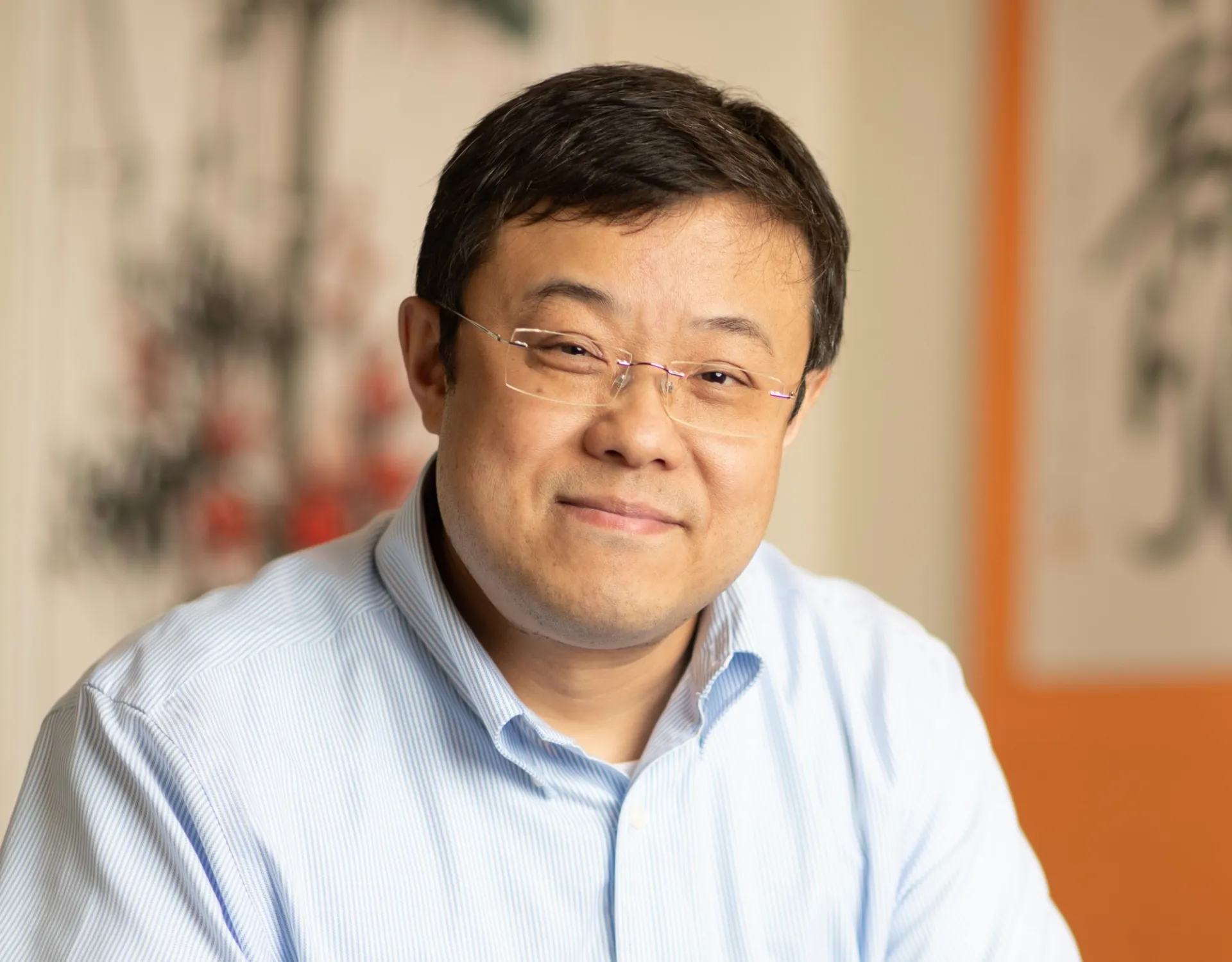
Kai He is Professor of International Relations and Director of the Centre for Governance and Public Policy, Griffith University, Australia. He was an Australian Research Council (ARC) Future Fellow (2017-2020). He is the author of "Institutional Balancing in the Asia Pacific: Economic Interdependence and China's Rise" (Routledge, 2009) and "China’s Crisis Behavior: Political Survival and Foreign Policy" (Cambridge, 2016). He is a co-author of "Prospect Theory and Foreign Policy Analysis in the Asia Pacific: Rational Leaders and Risky Behavior" (with Huiyun Feng, Routledge, 2013), and "How China Sees the World: Insights from Chinese International Relations Scholars" (with Huiyun Feng and Xiaojun Li, Palgrave, 2019). He is an editor/co-editor of "Contested Multilateralism 2.0 and Asian Security Dynamics" (Routledge 2020), "China’s Challenges and International Order Transition: Beyond 'Thucydides’s Trap'" (co-edited with Huiyun Feng, University of Michigan Press, 2020), "Chinese Scholars and Foreign Policy: Debating International Relations" (with Huiyun Feng and Xuetong Yan, Routledge, 2019), and "US-China Competition and the South China Sea Disputes" (with Huiyun Feng, Routledge, 2018). His forthcoming book includes "Contesting Revisionism: the United States, China, and Transformation of International Order" (with Steve Chan, Huiyun Feng, Weixing Hu, Oxford, 2021).
Photo Credit: https://pixabay.com/users/alexandra_koch-621802/