"The Upside of U.S.-Chinese Competition" - by CWP Kai He
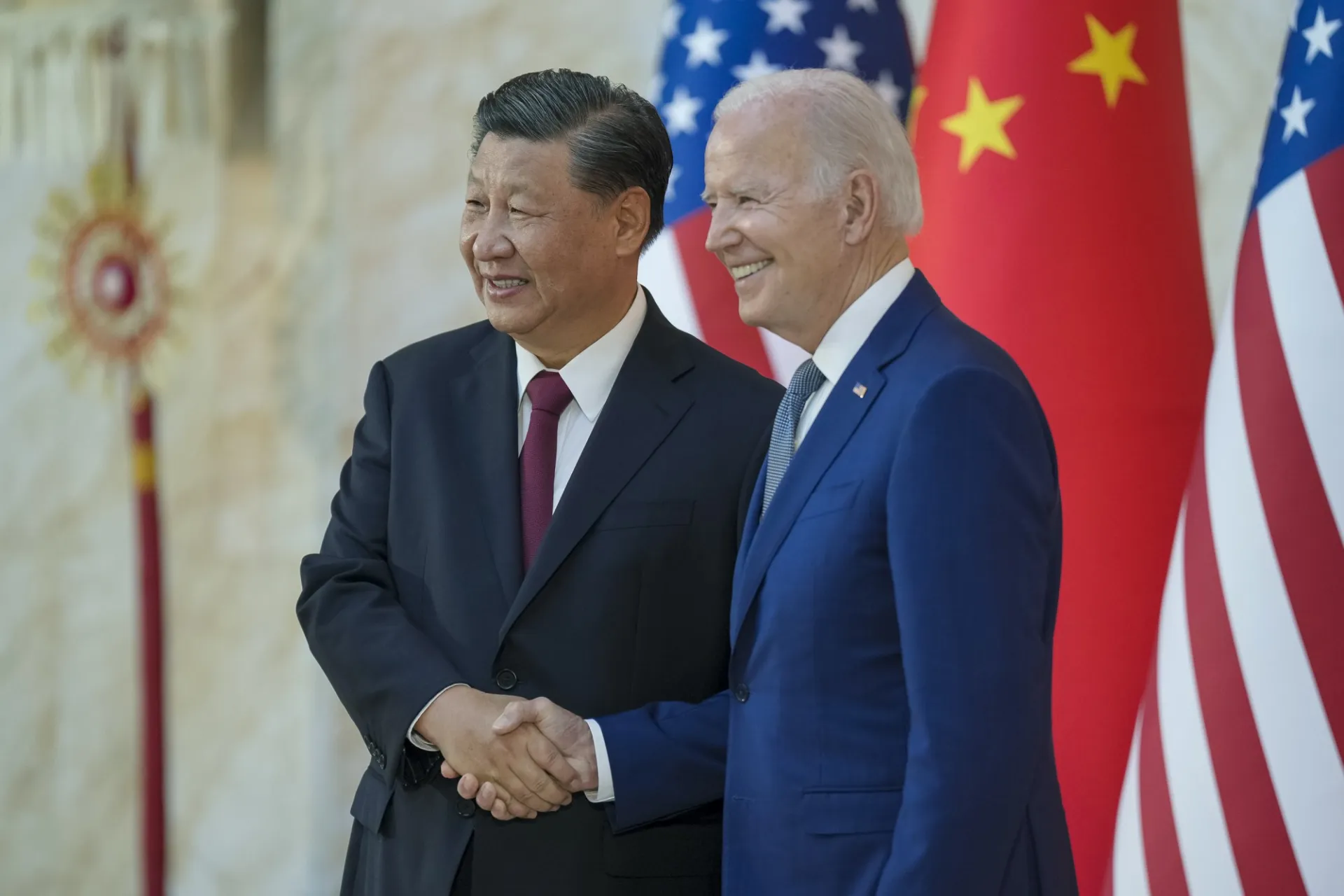
During the G-20 summit in Bali last November, U.S. President Joe Biden and Chinese President Xi Jinping emphasized the importance of responsibly managing the competition between their countries. “I absolutely believe there need not be a new Cold War,” Biden said. For his part, Xi stressed that the two countries share a common interest in “no confrontation and peaceful coexistence.” Recognizing the devastating consequences of military conflict, both leaders pledged to avoid it. Nevertheless, even if they can avoid conflict, the two countries are locked in a competition that will extend into the foreseeable future. As they navigate it, the rest of the world will look on nervously.
But there is a potential silver lining to U.S.-Chinese competition: the rise of “institutional balancing.” Unlike in traditional military balancing, whereby countries seek to equalize their power through arms buildups and defense alliances, institutional balancing involves countries seeking advantage by using the rules and norms associated with international institutions.
The Upside of U.S.-Chinese Competition: How Institutional Balancing Promotes Stability in Asia By Kai He July 14, 2023 - https://www.foreignaffairs.com/united-states/chinese-competition-asia-stability-institutional-balancing
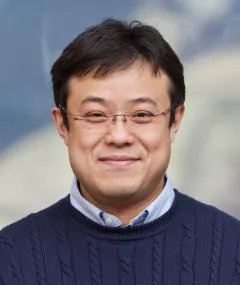
Kai He is Professor of International Relations and Director, Centre for Governance and Public Policy, Griffith University, Australia. He is a visiting Chair Professor of International Relations at the Zhou Enlai School of Government, Nankai University, China (2018-2020). He is currently an Australian Research Council (ARC) Future Fellow (2017-2020). He was a postdoctoral fellow in the Princeton-Harvard China and the World Program (2009-2010).
He is the author of Institutional Balancing in the Asia Pacific: Economic Interdependence and China's Rise (Routledge, 2009), Prospect Theory and Foreign Policy Analysis in the Asia Pacific: Rational Leaders and Risky Behavior (co-authored with Huiyun Feng, Routledge, 2013), and China’s Crisis Behavior: Political Survival and Foreign Policy (Cambridge, 2016). He is a co-editor (with Huiyun Feng) of US-China Competition and the South China Sea Disputes (Routledge, 2018).His peer-refereed articles have appeared in European Journal of International Relations, European Political Science Review, Political Science Quarterly, Review of International Studies, Security Studies, International Studies Review, International Politics, Cooperation and Conflict, Contemporary Politics, Asian Survey, The Pacific Review, Journal of Contemporary China, The Chinese Journal of International Politics, Asian Security, Asian Perspective, Australian Journal of Political Science, Australian Journal of International Relations, International Relations of the Asia Pacific, Issues and Studies, Strategic Studies Quarterly, and East Asia.
He received several internationally competitive fellowships and grants, including the Princeton-Harvard China and the World Program Postdoctoral Fellowship (2009-2010), a Lynde and Harry Bradley Foundation Research Fellowship (2009-2010), an EAI fellowship (2011-2012) from the East Asia Institute in Seoul, an Asia Studies Fellowship (2012) from the East-West Center in Washington D.C., and visiting fellowships (2014/2017) from the S. Rajaratnam School of International Studies, Nanyang Technological University, Singapore, and a policy-oriented research grant from the Korea Foundation, South Korea. His current research projects are funded by the MacArthur Foundation, USA (2016-2018) and Australian Research Council (2017-2020). the Australian Research Council [grant number FT160100355] and the John D.and Catherine T. MacArthur Foundation [grant number 16-1512-150509-IPS] for their support.
Photo Credit: By White House - https://twitter.com/WhiteHouse/status/1592291300778180608, Public Domain, https://commons.wikimedia.org/w/index.php?curid=125493381