"Understanding change in times of crises: US–China competition and the prospects for peaceful change" - by CWP alum Kai He

This essay explores the nature, causes, and prospects of three types of international order transitions: systemic, institutional, and systems transitions. It argues that peaceful change remains possible despite growing turbulence in the context of US–China competition. Historically, systemic transitions, marked by shifts in the distribution of power among great powers, were often driven by crises and wars. Today, however, nuclear deterrence, defensive military technologies, and the increasing agency of non-great powers create greater space for nonviolent systemic transitions. At the institutional level, states are pursuing strategies such as soft balancing, economic statecraft, and informal multilateralism to manage great power competition and shape rules, norms, and practices, fostering the possibility of peaceful institutional transitions in global governance. Looking further ahead, the rise of artificial intelligence and other emerging technologies may diffuse power beyond states, empowering corporations, NGOs, and other non-state actors. This could drive a more profound systems transition, fundamentally altering the structure and actors of the international order itself. While risks of technological overreach and geopolitical conflicts persist, this essay concludes that the trend toward low-violence great power rivalry, the growing agency of non-great powers, and the diffusion of critical technologies can collectively steer the international system toward more peaceful transitions in the context of US–China competition than in previous eras.
Kai He, Anders Wivel, Markus Kornprobst, T V Paul, Understanding change in times of crises: US–China competition and the prospects for peaceful change, The Chinese Journal of International Politics, Volume 19, Issue 2, Summer 2026, Pages 100–118, https://doi.org/10.1093/cjip/poaf022
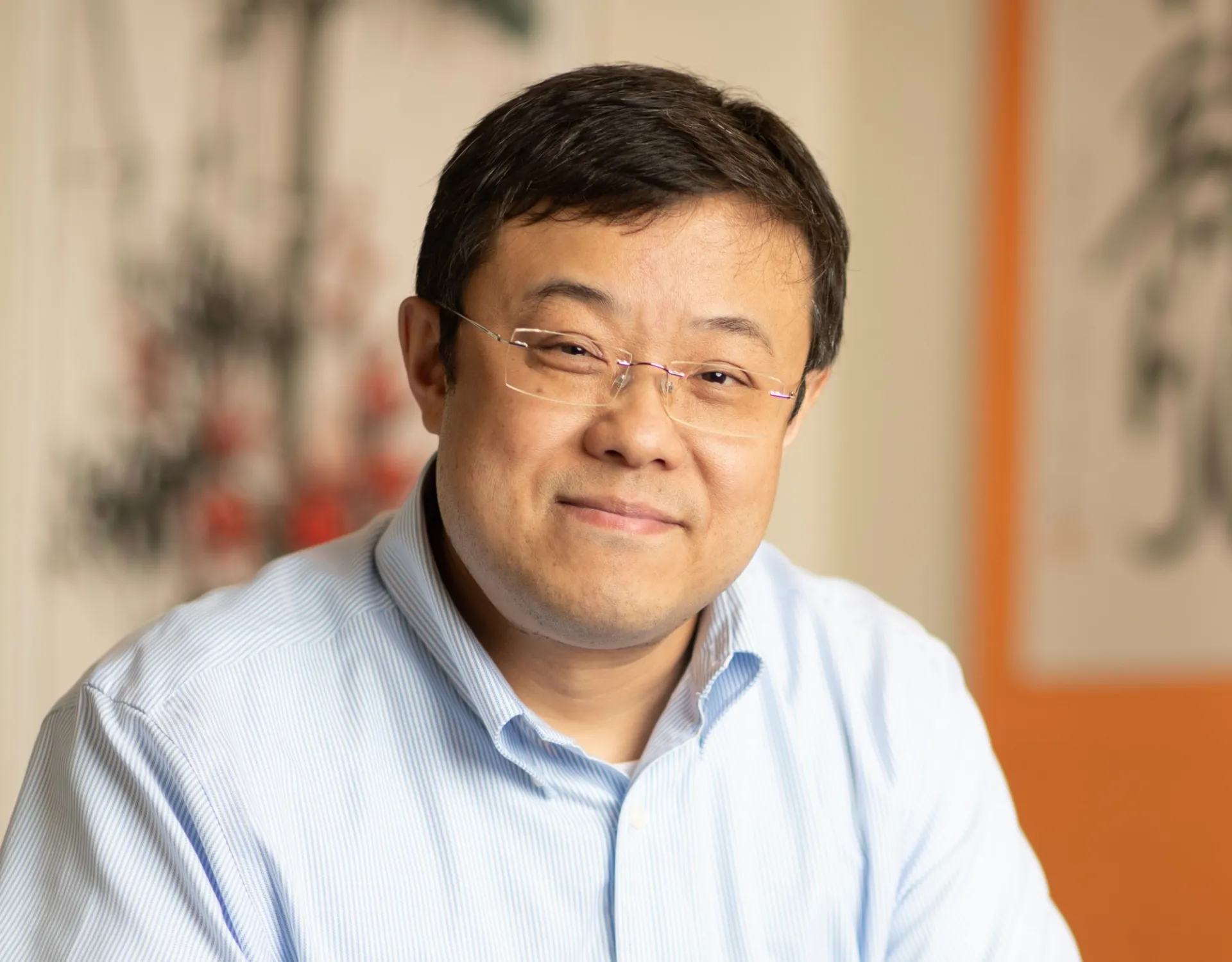
Kai He is Professor of International Relations at the School of Government and International Relations, Griffith University, Australia. He served as a non-resident Senior Scholar at the United States Institute of Peace (2022-2023), an Australian Research Council (ARC) Future Fellow (2017-2020), and a postdoctoral fellow in the Princeton-Harvard China and the World Program (2009-2010). He is a co-editor of “Cambridge Elements in Indo-Pacific Security,” a short-book series published by Cambridge University Press. He has authored or co-authored seven books and edited or co-edited eight volumes. His new books include The Upside of U.S.-Chinese Strategic Competition: Institutional Balancing and Order Transition in the Asia Pacific (co-authored with Huiyun Feng, Cambridge University Press, 2025) and International Organizations and Peaceful Change in World Politics (co-edited with T.V. Paul and Anders Wivel, Cambridge, 2025). He received the 2025 James Rosenau Award from the International Studies Association.
His peer-refereed articles have appeared in European Journal of International Relations, European Political Science Review, International Affairs, International Studies Review, International Politics, Political Science Quarterly, Review of International Studies, Security Studies, Cooperation and Conflict, Contemporary Politics, Ethics & International Affairs, Asian Survey, The Pacific Review, Journal of Contemporary China, The Chinese Journal of International Politics, Asian Security, Asian Perspective, Australian Journal of Political Science, Australian Journal of International Relations, International Relations of the Asia Pacific, Issues and Studies, Strategic Studies Quarterly, East Asia, Asia Policy, Cambridge Review of International Affairs, and Journal of Contemporary East Asian Studies.
He received several internationally competitive fellowships and grants, including the Princeton-Harvard China and the World Program Postdoctoral Fellowship (2009-2010), a Lynde and Harry Bradley Foundation Research Fellowship (2009-2010), an EAI fellowship (2011-2012) from the East Asia Institute in Seoul, an Asia Studies Fellowship (2012) from the East-West Center in Washington D.C., and visiting fellowships (2014/2017) from the S. Rajaratnam School of International Studies, Nanyang Technological University, Singapore, and policy-oriented research grants from the Korea Foundation, South Korea (2016/ 2019). His research projects are funded by the MacArthur Foundation, USA (2016-2018) and the Australian Research Council (2017-2020; 2021-2023).
Photo Credit: https://academic.oup.com/cjip/article/19/2/100/8572211