"Trump‑Xi summit: 3 ways the US and China can compete without going to war" - by CWP alum Kai He
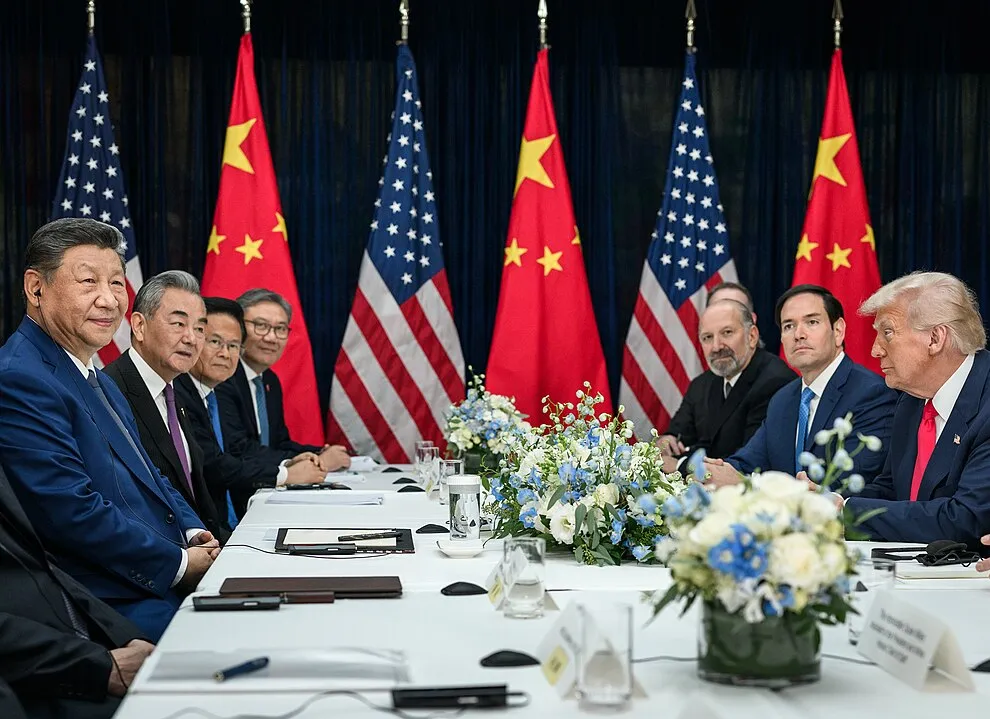
US President Donald Trump’s visit to Beijing this week may ease tensions at the margins of the US–China rivalry. But it will not change a central fact: neither side can escape the rivalry, and neither side can decisively win it.
The biggest challenge for Trump and Chinese leader Xi Jinping is whether they can compete without turning the world’s most consequential bilateral relationship into its most dangerous one. A war is not inevitable.
If Washington and Beijing want to keep their competition peaceful, they must try to accomplish a few basic things:
- preserve military deterrence without turning it into provocation
- channel their rivalry into institutions and public goods, such as infrastructure development, rather than a military confrontation
- keep ideology from hardening every disagreement into a zero-sum struggle.
So, how can this be done?
Published: May 13, 2026 1:46am EDT
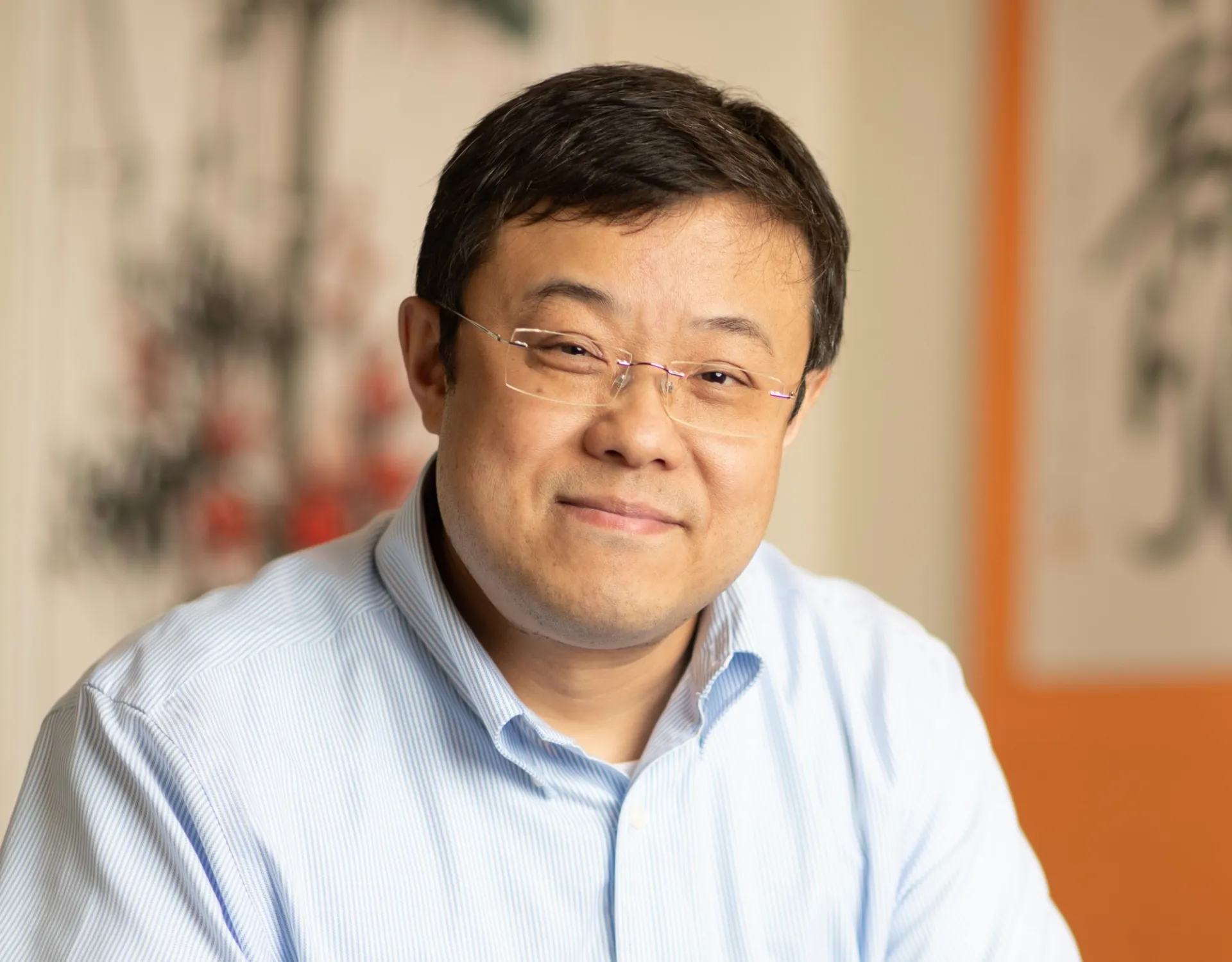
Kai He is Professor of International Relations at the School of Government and International Relations, Griffith University, Australia. He served as a non-resident Senior Scholar at the United States Institute of Peace (2022-2023), an Australian Research Council (ARC) Future Fellow (2017-2020), and a postdoctoral fellow in the Princeton-Harvard China and the World Program (2009-2010). He is a co-editor of “Cambridge Elements in Indo-Pacific Security,” a short-book series published by Cambridge University Press. He has authored or co-authored seven books and edited or co-edited eight volumes. His new books include The Upside of U.S.-Chinese Strategic Competition: Institutional Balancing and Order Transition in the Asia Pacific (co-authored with Huiyun Feng, Cambridge University Press, 2025) and International Organizations and Peaceful Change in World Politics (co-edited with T.V. Paul and Anders Wivel, Cambridge, 2025). He received the 2025 James Rosenau Award from the International Studies Association.
His peer-refereed articles have appeared in European Journal of International Relations, European Political Science Review, International Affairs, International Studies Review, International Politics, Political Science Quarterly, Review of International Studies, Security Studies, Cooperation and Conflict, Contemporary Politics, Ethics & International Affairs, Asian Survey, The Pacific Review, Journal of Contemporary China, The Chinese Journal of International Politics, Asian Security, Asian Perspective, Australian Journal of Political Science, Australian Journal of International Relations, International Relations of the Asia Pacific, Issues and Studies, Strategic Studies Quarterly, East Asia, Asia Policy, Cambridge Review of International Affairs, and Journal of Contemporary East Asian Studies.
He received several internationally competitive fellowships and grants, including the Princeton-Harvard China and the World Program Postdoctoral Fellowship (2009-2010), a Lynde and Harry Bradley Foundation Research Fellowship (2009-2010), an EAI fellowship (2011-2012) from the East Asia Institute in Seoul, an Asia Studies Fellowship (2012) from the East-West Center in Washington D.C., and visiting fellowships (2014/2017) from the S. Rajaratnam School of International Studies, Nanyang Technological University, Singapore, and policy-oriented research grants from the Korea Foundation, South Korea (2016/ 2019). His research projects are funded by the MacArthur Foundation, USA (2016-2018) and the Australian Research Council (2017-2020; 2021-2023).
Photo Credit: https://theconversation.com/trump-xi-summit-3-ways-the-us-and-china-can-compete-without-going-to-war-281328