"Theorizing Hedging" - by CWP alum Cheng-Chwee Kuik
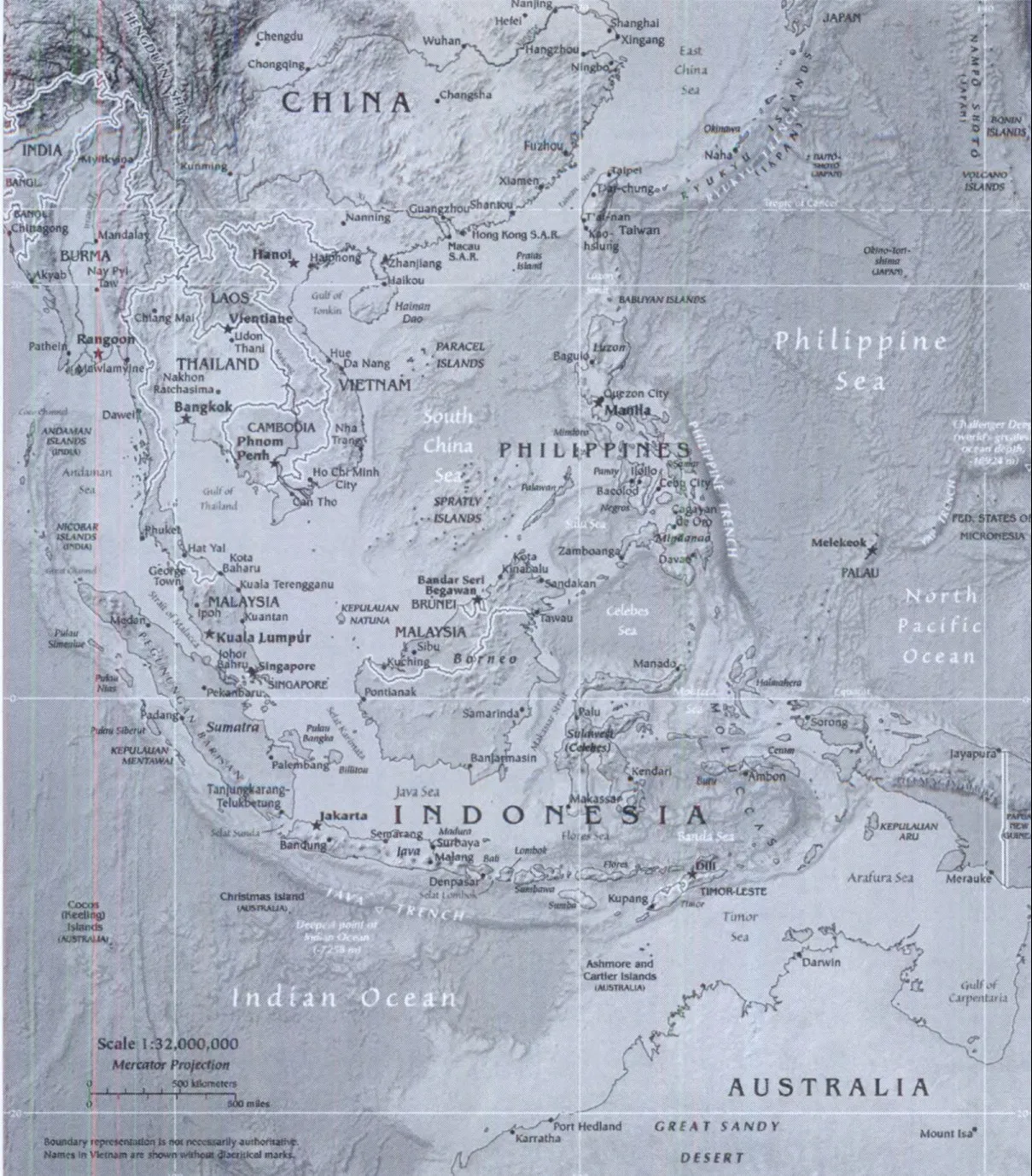
Hedging, not balancing or bandwagoning, is the modal behavior of the non-great powers under uncertainty. Despite its prevalence as a state alignment choice, hedging has remained an undertheorized subject in the study of international relations. This Element presents one of the first theoretical works on strategic hedging in world politics. Tracing the multidisciplinary roots of hedging as an instinctive human behavior, I contend that sovereign actors hedge in ways similar to commodity traders, farmers, fund managers, academic writers, politicians, and individuals in competitive organizations under conditions of high-stakes and high-uncertainties. I then develop a two-level theoretical framework to explain when, how and why states hedge, rather than balance or bandwagon. Using selected Indo-Pacific countries as empirical cases, I conclude that while structural-level conditions largely explain the shifts in alignment decisions (e.g., from non-hedging to hedging, or vice versa), domestic factors explain the variations in hedging choices.
1. Kuik C-C. Theorizing Hedging: Explaining Shifts and Variations in Alignment Choices. Cambridge University Press; 2026.
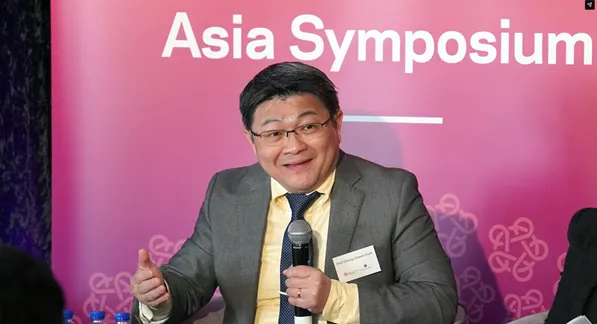
Cheng-Chwee Kuik (郭清水) is Professor of International Relations at the Institute of Malaysian and International Studies (IKMAS), National University of Malaysia (UKM). He is concurrently a Non-resident Fellow at Johns Hopkins’ Foreign Policy Institute. Previously, Cheng-Chwee was a Postdoctoral Research Associate at the Princeton-Harvard “China and the World” Program and a Visiting Research Fellow at Oxford University’s Department of Politics and International Relations. Professor Kuik’s research focuses on smaller state foreign policy, Asian security, and international relations. He served as Head of the Writing Team for the Government of Malaysia’s inaugural Defence White Paper (2020). Cheng-Chwee’s publications have appeared in peer-reviewed journals and edited books. Dr. Kuik’s essay, “The Essence of Hedging”, won the Michael Leifer Memorial Prize awarded by the Institute of Southeast Asian Studies. He is co-editor (with Alice Ba and Sueo Sudo) of Institutionalizing East Asia (2016), co-author (with David M. Lampton and Selina Ho) of Rivers of Iron: Railroads and Chinese Power in Southeast Asia (2020), and author of the chapter on ASEAN and Southeast Asian states for David Shambaugh’s International Relations of Asia, 3rd edition (2022). His current projects include: hedging in international relations, elite legitimation and foreign policy choices, and the geopolitics of infrastructure connectivity cooperation. Cheng-Chwee serves on the editorial boards/committees of Contemporary Southeast Asia, Australian Journal of International Affairs, Asian Politics and Policy, International Journal of Asian Studies, and East Asian Policy. He is a member of the newly established Council on Indo-Pacific Relations (CIPR), EWC in Washington (EWCW). He holds an M.Litt. from the University of St. Andrews and a PhD from Johns Hopkins University. He can be contacted at [email protected].
Photo Credit: https://www.cambridge.org/core/elements/theorizing-hedging/6C36B1041109582E9BFEE33B0841B79E