"Southeast Asian Responses to U.S.-China Tech Competition" - by CWP alum Cheng-Chwee Kuik

The economy-security nexus is at the core of U.S.-China technology competition. Both powers view economy and security as interconnected; both consider technology as the determining factor in turning this nexus to their advantage. Both aim to win the tech competition by seeking different forms of “decoupling” from each other—the United States proactively, China reactively. Simultaneously, however, both are pursuing an integrative policy towards other states—the United States with “likeminded” nations, China primarily with Global South countries. Southeast Asia, which is at the center of these competing courtships, faces both opportunities and risks. This article focuses on the policy choices of selected ASEAN states’ regarding 5G wireless technology as an instance of the responses of non-big powers to big-power tech competition. Its findings indicate that while the key ASEAN states have all responded by hedging, there are significant differences: Vietnam and to some extent Singapore have hedged more heavily (than Indonesia, Malaysia and other states) by excluding China from their 5G networks, but continued to engage China in other cooperation. Why do Southeast Asian states hedge differently vis-a-vis hi-tech competition? The article argues that the states’ responses are attributable to the politically-defined economy-security tradeoffs, as driven primarily by their respective ruling elites’ pathways of legitimation and other internal attributes.
Southeast Asian Responses to U.S.-China Tech Competition: Hedging and Economy-Security Tradeoffs -
- Published: 06 February 2024 - https://link.springer.com/article/10.1007/s11366-024-09882-6
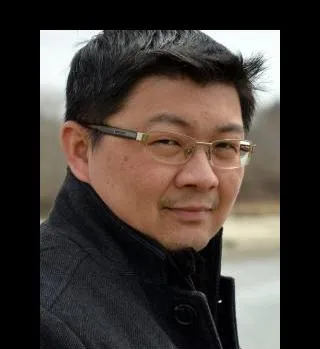
Dr. Kuik Cheng-Chwee is Professor of International Relations and Head of the Centre for Asian Studies, Institute of Malaysian and International Studies, National University of Malaysia (UKM). He is concurrently a non-resident Senior Fellow at Johns Hopkins University’s Foreign Policy Institute (FPI). Previously, he was a Postdoctoral Research Associate at the Princeton-Harvard “China and the World” (CWP) Program and a Visiting Research Fellow at Oxford University. Professor Kuik’s research focuses on smaller-state foreign and defence policies, Asian security, and international relations. He serves as a member of the Consultative Council on Foreign Policy, Malaysian Ministry of Foreign Affairs. Cheng-Chwee is a regular invited speaker to international conferences and closed-door policy roundtables. Cheng-Chwee’s publications have appeared in such peer-reviewed journals as International Affairs, Pacific Review, Journal of Contemporary China, Chinese Journal of International Politics, and Contemporary Southeast Asia. His essay, “The Essence of Hedging”, won the Michael Leifer Memorial Prize awarded by the Institute of Southeast Asian Studies. He is co-author (with David Lampton and Selina Ho) of Rivers of Iron: Railroads and Chinese Power in Southeast Asia (2020) and co-editor (with Alice Ba and Sueo Sudo) of Institutionalizing East Asia (2016). His current projects include: hedging in international relations, domestic politics and foreign policy choices, and the geopolitics of connectivity cooperation. Cheng-Chwee serves on the editorial boards of Contemporary Southeast Asia, Australian Journal of International Affairs, Asian Politics and Policy, International Journal of Asian Studies, and East Asian Policy. He holds an M.Litt. from the University of St. Andrews, and a PhD from the Johns Hopkins University’s School of Advanced International Studies. Cheng-Chwee can be contacted at [email protected].
Photo Credit: https://pixabay.com/users/akitada31-172067/