
"A South China Sea Conflict And The U.S.–ROK Alliance" - By CWP Alum Joel Wuthnow
China’s “gray zone” tactics to intimidate rival claimants in the South China Sea have become a U.S. concern. Against a backdrop of a recently deepening U.S.–Philippines alliance, this article suggested a gray zone conflict scenario in which China blockades Filipino resupply vessels for Filipino marines on the Sierra Madre at Second Thomas Shoal in a fictional late 2020s environment. In this case, the Philippines would likely request armed U.S. escorts for its resupply vessel. The United States. can formulate a middle-of-the-road position centered on diplomatic condemnation against China’s provocations, between a strong response option and inaction to this gray zone conflict. Also, in this context, the United States would welcome the ROK’s diplomatic and economic support. For example, the United States would expect the ROK to participate in U.S. diplomatic efforts by signing a joint statement through the Quad-Plus. In addition, the United States would also anticipate ROK assistance to help the Philippines cope with Chinese economic retaliation in the gray zone crisis.
The Korean Journal of Defense Analysis - 약어 : KJDA - 2022, vol.34, no.4, pp.657 - 670
DOI : 10.22883/kjda.2022.34.4.007 - 발행기관 : 한국국방연구원 - 연구분야 : 정치외교학 - Copyright © 한국국방연구원
Dr. Joel Wuthnow is a senior research fellow in the Center for the Study of Chinese Military Affairs within the Institute for National for Strategic Studies at NDU. His research areas include Chinese foreign and security policy, Chinese military affairs, U.S.-China relations, and strategic developments in East Asia. In addition to his duties in INSS, he also serves as an adjunct professor in the Edmund A. Walsh School of Foreign Service at Georgetown University.
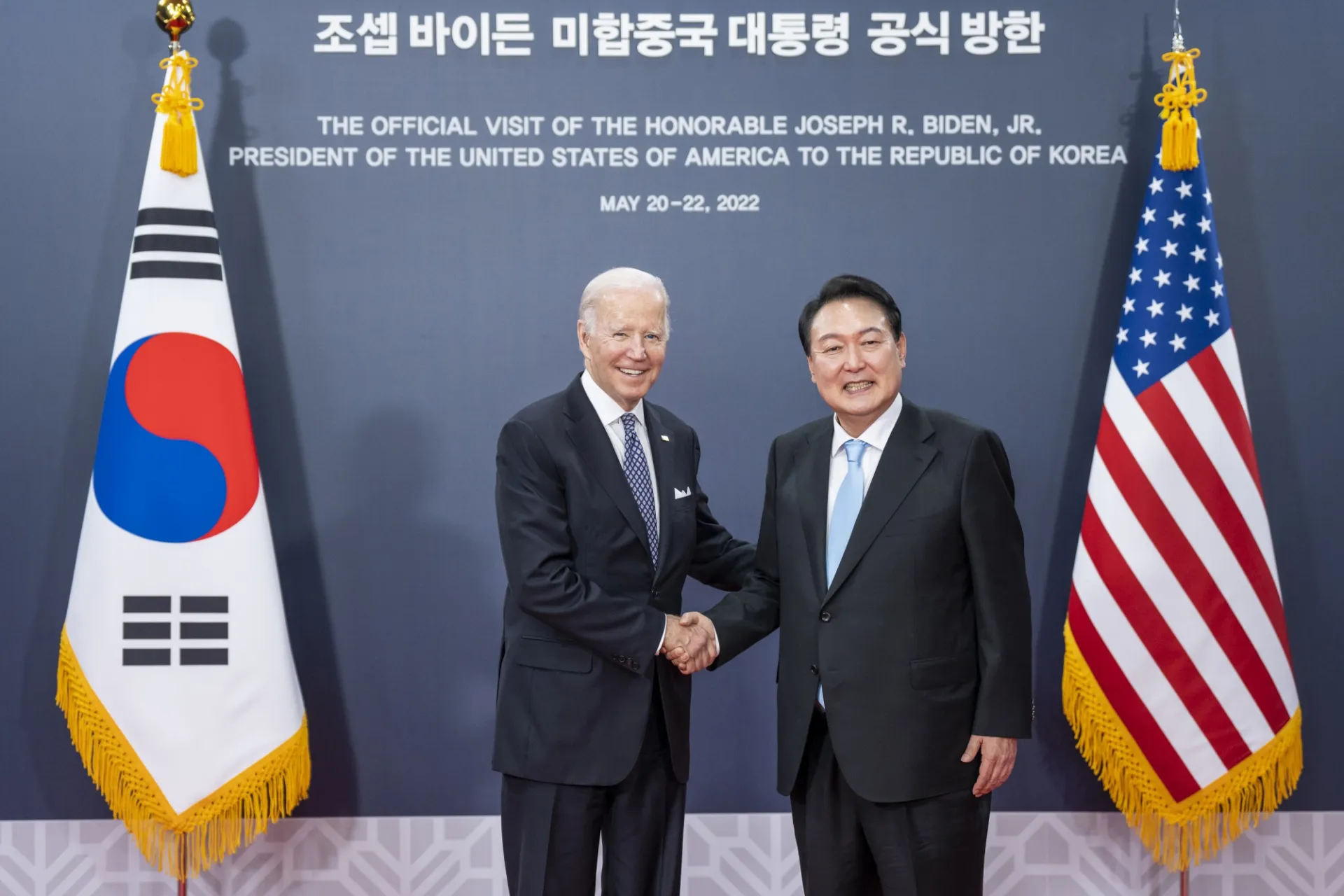
Photo Credit: By Office of the President of the United States - https://twitter.com/POTUS/status/1528059302795165696, Public Domain, https://commons.wikimedia.org/w/index.php?curid=118221060