'Soft balancing in the regions: causes, characteristics and consequences' - By C&WP alum Kai He

US decline and retrenchment is increasing the importance of regional dynamics across the international system. Over the past decade, International Relations scholars have described and conceptualized this development variously as ‘de-centred globalism’, a ‘multi-order world’, a ‘multiplex world’ or a multicultural ‘no one's world’, but the links between the regional and global levels and the roles and functions of regional institutions in power politics continue to be poorly understood. This special section uses the analytical lens of soft balancing—that is, attempts at restraining a threatening power through diplomatic and institutional delegitimation—to explore these links. Soft balancing has been used extensively to understand developments at the great power level, but its focus on diplomatic and institutional strategies holds considerable potential for explaining how rising powers, middle powers and smaller states seek to navigate the emerging international order. Contributors to the section discuss developments in the Indo-Pacific, central Asia, Europe and BRICS to answer questions such as: what are the characteristics of soft balancing in the regions? How do regional actors apply different soft balancing strategies? When and under what conditions will soft balancing strategies be effective? What is their impact on regional and global orders? This introduction offers an overview of soft balancing in theory and practice and their relevance to the world's regions.
International Affairs, Volume 101, Issue 1, January 2025, Pages 3–15, https://doi.org/10.1093/ia/iiae286
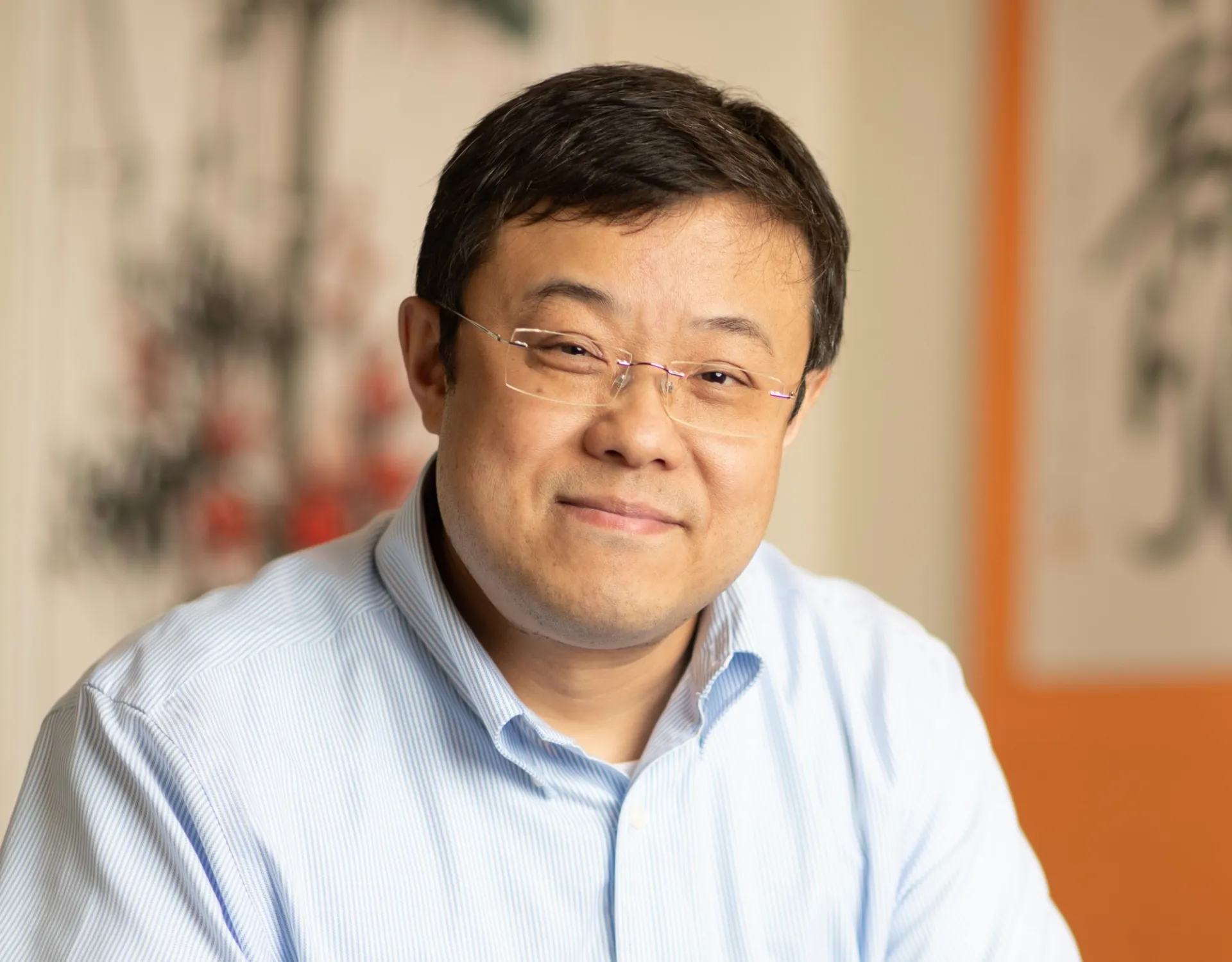
Kai He is Professor of International Relations and Director of the Centre for Governance and Public Policy, Griffith University, Australia. He was an Australian Research Council (ARC) Future Fellow (2017-2020). He is the author of "Institutional Balancing in the Asia Pacific: Economic Interdependence and China's Rise" (Routledge, 2009) and "China’s Crisis Behavior: Political Survival and Foreign Policy" (Cambridge, 2016). He is a co-author of "Prospect Theory and Foreign Policy Analysis in the Asia Pacific: Rational Leaders and Risky Behavior" (with Huiyun Feng, Routledge, 2013), and "How China Sees the World: Insights from Chinese International Relations Scholars" (with Huiyun Feng and Xiaojun Li, Palgrave, 2019). He is an editor/co-editor of "Contested Multilateralism 2.0 and Asian Security Dynamics" (Routledge 2020), "China’s Challenges and International Order Transition: Beyond 'Thucydides’s Trap'" (co-edited with Huiyun Feng, University of Michigan Press, 2020), "Chinese Scholars and Foreign Policy: Debating International Relations" (with Huiyun Feng and Xuetong Yan, Routledge, 2019), and "US-China Competition and the South China Sea Disputes" (with Huiyun Feng, Routledge, 2018). His forthcoming book includes "Contesting Revisionism: the United States, China, and Transformation of International Order" (with Steve Chan, Huiyun Feng, Weixing Hu, Oxford, 2021).
Photo credit: https://pixabay.com/users/markthomas-3675305/