"Public Trust in Global AI Governance Across Geopolitical Rivals" - by CWP alum Xiaojun Li

The global governance of artificial intelligence (AI) depends on coordination among national governments, international organizations, and non-state actors. While existing research has mapped the institutional complexity of the emerging AI regime, public trust in the stakeholders involved remains underexplored. This study addresses this gap using parallel surveys in the United States and China, two leading AI powers locked in strategic rivalry. Results show that respondents in both countries express the highest levels of trust in their own government and the lowest in their geopolitical rival, with other actors such as the European Union, tech firms, and research institutes falling in between. These patterns reflect how geopolitical competition and intergroup dynamics shape public trust, posing challenges for inclusive and cooperative governance in contested global domains such as AI. At the same time, individuals who view AI as socially beneficial and who support international cooperation report higher trust across a broad set of actors, including rivals. These findings illuminate systematic patterns in public opinions that condition the political viability of global AI governance and suggest that narratives emphasizing shared benefits and collaboration may help bridge trust gaps.
First published: 28 October 2025 - https://doi.org/10.1111/1758-5899.70105
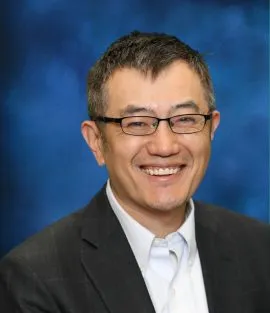
Xiaojun (pronounced “shee·ow ji·win”) received his Ph.D. in Political Science from Stanford University and joined the department in 2013. He is currently Associate Professor of Political Science at UBC and non-resident scholar at the 21st Century China Centre at UC San Diego School of Global Policy and Strategy. He has also held visiting positions at Harvard University’s Fairbank Center for Chinese Studies (2014-2015), Fudan Development Institute (2016), the East-West Center (2018), and the ISEAS–Yusof Ishak Institute (2021).
His previous and ongoing research on international and comparative political economy can be broadly divided into three research programs that investigate (1) the impact of domestic politics on the process and content of foreign economic and security policies, (2) the impact of global supply chains on trade and investment, and (3) the political economy of trade liberalization in developing and post-communist countries. In all of these research programs, he uses China as the primary case of inquiry and employs a variety of methods, including interviews, archival research, survey experiment, and large-N analysis.
His recent books include Token Forces: How Tiny Troop Deployments became Ubiquitous in UN Peacekeeping (Cambridge University Press 2022), Fragmenting Globalization: The Politics of Preferential Trade Liberalization in China and the United States (University of Michigan Press 2021), and How China Sees the World: Insights from China’s International Relations Scholars (Palgrave 2019). His articles have appeared in general political science journals such as Journal of Politics and Political Science Research and Methods, internatioanl relations journals such as International Affairs and International Studies Quarterly, area studies journals such as Asian Survey, China Quarterly, and Pacific Affairs, as well as interdisciplinary journals such as Business and Politics, Regulation and Governance, and Studies in Comparative International Development. His research has received grants and awards from such organizations as the Social Science and Humanities Research Council of Canada, the National Science Foundation of the United States, the American Political Science Association, the International Studies Association, the Association of Chinese Political Studies, and the Chiang Ching-Kuo Foundation.
Photo Credit: https://onlinelibrary.wiley.com/doi/full/10.1111/1758-5899.70105
By JPxG - DALL-E 3, Public Domain, https://commons.wikimedia.org/w/index.php?curid=144161107