"The PLA’s Loyalty and the Future of the CCP" - by Yan Bennett

The world watches with caution as the two preeminent world powers, the United States and the People’s Republic of China, navigate an era of intensifying competition. Since the end of the Second World War, the United States has served as the center of gravity for geopolitics, economics, and military might. While the Soviet Union emerged as a formidable rival during the Cold War, the post-Cold War era identifies China as the primary state to watch in the contest for leadership in the 21st century.
While China presents the outward appearance of a “normal” state—complete with executive, legislative, and judicial branches—it is unique as a party-state led exclusively by the Chinese Communist Party (CCP or Party). Since routing the Nationalists from mainland China in 1949, the CCP has maintained uninterrupted rule through five distinct leadership eras: Mao Zedong, Deng Xiaoping, Jiang Zemin, Hu Jintao, and now Xi Jinping. Each Party leader has had distinct styles that have manifested in different objectives and outcomes. While the country has endured massive transitions and upheavals due to leadership transitions, two pillars have remained constant: the Party and its armed wing, the People’s Liberation Army (PLA).
YAN CHANG BENNETT &
BRENDAN MIRRA
March/April 2026
Published on March 02, 2026
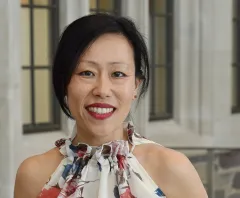
Dr. Yan Chang Bennett is a seasoned subject-matter expert in foreign policy and international law, contributing to academic scholarship and practical applications of international affairs. Currently serving as the Deputy Chair of Global Issues (KCK, Inc) at the U.S. Department of State’s Foreign Service Institute, Dr. Bennett shapes the education of diplomats on key global and transnational issues critical to American foreign policy. With a rich background that includes experience as a tenured Foreign Service Officer serving in Singapore, China, Bosnia-Herzegovina, and bridge assignments at the Department, she has deep practical experience in political/economic issues as well as front office experience as Special Assistant to a U.S. Ambassador.
Following her Foreign Service career, Dr. Bennett pivoted to a career in higher education, including research and scholarship on American foreign policy, contemporary Chinese politics, international law and multilateralism in the 21st Century. Concurrent to her work at FSI, she teaches at the Elliott School of International Affairs at George Washington University and the School of International Service at American University on such courses as Law and Diplomacy and UN and the International System, the UN Reimagined, China’s Global Ambitions, and International Law. Dr. Bennett also teaches Chinese Politics, Chinese Policy, and the Belt and Road Initiative for other government clients. Previously, she has taught 21st Century U.S. Diplomacy and the History of American Diplomacy at Illinois State University. At Princeton University, Dr. Bennett implemented programs on the study of China and a study abroad seminar to China. Dr. Bennett’s work is complemented by her prolific scholarship on U.S.-China relations and global security, making her an invaluable resource for students seeking to gain a deeper perspective on foreign policy, the international system, and U.S.-China relations. She holds an MA in international affairs from the Elliott School, a JD in law, and a PhD in American diplomatic history.
Photo Credit: https://foreignanalysis.com/the-plas-loyalty-and-the-future-of-the-ccp/