
"The “One China” Framework At 50 (1972–2022): The Myth Of “Consensus” And Its Evolving Policy Significance" - By CWP Alum Adam P. Liff & Dalton Lin
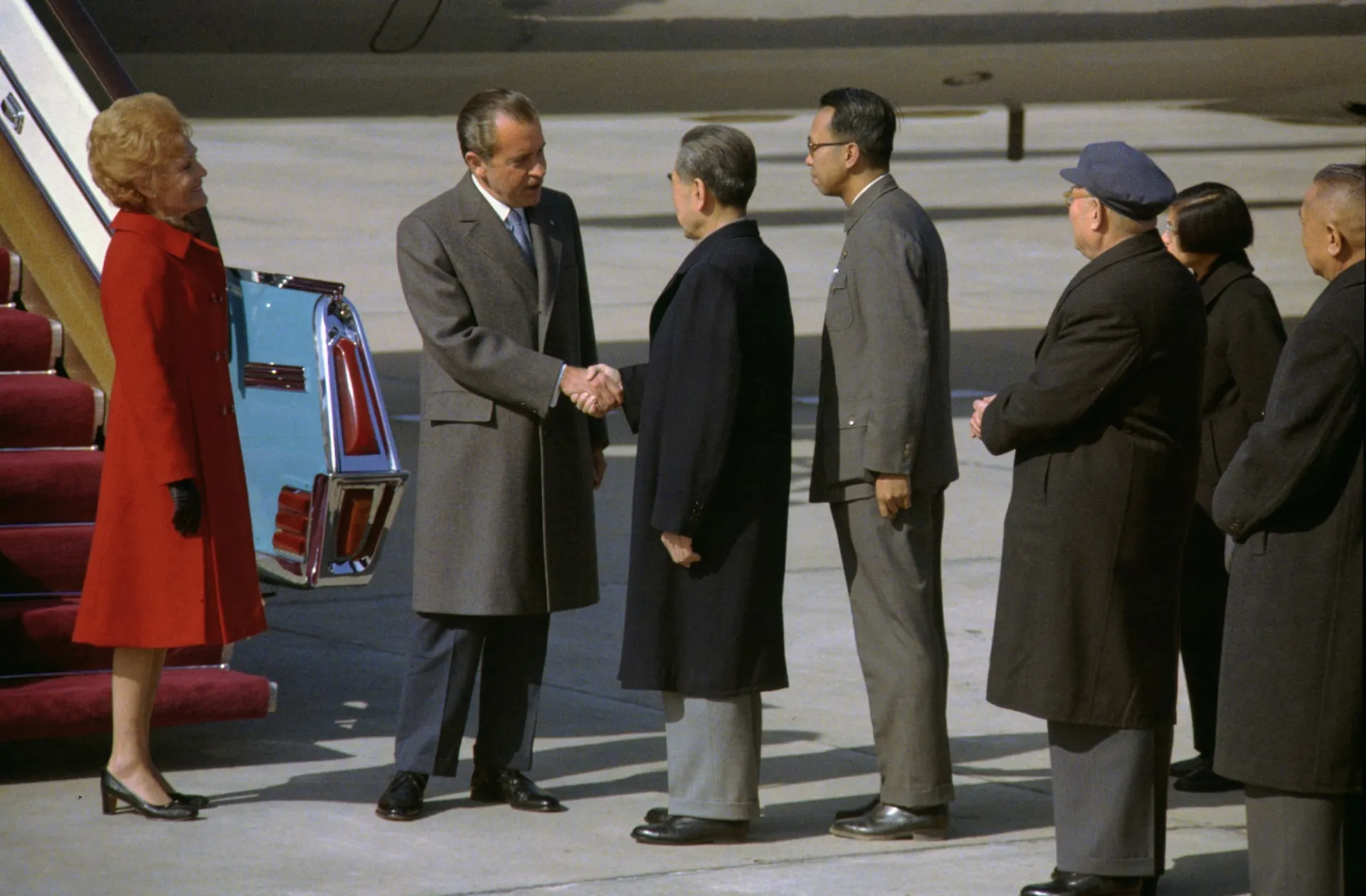
This lead article surveys the history and evolving policy legacies of the “one China” framework 50 years after US President Richard Nixon's historic 1972 visit to China. It begins by introducing key concepts and highlighting the crucial difference between Beijing's self-defined “one-China principle” and the US's, Japan's and key other countries’ variable “one China” policies as it relates to Taiwan. It argues that three seminal 1970s developments consolidated the “one China” framework as an informal institution of international politics. The ambiguity baked in by Cold War-era geopolitical necessity provided flexibility sufficient to enable diplomatic breakthroughs between erstwhile adversaries, but also planted seeds for deepening contestation and frictions today. Recent developments – especially Taiwan's democratization and Beijing's increasingly bold and proactive assertion of its claim to sovereignty over Taiwan – have transformed incentive structures in Taipei and for its major international partners. The net effect is that the myth of “consensus” and the ambiguities enabling the framework's half-century of success face unprecedented challenges today.
摘要
本篇专节的首文回顾了尼克松 1972 年历史性访华 50 年后,“一个中国”框架的发展和政策遗产。它首先定义几个贯串专节的关键概念,重点强调了中华人民共和国政府主张的“一个中国原则”与美国、日本和其他主要国家的“一个中国”政策之间的关键区别。本文指出 1970 年代三个开创性的发展如何巩固了“一个中国”框架作为国际政治的非正式机制。“一个中国”框架内含的模糊性为昔日冷战对手之间的外交突破提供了足够的灵活性,但也为今日升高的竞争和摩擦埋下了种子。最终结果是,支撑该框架半个世纪成功的模糊性现正面临着前所未有的挑战。
Professor Adam P. Liff is Associate Professor of East Asian International Relations at Indiana University’s Hamilton Lugar School of Global & International Studies (EALC Department), and Director of its 21st Century Japan Politics and Society Initiative ("21JPSI"). Beyond IU, he is a Nonresident Senior Fellow in Foreign Policy at the Brookings Institution, as well as an Associate-in-Research at Harvard University's Reischauer Institute of Japanese Studies and Fairbank Center for Chinese Studies.
Liff's areas of specialty are international relations, security studies, and East Asian politics—with a particular focus on contemporary security affairs in the Asia-Pacific region. His main research interests include the foreign relations of Japan and China; U.S. Asia-Pacific strategy; the U.S.-Japan alliance, and the rise of China and its impact on its region and the world.
Liff's academic scholarship has been published in Asia Policy, Asian Survey, International Relations of the Asia-Pacific, International Security, Japanese Journal of Political Science, Journal of Contemporary China, Japanese Studies, Journal of Strategic Studies, Security Studies, Texas National Security Review, The China Quarterly, and The Washington Quarterly. His previous research affiliations include the Harvard Kennedy School of Government's Belfer Center for Science and International Affairs, the Princeton-Harvard China and the World Program, the University of Virginia's Miller Center, the University of Tokyo’s Institute of Social Science, Peking University's School of International Studies, the Stanford Center at PKU, the University of Tokyo’s Graduate School of Law and Politics, the Wilson Center, and the Center for Strategic and International Studies (CSIS).
Liff holds a Ph.D. and M.A. in Politics from Princeton University, and a B.A. from Stanford University.
Dalton Lin is a political scientist specializing in theories of international relations and foreign policy. His research interests focus on theorizing the bargaining between major and lesser countries in international politics, with an area focus on China and East Asia. He holds a research affiliation with the China Research Center and has been the Executive Editor of the Taiwan Security Issues since 2022. Before joining Georgia Tech, he was a Postdoctoral Research Fellow with the Princeton-Harvard China and the World Program at the Woodrow Wilson School of Public and International Affairs, Princeton University. He received his Ph.D. in political science from the University of Wisconsin-Madison.
Photo Credit: By Series: Nixon White House Photographs, 1/20/1969 - 8/9/1974Collection: White House Photo Office Collection (Nixon Administration), 1/20/1969 - 8/9/1974 - https://catalog.archives.gov/id/66394264, Public Domain, https://commons.wikimedia.org/w/index.php?curid=94418304