"Malaysian conceptions of international order: paradoxes of small-state pragmatism" - by CWP alum Cheng-Chwee Kuik
Why do weaker states perceive the liberal international order (LIO) with ambivalence? This article argues that in the case of small states like Malaysia, historical memories, structural realities and domestic imperatives combine to explain their conceptions of and responses to the LIO. The article traces the features and unpacks the factors underpinning the paradoxes of small-state pragmatism vis-à-vis international order: a) rejecting power hierarchy but recognizing (and leveraging) power asymmetry; b) acknowledging its smallness but actively punching above its weight whenever possible; and c) promoting co-existence through principled contradictions. Such paradoxical pragmatism is quintessentially an act of hedging aimed at mitigating and off-setting multiple risks amid increasing uncertainties. This article makes three contributions. First, it contributes to the literature on international order by presenting a small-state perspective on the LIO, highlighting that small-state responses are more about ‘struggle for survival’, rather than ‘struggle for power’. Second, the notion of ‘paradoxical pragmatism’ engages the ongoing debate on ‘hedging’ in international relations. Third, the article's findings suggest that, theoretically, hedging and its dualistic elements are attributable to both structural and domestic-level factors. While structural conditions drive states to hedge, domestic factors determine the extent and manner in which states hedge.
International Affairs, Volume 99, Issue 4, July 2023, Pages 1477–1497, https://doi.org/10.1093/ia/iiad162
This article unpacks Malaysia's conceptions of the liberal international order (LIO). It argues that Malaysia's ambivalent perceptions of and pragmatic approaches to the LIO are products of historical experiences with great powers, domestic politics and its structural position in world politics.
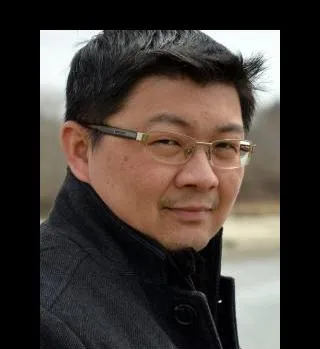
Dr. Kuik Cheng-Chwee is Professor in International Relations and Head of the Centre for Asian Studies, Institute of Malaysian and International Studies, National University of Malaysia (UKM). He is concurrently a non-resident Fellow at Johns Hopkins University’s Foreign Policy Institute (FPI). Previously, he was a Postdoctoral Research Associate at the Princeton-Harvard “China and the World” (CWP) Program and a Visiting Research Fellow at Oxford University. Professor Kuik’s research focuses on smaller-state foreign and defence policies, Asian security, and international relations. He has held consultant positions for Japan International Cooperation Agency (JICA), Peace Research Institute Oslo (PRIO), Council on Foreign Relations (CFR), and Asian Development Bank (ADB). He served as Head of the Writing Team for the Government of Malaysia’s inaugural Defence White Paper. Cheng-Chwee is a regular invited speaker to international conferences and closed-door policy roundtables. Dr. Kuik’s publications have appeared in peer-reviewed journals and edited books. His essay, “The Essence of Hedging”, won the Michael Leifer Memorial Prize awarded by the Institute of Southeast Asian Studies. He is co-author (with David Lampton and Selina Ho) of Rivers of Iron: Railroads and Chinese Power in Southeast Asia (2020) and co-editor (with Alice Ba and Sueo Sudo) of Institutionalizing East Asia (2016). His current projects include: hedging in international relations, domestic politics and foreign policy choices, and the geopolitics of connectivity cooperation. Cheng-Chwee serves on the editorial boards of Contemporary Southeast Asia, Australian Journal of International Affairs, Asian Perspective, Asian Politics and Policy, International Journal of Asian Studies (Cambridge University Press), and East Asian Policy. He is a member of the Council on Indo-Pacific Relations (CIPR), East West Centre in Washington. He holds an M.Litt. from the University of St. Andrews, and a PhD from the Johns Hopkins University’s School of Advanced International Studies. Cheng-Chwee can be contacted at [email protected].
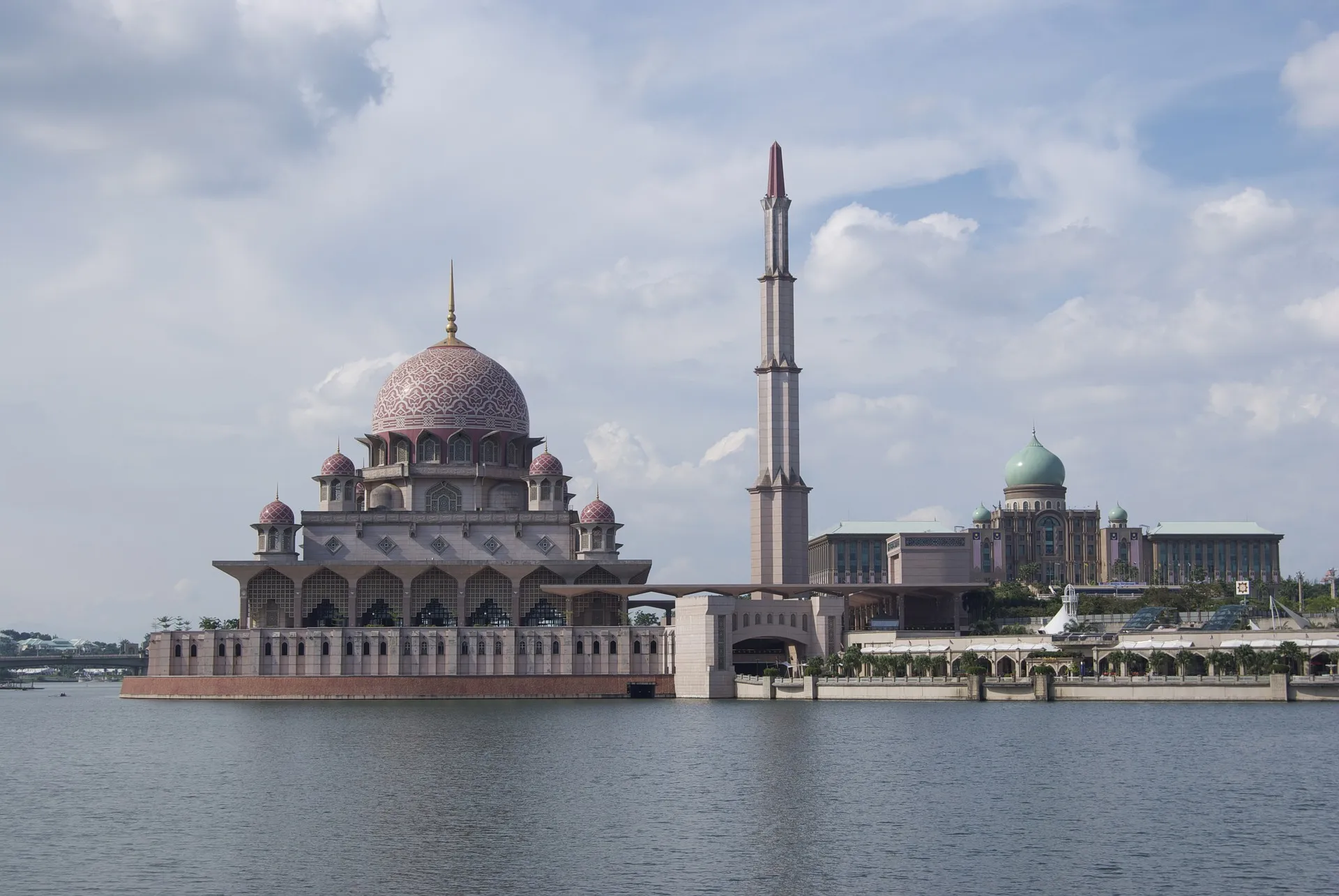
Photo Credit: https://pixabay.com/users/behyad-148709/