"Malaysia And Northeast Asia" - By CWP Alum Cheng-Chwee Kuik
This paper adopts a two-level model to explain Malaysia’s forward diplomacy toward the Northeast Asian states, the larger economies beyond its immediate neighborhood of Southeast Asia. We contend that while such structural conditions as power dynamics drive and constrain the smaller state’s agency toward the Northeast Asian nations, their effects are filtered by domestic politics, specifically the ruling elite’s pathways of legitimation. The findings highlight that while diplomacy is almost always motivated by the imperatives of immediate reality and identity, there is a different genre of driver, that of nurtured necessity. This paper illustrates how Malaysia’s outlook toward the Northeast Asian states—and its resulting active and anticipatory diplomacy—has been more “discovered” than determined and why such diplomacy has been driven more by the elite’s domestic political needs than the idiosyncrasies of its leaders.
CHENG-CHWEE KUIK, ABDUL RAZAK AHMAD and AYMAN RASHDAN WONG - https://doi.org/10.1142/S1013251122400033
Malaysia and Northeast Asia: What Drives Small-State Forward Diplomacy? - https://www.worldscientific.com/doi/abs/10.1142/S1013251122400033
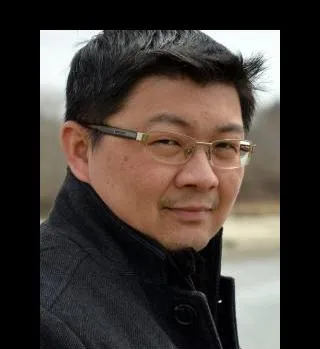
Cheng-Chwee Kuik is a Fellow at the Foreign Policy Institute of the Johns Hopkins University School of Advanced International Studies (SAIS). He is Associate Professor and Head of the Centre for Asian Studies at the National University of Malaysia (UKM)’s Institute of Malaysian and International Studies (IKMAS). He is Co-Founder of the East Asian International Relations (EAIR) Caucus, a research platform for exchange, engagement, and empowerment among foreign affairs professionals in Malaysia. He served as Head of the Writing Team for the Government of Malaysia’s inaugural Defence White Paper (2020). Previously he was a postdoctoral research associate at the Princeton-Harvard “China and the World” Program (CWP) and a visiting research fellow at the University of Oxford's Department of Politics and International Relations.
Kuik’s research concentrates on weaker states’ foreign policy behavior, regional multilateralism, East Asian security, China-ASEAN relations, and Malaysia’s external policy. His publications have appeared in peer-reviewed journals such as the Journal of Contemporary China, Contemporary Southeast Asia, Chinese Journal of International Politics, Asian Security, China: An International Journal, Asian Politics and Policy, East Asian Policy, Shijie Jingji yu Zhengzhi, as well as edited books.
He is co-author with David M. Lampton and Selina Ho of Rivers of Iron: Railroads and Chinese Power in Southeast Asia (University of California Press, October 2020), and co-editor with Alice Ba and Sueo Sudo of Institutionalizing East Asia: Mapping and Reconfiguring Regional Cooperation (Routledge 2016). Kuik's essay, “The Essence of Hedging” was awarded the biennial 2009 Michael Leifer Memorial Prize by the Institute of Southeast Asian Studies for best article published in any of the three ISEAS journals.
Kuik is a regular invited speaker to international conferences and closed-door policy roundtables. His current projects include: hedging in international relations, geopolitics of infrastructure connectivity cooperation in Asia, and domestic sources of Southeast Asian states’ BRI engagement. He serves on the editorial boards or committees of Contemporary Southeast Asia, Australian Journal of International Affairs, Asian Perspective, and Routledge’s “IR Theory and Practice in Asia” Book Series. He holds an M.Litt. from the University of St. Andrews and a Ph.D. from the Johns Hopkins University SAIS.
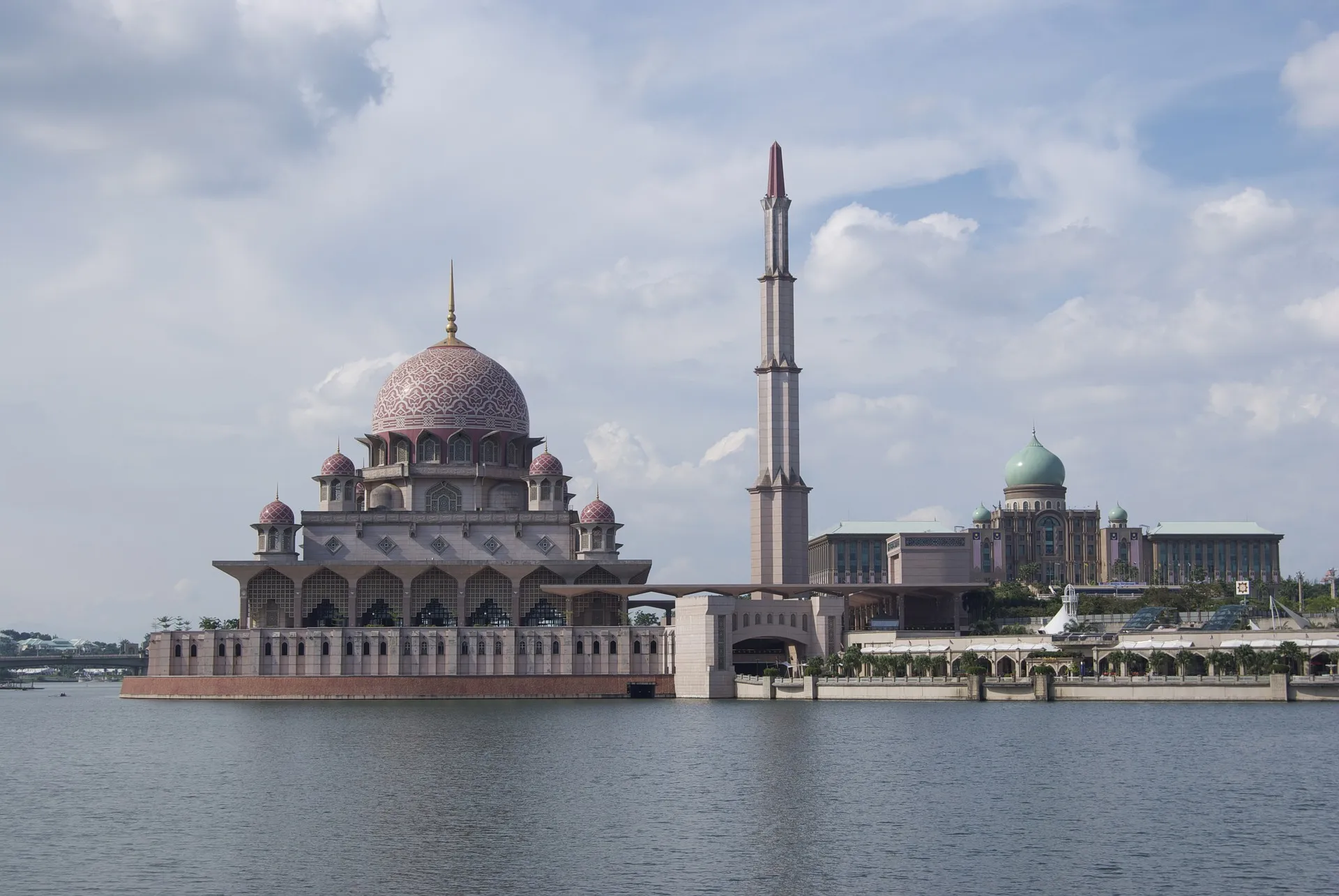
Photo Credit: https://pixabay.com/users/behyad-148709/