"Laos-China infrastructure cooperation" - by CWP alum Cheng-Chwee Kuik
Focusing on Laos’s engagement with China’s Belt and Road Initiative (BRI), this article examines the role and limits of host-county agency toward foreign-backed infrastructure connectivity cooperation. Based on fieldwork observations, semi-structured interviews, and scholarly literature, this paper finds that Laos’s agency toward the BRI has been mixed and uneven, with both active and passive elements. That is, while Laos actively initiated cooperation with China on the Vientiane-Boten railway and other projects, during the negotiation and implementation phases it was at times passive and acquiescent. While the Lao government has attempted to shape the processes, it is unclear how successful these attempts have been. Although the Lao authorities have pursued pragmatic planning in order to benefit more fully from ventures with China, it is too early to determine actual progress. We argue that such patterns of agency result from internal and external dynamics. Internally, while Lao elites’ performance legitimation has been the main driver motivating the small state’s embrace of the BRI, its capacity to gather feedback, act responsively, and correct its course of cooperation has been limited by its one-party political system and near absence of societal agency. Externally, a lack of alternative infrastructure partner has further constrained Laos’s developmental options. Looking ahead, external partners have an important role to play.
Laos-China infrastructure cooperation: legitimation and the limits of host-country agency Cheng-Chwee Kuik & Zikri Rosli Received 26 Mar 2023, Accepted 19 Oct 2023, Published online: 06 Nov 2023 https://doi.org/10.1080/24761028.2023.2274236
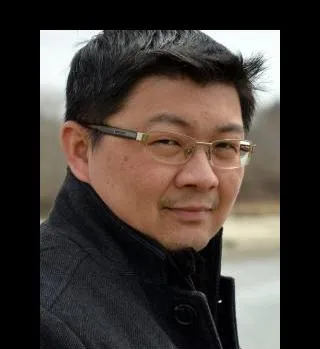
Dr. Kuik Cheng-Chwee is Professor in International Relations and Head of the Centre for Asian Studies, Institute of Malaysian and International Studies, National University of Malaysia (UKM). He is concurrently a non-resident Fellow at Johns Hopkins University’s Foreign Policy Institute (FPI). Previously, he was a Postdoctoral Research Associate at the Princeton-Harvard “China and the World” (CWP) Program and a Visiting Research Fellow at Oxford University. Professor Kuik’s research focuses on smaller-state foreign and defence policies, Asian security, and international relations. He has held consultant positions for Japan International Cooperation Agency (JICA), Peace Research Institute Oslo (PRIO), Council on Foreign Relations (CFR), and Asian Development Bank (ADB). He served as Head of the Writing Team for the Government of Malaysia’s inaugural Defence White Paper. Cheng-Chwee is a regular invited speaker to international conferences and closed-door policy roundtables. Dr. Kuik’s publications have appeared in peer-reviewed journals and edited books. His essay, “The Essence of Hedging”, won the Michael Leifer Memorial Prize awarded by the Institute of Southeast Asian Studies. He is co-author (with David Lampton and Selina Ho) of Rivers of Iron: Railroads and Chinese Power in Southeast Asia (2020) and co-editor (with Alice Ba and Sueo Sudo) of Institutionalizing East Asia (2016). His current projects include: hedging in international relations, domestic politics and foreign policy choices, and the geopolitics of connectivity cooperation. Cheng-Chwee serves on the editorial boards of Contemporary Southeast Asia, Australian Journal of International Affairs, Asian Perspective, Asian Politics and Policy, International Journal of Asian Studies (Cambridge University Press), and East Asian Policy. He is a member of the Council on Indo-Pacific Relations (CIPR), East West Centre in Washington. He holds an M.Litt. from the University of St. Andrews, and a PhD from the Johns Hopkins University’s School of Advanced International Studies. Cheng-Chwee can be contacted at [email protected].
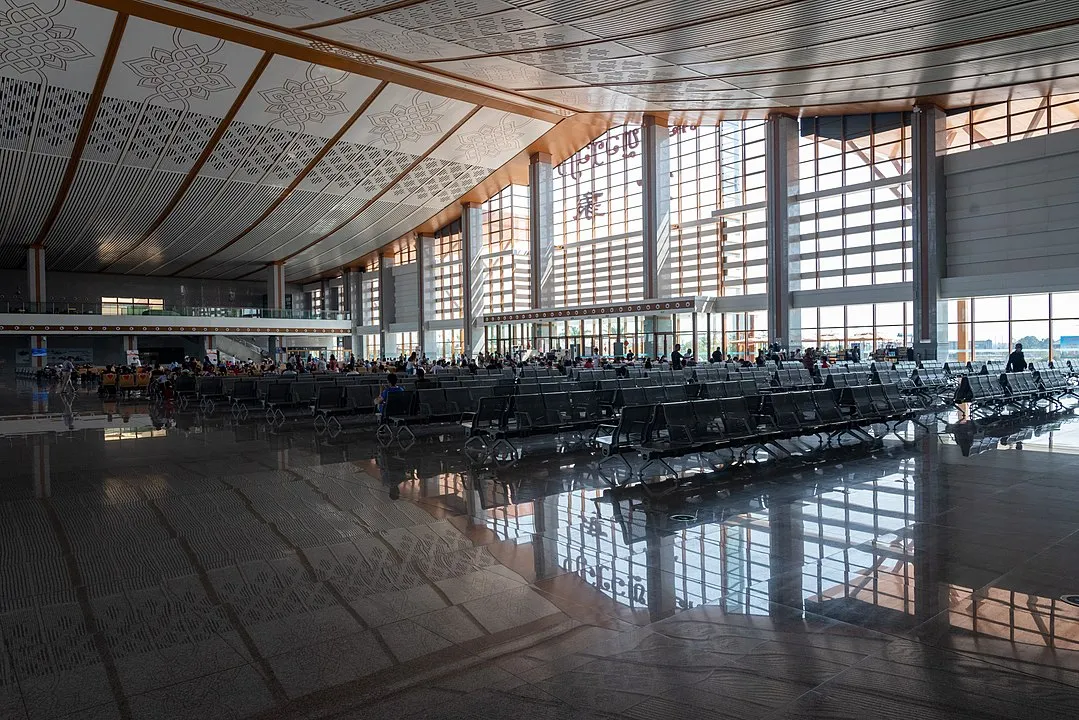
Photo Credit: By Dominik Landwehr - Own work, CC BY-SA 4.0, https://commons.wikimedia.org/w/index.php?curid=129071071