
"An Indo-Pacific Economic Framework—Minus Economics" - by CWP alum Manjari Chatterjee Miller
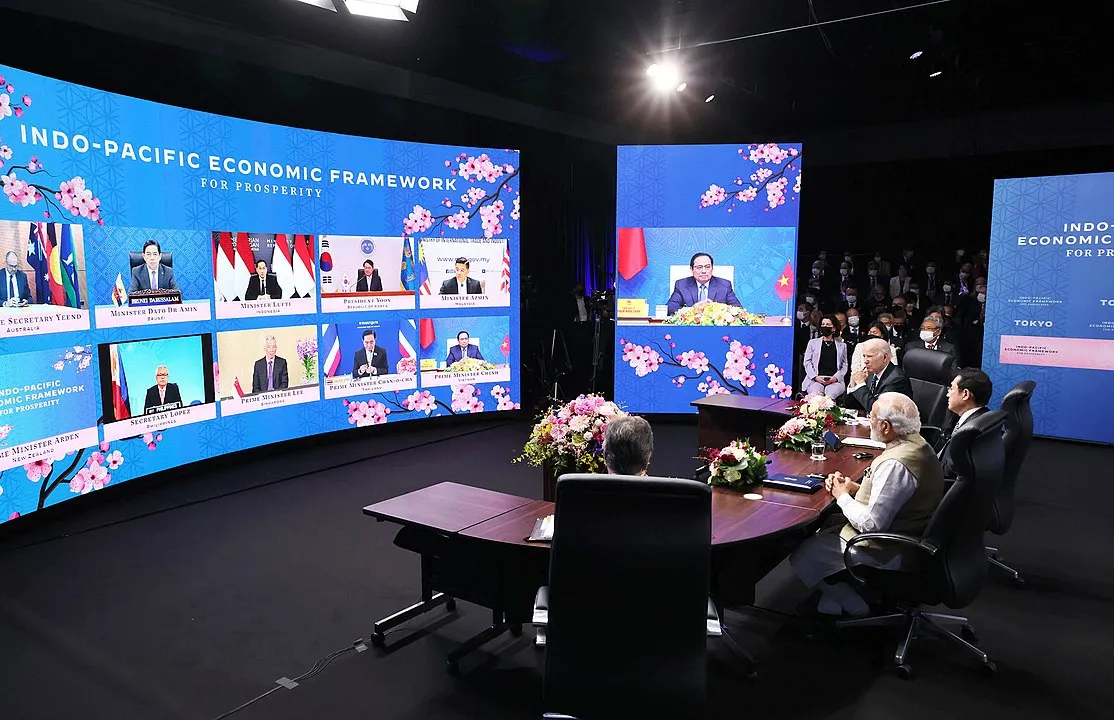
When President Joe Biden launched the Indo-Pacific Economic Framework (IPEF) in May 2022, he declared that the agreement would write “new rules for the 21st century economy.” Modeled on four pillars—trade, supply chains, clean energy, and tackling corruption—the IPEF is the administration’s response to growing Chinese influence in the region and a desire to shore up U.S. presence among key Indo-Pacific partners. However, at a summit this month, IPEF countries failed to conclude an agreement on the trade pillar, leaving the framework with no substantive economic component. Making matters worse, of the thirteen countries negotiating with the United States, only three have an existing trade agreement—Australia, Singapore, and South Korea. This means the collapse of the trade pillar of IPEF is a missed opportunity to deepen economic links in the Indo-Pacific and undercuts U.S. efforts to develop a new architecture for engagement in the region.
by Inu Manak Manjari Chatterjee Miller - https://nationalinterest.org/feature/indo-pacific-economic-framework%E2%80%94minus-economics-207612
Dr. Manjari Chatterjee Miller is senior fellow for India, Pakistan, and South Asia at the Council on Foreign Relations (CFR) and a tenured Associate Professor of International Relations at Boston University. She is the author of Why Nations Rise: Narratives and the Path to Great Power (2021, shortlisted for the 2022 Hedley Bull Prize in International Relations) and Wronged by Empire: Post-Imperial Ideology and Foreign Policy in India and China (2013). Miller is also the co-editor of the Routledge Handbook of China-India Relations (2020), a monthly columnist for the Hindustan Times, and a frequent contributor to policy and media outlets.
Photo Credit: By 首相官邸 - https://www.kantei.go.jp/jp/101_kishida/actions/202205/23usa.html, CC BY 4.0, https://commons.wikimedia.org/w/index.php?curid=118291804