"India Is Reluctant To Condemn Russia. Its History With China Looms Large" - By CWP Alum Manjari Chatterjee Miller
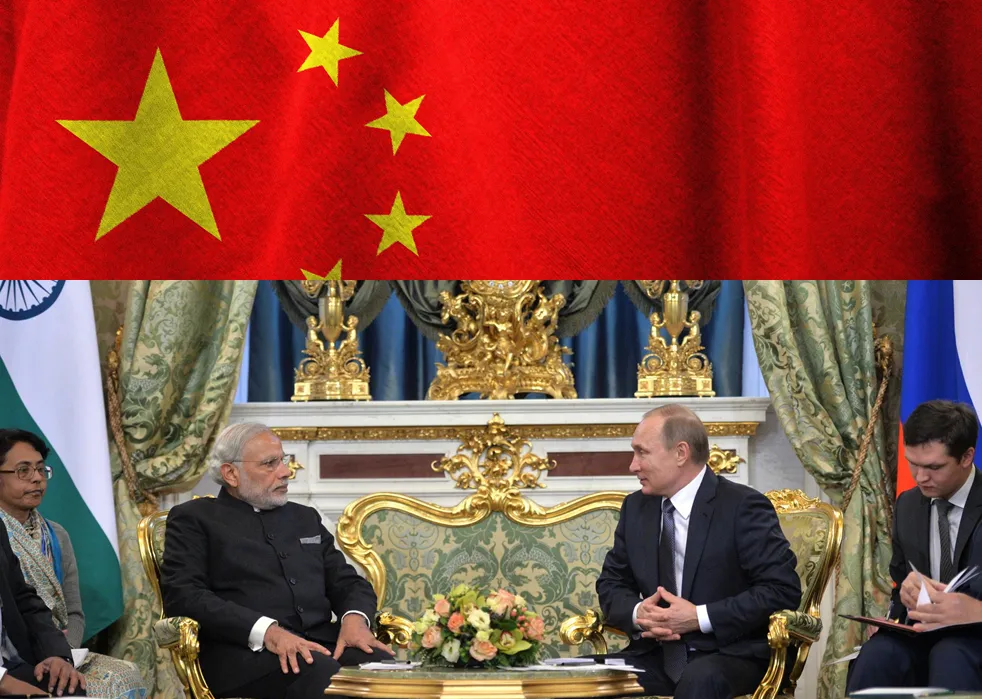
As war continues in Ukraine, many U.S. analysts fear both Russia’s adventurist and autocratic playbook and the lessons China will draw from it. But for India, a major U.S. partner, the war in Ukraine is playing out differently. Ukraine risks distracting from the rise of China and, at worst, bolstering it.
Much has been written about India’s relationship with Russia and how that affects its position on Ukraine, but the analysis of India’s positions in the conflict are incomplete without taking into account the history of India’s relationship with China. India and China’s historic border dispute is central to understanding their contemporary relations and India’s preferences on the Ukraine war’s outcome.
In the 1950s, as post-colonial independent nations, India and China had forged friendly ties based on their common opposition to imperialism. But these ties frayed as disagreements over their border surfaced. The 1960 border negotiations between Chinese Premier Zhou Enlai and Indian Prime Minister Jawaharlal Nehru revealed fundamental differences in how each side viewed the border. China viewed the border as an imperialist fabrication drawn by the then British empire. Zhou wondered at the time why India, an anti-colonial country, did not reject the premise of the China-India border as an irrelevant colonial legacy. Unlike Zhou, Nehru regarded modern India as the legitimate successor to the British Indian government which had simply formalized historical borders that, in his description, had “existed since millennia.”
Manjari Chatterjee Miller is senior fellow for India, Pakistan, and South Asia at the Council on Foreign Relations (CFR). She is also a research associate in the Contemporary South Asian Studies Programme at the Oxford School of Global and Area Studies at the University of Oxford. An expert on India, China, South Asia, and rising powers, she is the author of Why Nations Rise: Narratives and the Path to Great Power (2021) and Wronged by Empire: Post-Imperial Ideology and Foreign Policy in India and China (2013). Miller is also the co-editor of the Routledge Handbook of China-India Relations (2020), a monthly columnist for the Hindustan Times, and a frequent contributor to policy and media outlets in the United States and Asia.
Miller is currently on leave from the Frederick S. Pardee School of Global Studies at Boston University where she is a tenured associate professor of international relations, and the director of the Rising Powers Initiative at the Pardee Center. She has been a non-resident fellow at the Atlantic Council, a fellow at the Belfer Center of Science and International Affairs at Harvard University, a visiting associate professor at the Lee Kuan Yew School of Public Policy at the National University of Singapore, and a visiting scholar at the Chinese Academy of Social Sciences and the Crawford School of Public Policy at Australian National University. She has published numerous articles in peer-reviewed and policy journals, and chapters in edited books. She serves on the international advisory board of Chatham House's International Affairs journal, and her research has been supported by grants and fellowships from multiple institutions. Miller received a BA from the University of Delhi, an MSc from the University of London, and a PhD from Harvard University. She was a post-doctoral fellow in the China and the World Program at Princeton University.
Photo Credit:
- kremlin.ru, CC BY 4.0 <https://creativecommons.org/licenses/by/4.0>, via Wikimedia Commons
- https://pixabay.com/users/thedigitalartist-202249/