
"On India-Pakistan Conflict, The United States Needs to Tread Carefully" - by CWP alum Manjari Chatterjee Miller
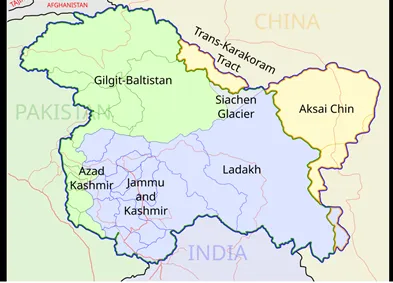
India’s military strikes across Pakistan today were not surprising. A response was widely expected following the killing of twenty-six tourists in an April 22 attack in Indian-administered Kashmir claimed by a terrorist group based in Pakistan. The government of Narendra Modi was under intense pressure from Indian media and citizens to respond. But the military exchange and the level of rhetoric on both sides are different this time. This raises concerns that the tensions could move beyond the last major escalation in 2019, which followed the bombing of a bus full of Indian paramilitary soldiers in Pulwama, Kashmir.
The Resistance Front (TRF) claimed responsibility for both attacks. TRF is a proxy for the Lashkar-e-Taiba, an Islamist terrorist group headquartered in Pakistan—and allegedly supported by Pakistan’s Inter-Services Intelligence Agency— that is on the United States’ list of Foreign Terrorist Organizations. The 2019 Indian response was a retaliatory strike on a terrorist training complex in Balakot, Pakistan.
India’s aerial attacks on Pakistan mark a sharp escalation in tensions between the two nuclear-armed nations following an attack in Kashmir that killed twenty-six tourists and posing a dilemma for U.S. policymakers.
Expert Brief by Manjari Chatterjee Miller - May 7, 2025 10:06 am (EST)
Manjari Chatterjee Miller is a senior fellow for India, Pakistan, and South Asia at the Council on Foreign Relations, and professor of international relations and Munk chair in Global India at the Munk School of Global Affairs and Public Policy, University of Toronto.
Photo Credit: By w:user:Planemad - Own workInternational Borders: University of Texas map library - India Political map 2001Disputed Borders: University of Texas map library - China-India Borders - Eastern Sector 1988 & Western Sector 1988 - Kashmir Region 2004 - Kashmir Maps.State and District boundaries: Census of India - 2001 Census State Maps - Survey of India Maps.Other sources: US Army Map Service, Survey of India Map Explorer, Columbia UniversityMap specific sources: [1],., CC BY-SA 3.0, https://commons.wikimedia.org/w/index.php?curid=1914997