"How America Lost Command of the Commons" by CWP alum Isaac Kardon
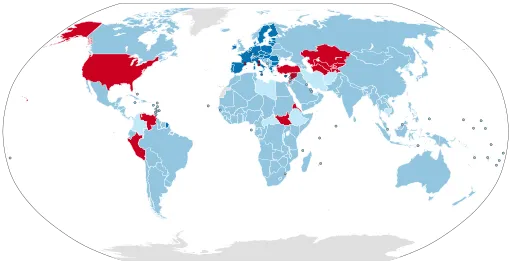
Iran’s shuttering of the Strait of Hormuz, and the United States’ failure to restore the free flow of maritime traffic, has put a spotlight on just how much the global economy depends on ships’ ability to pass unencumbered through key waterways—and how fragile that right is. But well before the strait’s closure, a long era of free seas was already coming to an end.
Critical maritime chokepoints around the world have become fraught with new risks. Beginning in late 2023, for instance, the Iranian-backed Houthi militia in Yemen has throttled transit through the Red Sea, forcing major shippers to reroute away from the Suez Canal and Bab el Mandeb Strait. Since at least 2022, China has mounted increasingly aggressive exercises and activities in and around the Taiwan Strait, triggering great anxiety about the vulnerability of semiconductor supply chains. Russia’s hybrid warfare in the Baltic Sea, Ukraine’s unexpected success attacking Russian vessels in the Black Sea, and even the United States’ lethal campaign against alleged drug-smuggling boats and its hot pursuit of shadow fleet tankers have all badly shaken the impression that the oceans are relatively free to navigate.
And Why the Open Seas May Soon Be Tolled - Isaac Kardon - June 9, 2026
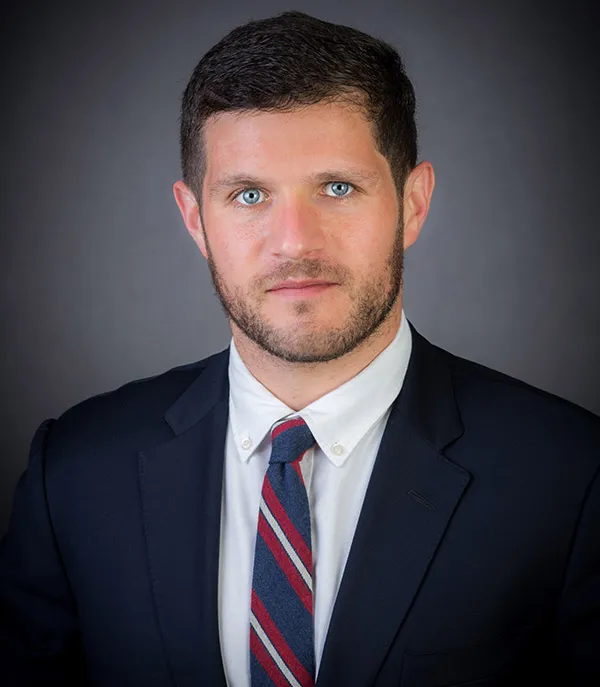
Isaac B. Kardon, Ph.D., (孔适海博士) is a senior fellow for China studies in the Asia program at the Carnegie Endowment for International Peace. He is concurrently adjunct professor at Johns Hopkins SAIS, and was formerly assistant professor at the U.S. Naval War College (NWC), where he served in the China Maritime Studies Institute.
Dr. Kardon’s research centers on the People’s Republic of China’s maritime power, with specialization in maritime disputes and the international law of the sea, Chinese global port investments and maritime transportation, China-Pakistan relations, and the People’s Liberation Army’s overseas basing. His writing appears in International Security, Security Studies, Foreign Affairs, the New York Times, the Naval War College Review, as well as other scholarly and policy publications. His book, China’s Law of the Sea: The New Rules of Maritime Order (Yale, 2023) analyzes whether and how China is “making the rules” of regional and global order.
Current research centers on a new book project telling the story of China’s challenge to a centuries-old Anglo-American dominance over the world’s oceans. The actions of China’s state-owned mega-firm, COSCO, serve as the narrative vessel to chart how China’s maritime power made it the world’s strongest trade and transportation state, if not its predominant navy, and positions it to mount the only credible threat to U.S. “maritime hegemony.” (Provisional title: “How the China Ocean Shipping Company Made China Great Again”)
He earned a Ph.D. in government from Cornell University, an M.Phil in modern Chinese studies from Oxford University, and a B.A. in history from Dartmouth College. He was a China & the World post-doctoral fellow at Princeton University, and has held visiting appointments at NYU School of Law, Academia Sinica, and the PRC National Institute for South China Sea Studies. He studied Chinese (Mandarin) at Peking University, Tsinghua University, Hainan University, and National Taiwan Normal University.
Photo Credit: https://www.foreignaffairs.com/united-states/how-america-lost-command-commons