"Hedging In Non-Traditional Security: The Case Of Vietnam’s Disaster Response Cooperation" - By CWP Alum Cheng-Chwee Kuik

Although much has been written on hedging in traditional security, few studies have focused on hedging in the non-traditional security (NTS) domains. This essay examines NTS hedging through the case of Vietnam’s disaster response cooperation with the USA and with China. “Hedging” is insurance-seeking behaviour, characterised by avoidance of irrevocable commitment, adoption of impartial and inclusive diversification, and the pursuit of prudent contradictions—all aimed at offsetting risks and cultivating a fallback position. We argue that it is Vietnam’s elite-defined strategic considerations and functional needs amid uncertainty that both drive and constrain its hedging approach to disaster management cooperation with the competing powers—China and the USA. While not fully aligning with either power, Vietnam has sought closer cooperation with both, with different objectives in mind: engaging China to maintain a good relationship, while engaging the USA to enhance its capabilities. The net result is cooperation that is symbolic in posture and selective in practice, which serves the substantive purposes of mitigating risks while acquiring concrete gains. In the world of hedging, symbolism is substance.
The Chinese Journal of International Politics, poac017, https://doi.org/10.1093/cjip/poac017 Published: 11 October 2022
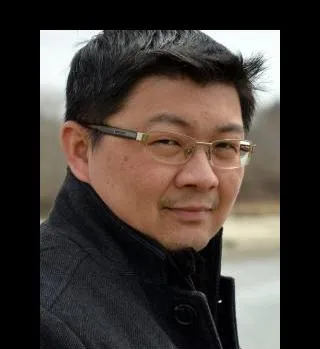
Cheng-Chwee Kuik (郭清水) is Professor in International Relations and Head of the Centre for Asian Studies, Institute of Malaysian and International Studies (IKMAS), National University of Malaysia (UKM). He is concurrently a Non-resident Fellow at Johns Hopkins’ Foreign Policy Institute. Previously, Cheng-Chwee was a Postdoctoral Research Associate at the Princeton-Harvard “China and the World” Program and a Visiting Research Fellow at Oxford University’s Department of Politics and International Relations. Professor Kuik’s research focuses on smaller state foreign policy, Asian security, and international relations. He served as Head of the Writing Team for the Government of Malaysia’s inaugural Defence White Paper (2020). Cheng-Chwee’s publications have appeared in peer-reviewed journals and edited books. Dr. Kuik’s essay, “The Essence of Hedging”, won the Michael Leifer Memorial Prize awarded by the Institute of Southeast Asian Studies. He is co-editor (with Alice Ba and Sueo Sudo) of Institutionalizing East Asia (2016), co-author (with David M. Lampton and Selina Ho) of Rivers of Iron: Railroads and Chinese Power in Southeast Asia (2020), and author of the chapter on ASEAN and Southeast Asian states for David Shambaugh’s International Relations of Asia, 3rd edition (2022). His current projects include: hedging in international relations, elite legitimation and foreign policy choices, and the geopolitics of infrastructure connectivity cooperation. Cheng-Chwee serves on the editorial boards/committees of Contemporary Southeast Asia, Australian Journal of International Affairs, Asian Politics and Policy, International Journal of Asian Studies, and East Asian Policy. He is a member of the newly established Council on Indo-Pacific Relations (CIPR), EWC in Washington (EWCW). He holds an M.Litt. from the University of St. Andrews and a PhD from Johns Hopkins University. He can be contacted at [email protected].
Poto Credit: https://pixabay.com/users/pexels-2286921/