"Hedging Via Institutions: ASEAN-Led Multilateralism In The Age Of The Indo-Pacific" - By CWP Alum Cheng-Chwee Kuik

This article unpacks the dynamics of group hedging in international relations by examining the Southeast Asian states’ collective efforts to use ASEAN-led multilateral institutions as a platform to hedge against a range of risks surrounding intensifying big-power rivalry and increasing global uncertainties. It argues that ASEAN’s collective hedging is a converged but not necessarily coordinated act. Despite the states’ diverging attributes and outlooks, they converge on shared vulnerabilities, collective memories, and disadvantaged positions. Southeast Asian states thus view ASEAN-based multilateralism as an indispensable, albeit insufficient, means to engage big powers and manage other challenges. Through the functions of institutional binding, buffering, and building, ASEAN’s group hedging serves to mitigate and offset risks while shaping Asian order amid deepening uncertainties in the age of the Indo-Pacific
Asian Journal of Peacebuilding Vol. 10 No. 2 (2022): 355-386 doi: 10.18588/202211.00a319
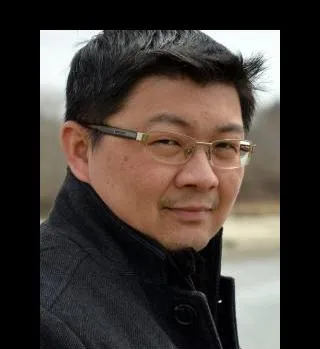
Cheng-Chwee Kuik is Professor and Head of the Centre for Asian Studies, Institute of Malaysian and International Studies, National University of Malaysia. He is concurrently a Non-Resident Fellow at Johns Hopkins’ Foreign Policy Institute. Dr. Kuik’s research focuses on small-state alignment behavior, 386 Cheng-Chwee Kuik ASEAN-based multilateralism, and Asian security. Cheng-Chwee is guest editor of “Southeast Asian Responses to China’s Belt and Road Initiative” (Asian Perspective, 2021) and co-author of Rivers of Iron: Railroads and Chinese Power in Southeast Asia (2020). Email: [email protected]
Photo Credit: https://pixabay.com/users/christianpackenius-3401629/