"The global costs of the US-China tariff war are mounting. And the worst may be yet to come" - by CWP alum Kai He
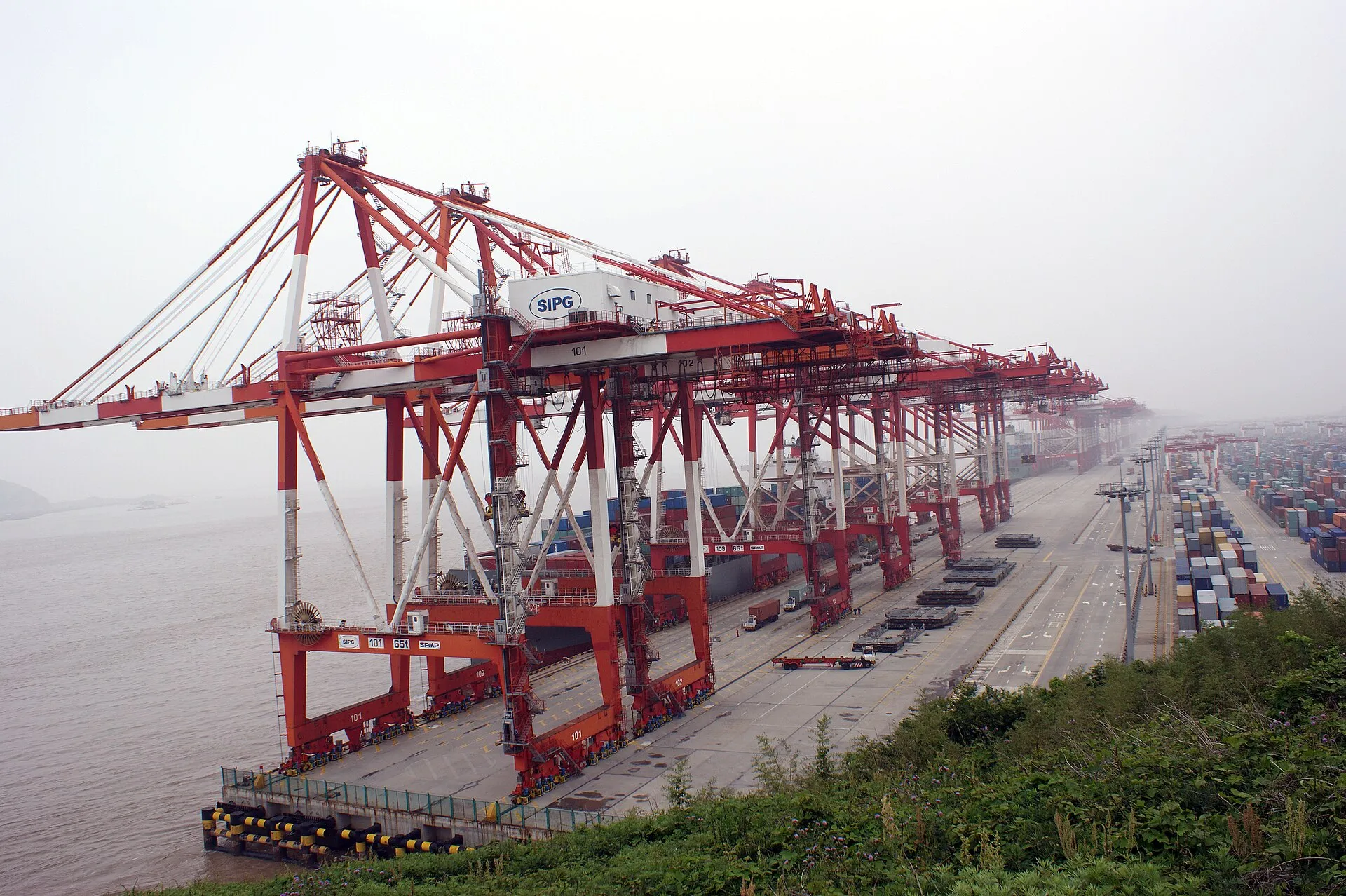
The United States and China remain in a standoff in their tariff war. Neither side appears willing to budge.
After US President Donald Trump imposed massive 145% tariffs on Chinese imports in early April, China retaliated with its own tariffs of 125% on US goods.
US Treasury Secretary Scott Bessent said this week it’s up to China to de-escalate tensions. China’s Foreign Ministry, meanwhile, said the two sides are not talking.
The prospect of economic decoupling between the world’s two largest economies is no longer speculative. It is becoming a hard reality. While many observers debate who might “win” the trade war, the more likely outcome is that everyone loses.
Published: April 30, 2025 10:10pm EDT
Kai He is Professor of International Relations and Director of the Centre for Governance and Public Policy, Griffith University, Australia. He was an Australian Research Council (ARC) Future Fellow (2017-2020). He is the author of "Institutional Balancing in the Asia Pacific: Economic Interdependence and China's Rise" (Routledge, 2009) and "China’s Crisis Behavior: Political Survival and Foreign Policy" (Cambridge, 2016). He is a co-author of "Prospect Theory and Foreign Policy Analysis in the Asia Pacific: Rational Leaders and Risky Behavior" (with Huiyun Feng, Routledge, 2013), and "How China Sees the World: Insights from Chinese International Relations Scholars" (with Huiyun Feng and Xiaojun Li, Palgrave, 2019). He is an editor/co-editor of "Contested Multilateralism 2.0 and Asian Security Dynamics" (Routledge 2020), "China’s Challenges and International Order Transition: Beyond 'Thucydides’s Trap'" (co-edited with Huiyun Feng, University of Michigan Press, 2020), "Chinese Scholars and Foreign Policy: Debating International Relations" (with Huiyun Feng and Xuetong Yan, Routledge, 2019), and "US-China Competition and the South China Sea Disputes" (with Huiyun Feng, Routledge, 2018). His forthcoming book includes "Contesting Revisionism: the United States, China, and Transformation of International Order" (with Steve Chan, Huiyun Feng, Weixing Hu, Oxford, 2021).
His peer-refereed articles have appeared in European Journal of International Relations, European Political Science Review, International Affairs, International Studies Review, International Politics, Political Science Quarterly, Review of International Studies, Security Studies, Cooperation and Conflict, Contemporary Politics, Ethics & International Affairs, Asian Survey, The Pacific Review, Journal of Contemporary China, The Chinese Journal of International Politics, Asian Security, Asian Perspective, Australian Journal of Political Science, Australian Journal of International Relations, International Relations of the Asia Pacific, Issues and Studies, Strategic Studies Quarterly, East Asia, Asia Policy, Cambridge Review of International Affairs, and Journal of Contemporary East Asian Studies.
He received several internationally competitive fellowships and grants, including the Princeton-Harvard China and the World Program Postdoctoral Fellowship (2009-2010), a Lynde and Harry Bradley Foundation Research Fellowship (2009-2010), an EAI fellowship (2011-2012) from the East Asia Institute in Seoul, an Asia Studies Fellowship (2012) from the East-West Center in Washington D.C., and visiting fellowships (2014/2017) from the S. Rajaratnam School of International Studies, Nanyang Technological University, Singapore, and policy-oriented research grants from the Korea Foundation, South Korea (2016/ 2019). His research projects are funded by the MacArthur Foundation, USA (2016-2018) and the Australian Research Council (2017-2020; 2021-2023).
Photo Credit: By Bruno Corpet (Quoique) - Own work, CC BY-SA 3.0, https://commons.wikimedia.org/w/index.php?curid=26190727