"Erosion of International Organizations’ Legitimacy under Superpower Rivalry: Evidence on the International Court of Justice" - by CWP alum Enze Han & Xiaojun Li

This article investigates how superpower rivalry affects public perceptions of international organization (IO) legitimacy in the hegemon. We argue that the representation of a superpower rival state at an IO in the form of its key decision maker’s nationality can dampen the IO’s perceived legitimacy within the rival power. We test this argument using a survey experiment in the United States under President Trump, where we manipulate the nationality of the International Court of Justice (ICJ) judge who casts a tie-breaking vote against the United States. Our results show that when the judge is Chinese, there is a strong and robust dampening of Americans’ perceptions of the ICJ’s legitimacy, with no comparable effect arising when the judge is from other countries, including Russia. Replication of the experiment in the United States under President Biden offers external validity for our findings, which may have important implications for the future of the liberal international order.
Canadian Journal of Political Science (2024), 1–22 doi:10.1017/S000842392300063X
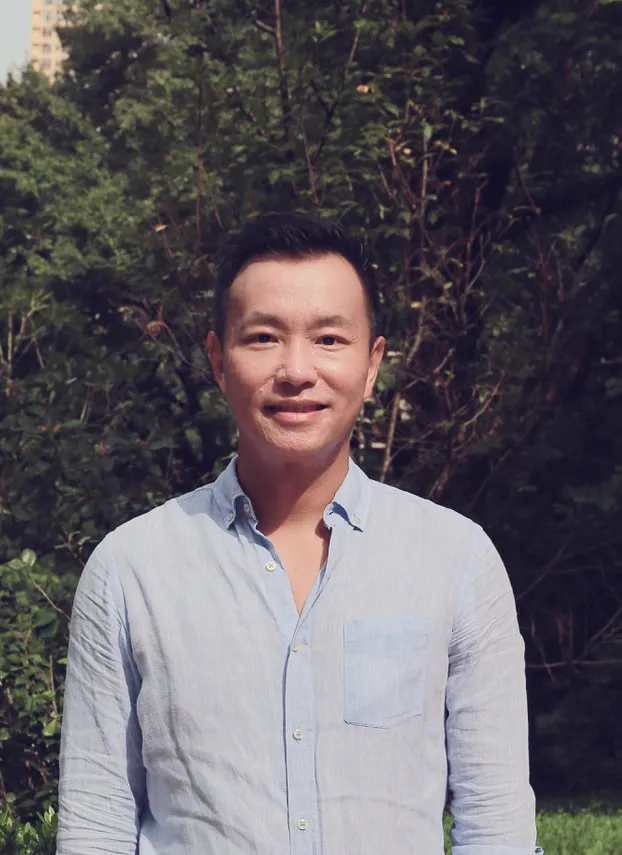
Dr. Enze Han is Associate Professor at the Department of Politics and Public Administration. His research interests include international relations of East Asia, China's relations with Southeast Asia, Southeast Asian politics, and ethnic politics in China. Dr. Han received a Ph.D in Political Science from the George Washington University in the United States in 2010. Afterwards he was a postdoctoral research fellow in the China and the World Program at Princeton University. During 2015-2016, he was a Friends Founders' Circle Member of the School of Social Science at the Institute for Advanced Study in Princeton, USA. In 2017, he was a fellow at the East Asia Institute in Seoul, South Korea. During 2021-2022, he was Lee Kong Chian Fellow on Contemporary Southeast Asia at the National University of Singapore and Stanford University. His research has been supported by the Leverhulme Research Fellowship and British Council/Newton Fund. Prior to HKU, Dr. Han was Senior Lecturer in the International Security of East Asia at SOAS, University of London, United Kingdom.
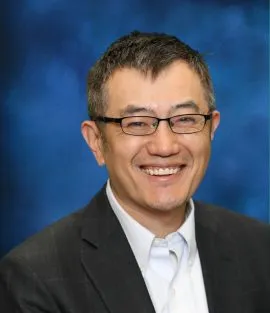
Xiaojun (pronounced “shee·ow ji·win”) received his Ph.D. in Political Science from Stanford University and joined the department in 2013. He is currently Associate Professor of Political Science at UBC and non-resident scholar at the 21st Century China Centre at UC San Diego School of Global Policy and Strategy. He has also held visiting positions at Harvard University’s Fairbank Center for Chinese Studies (2014-2015), Fudan Development Institute (2016), the East-West Center (2018), and the ISEAS–Yusof Ishak Institute (2021).
His previous and ongoing research on international and comparative political economy can be broadly divided into three research programs that investigate (1) the impact of domestic politics on the process and content of foreign economic and security policies, (2) the impact of global supply chains on trade and investment, and (3) the political economy of trade liberalization in developing and post-communist countries. In all of these research programs, he uses China as the primary case of inquiry and employs a variety of methods, including interviews, archival research, survey experiment, and large-N analysis.
Photo Credit: By vectored byFOX 52 - commons file, CC BY-SA 4.0, https://commons.wikimedia.org/w/index.php?curid=49564533