"Does The China-Solomon Islands Security Pact Portend A More Interventionist Beijing? - By CWP Alum Patricia Kim
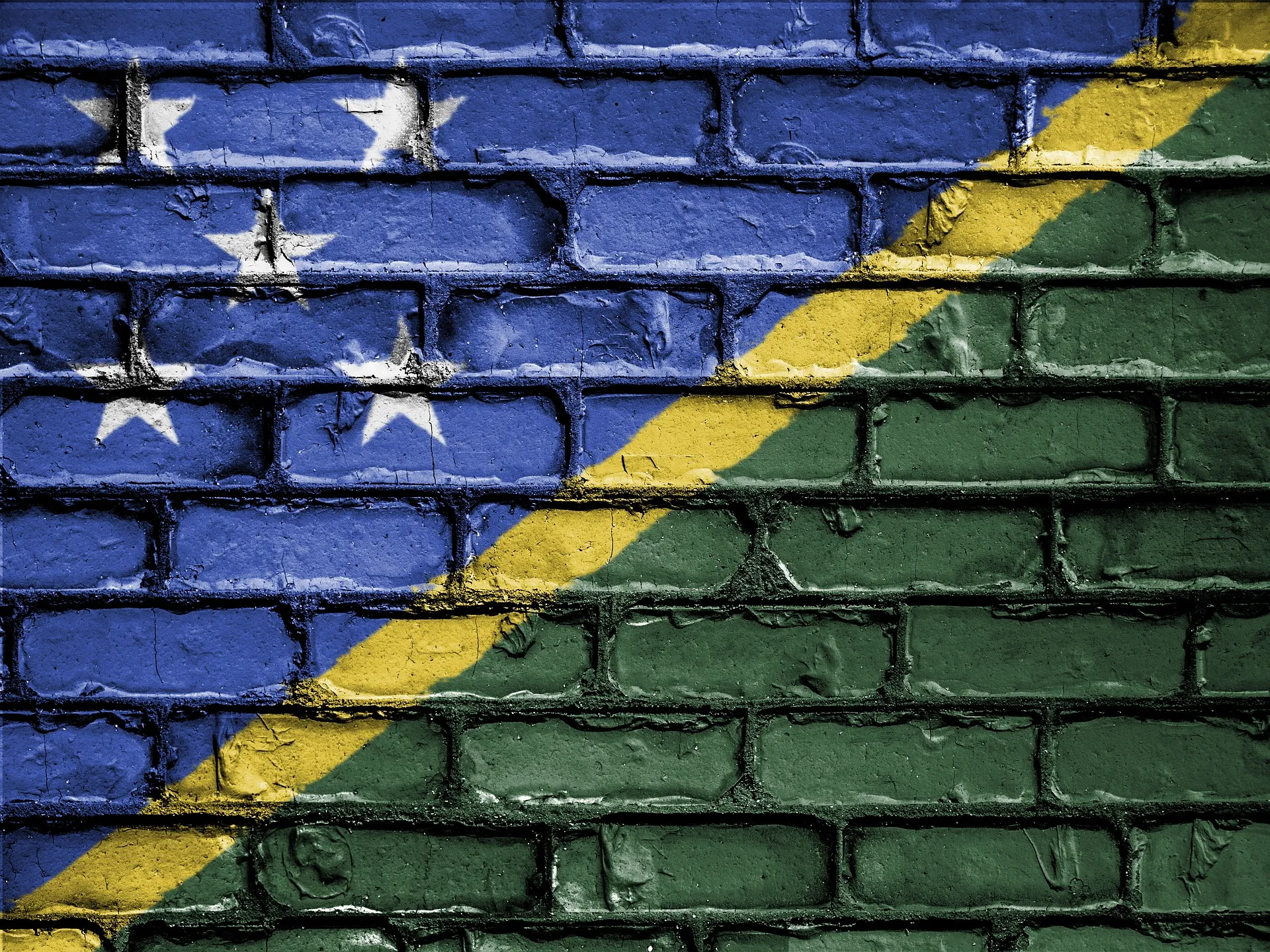
The recent announcement of a new security agreement between China and the Solomon Islands has rattled leaders in Washington, Canberra, and other Indo-Pacific capitals who fear it opens the door to a Chinese military presence in the southern Pacific. Much of the attention has been on the deal’s potential to lead to a Chinese military base on the island nation, and the power-projection capabilities the People’s Liberation Army (PLA) would gain as a result. But the new pact raises another critical question that has received less attention: is China is reentering the business of militarily propping up friendly regimes?
While Beijing is no stranger to serving as an economic and diplomatic lifeline to close partners, it has largely eschewed providing direct security assistance to other states since the second half of the Cold War, for both pragmatic and principled reasons. Although it remains to be seen how precisely Beijing and Honiara will operationalize their new security pact, a looming question is whether this agreement will prove to be an exception or if it heralds the rise of a more activist China that is now willing to extend military support to other states in its concerted
Patricia M. Kim Friday, May 6, 2022 - https://www.brookings.edu/blog/order-from-chaos/2022/05/06/does-the-china-solomon-islands-security-pact-portend-a-more-interventionist-beijing/
Patricia M. Kim is a David M. Rubenstein Fellow at Brookings and holds a joint appointment to the John L. Thornton China Center and the Center for East Asia Policy Studies. She is an expert on Chinese foreign policy, U.S.-China relations, and U.S. alliance management and regional security dynamics in East Asia.
Previously, Kim served as a China specialist at the U.S. Institute of Peace, where she focused on China's impact on conflict dynamics around the world and directed major projects on U.S.-China strategic stability and China's growing presence in the Red Sea region. She was also a Stanton Nuclear Security Fellow at the Council on Foreign Relations, International Security Program Research Fellow at the Harvard Kennedy School of Government's Belfer Center for Science and International Affairs, and postdoctoral fellow at the Princeton-Harvard China and the World Program at Princeton University.
Kim’s writing and research has been featured widely in outlets such as Foreign Affairs, Foreign Policy, The New York Times, The Washington Post and The South China Morning Post. She frequently briefs U.S. government officials in her areas of expertise and has testified before the House Intelligence Committee and the House Foreign Affairs Subcommittee on Terrorism, Nonproliferation, and Trade.
Kim received her doctoral degree from the Department of Politics at Princeton University and her bachelor's degree with highest distinction in political science and Asian studies from the University of California, Berkeley. She is fluent in Mandarin Chinese and Korean, and proficient in Japanese. Kim is also a Global Fellow at the Woodrow Wilson Center and a term member of the Council on Foreign Relations.
Photo Credit: https://pixabay.com/users/david_peterson-4745048/