
"Delivering Promises for the China-Pakistan Economic Corridor: Lessons Learned and the Path Forward" - by CWP alum Hong Zhang
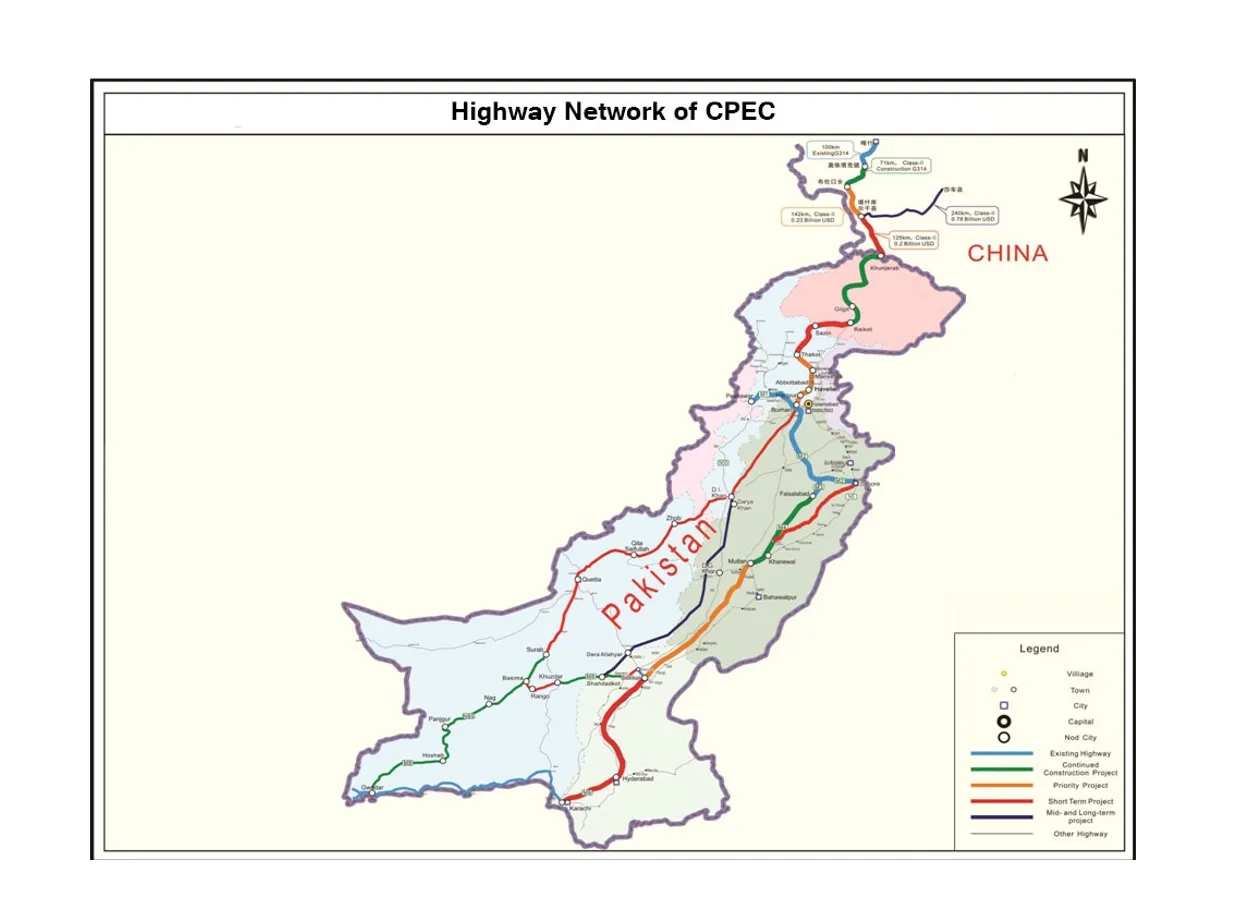
The Pakistani government celebrated the tenth anniversary of the establishment of the China-Pakistan Economic Corridor (CPEC) in 2023 with great fanfare. Prime Minister Shahbaz Sharif praised the “transformational impact of CPEC on Pakistan’s economy.” However, the reality was starkly different. After $55.2 billion in aid and credit for new highways, power projects, and rescue loans, CPEC has struggled to generate sustained economic benefits amidst a deteriorating security situation marred by poor governance.
The scholarship on CPEC has mainly focused on security dimensions, focusing on regional issues like China and Pakistan’s common rivalry with India and geopolitical considerations related to the Gwadar port. But far less is known about CPEC’s intergovernmental governance, the main cause of its failure to generate prosperity. With original data analysis and interviews with key stakeholders in Pakistan and China, this article fills this gap by shedding new light on this critical issue.
Hong Zhang and Ammar A. Malik - Date Published: December 16, 2024
Hong Zhang is an Assistant Professor at the Hamilton Lugar School of Global and International Studies, Indiana University Bloomington. Her research focuses on China’s role in global development, particularly in the areas of infrastructure development and industrialization. She co-edits the People’s Map of Global China and Global China Pulse journal, initiatives that foster collective efforts to study China’s global presence. Previously, she was a Postdoctoral Fellow at the Harvard Kennedy School, Johns Hopkins University School of Advanced International Studies, and the Columbia-Harvard China and the World Program. She holds a PhD in public policy from George Mason University.
Photo Credit: By Government of Pakistan - http://www.pc.gov.pk/wp-content/uploads/2016/01/Highway-Network-of-cpac-new.jpg, Public Domain, https://commons.wikimedia.org/w/index.php?curid=48972437