"Deference And Defiance In Malaysia's China Policy" - By CWP Alum Cheng-Chwee Kuik

When do smaller states defer to and when do they defy stronger powers? How and why? This article traces and explains the changing patterns of deference and defiance in Malaysia's China policy. There are three findings. First, deference and defiance are essential elements in all inter-state relations, especially asymmetric ones. The greater the power asymmetry, the greater the inclination to defer and defy. Second, states often pursue defiance and deference concurrently and selectively, with approaches adapted in accordance with changing external and internal conditions. The concurrent adoption of the two behaviors often manifest in hedging, an insurance-seeking policy aimed at offsetting multiple risks by counteracting the effects of the other behavior: deference without defiance risks subservience and dependency; defiance without deference invites hostility and confrontation. Third, the specific patterns and proportions of the deference–defiance mix are attributable more to domestic than external determinants, i.e., the needs to balance security, prosperity, and autonomy, as necessitated by the prevailing pathways of elite legitimation. This explains why Malaysia's open deference vis-à-vis China has been accompanied by an indirect and quiet defiance especially in recent years, as best evidenced by the second Mahathir administration's dualistic approaches toward the Belt and Road, South China Sea, and Xinjiang.
Deference and defiance in Malaysia's China policy: determinants of a dualistic diplomacy
Published online by Cambridge University Press: 11 April 2023 Cheng-Chwee Kuik & Yew Meng Lai
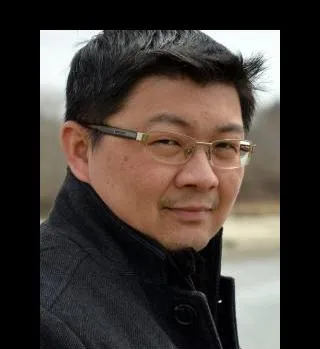
Dr. Kuik Cheng-Chwee is Professor in International Relations and Head of the Centre for Asian Studies, Institute of Malaysian and International Studies, National University of Malaysia (UKM). He is concurrently a non-resident Fellow at Johns Hopkins University’s Foreign Policy Institute (FPI). Previously, he was a Postdoctoral Research Associate at the Princeton-Harvard “China and the World” (CWP) Program and a Visiting Research Fellow at Oxford University. Professor Kuik’s research focuses on smaller-state foreign and defence policies, Asian security, and international relations. He has held consultant positions for Japan International Cooperation Agency (JICA), Peace Research Institute Oslo (PRIO), Council on Foreign Relations (CFR), and Asian Development Bank (ADB). He served as Head of the Writing Team for the Government of Malaysia’s inaugural Defence White Paper. Cheng-Chwee is a regular invited speaker to international conferences and closed-door policy roundtables. Dr. Kuik’s publications have appeared in peer-reviewed journals and edited books. His essay, “The Essence of Hedging”, won the Michael Leifer Memorial Prize awarded by the Institute of Southeast Asian Studies. He is co-author (with David Lampton and Selina Ho) of Rivers of Iron: Railroads and Chinese Power in Southeast Asia (2020) and co-editor (with Alice Ba and Sueo Sudo) of Institutionalizing East Asia (2016). His current projects include: hedging in international relations, domestic politics and foreign policy choices, and the geopolitics of connectivity cooperation. Cheng-Chwee serves on the editorial boards of Contemporary Southeast Asia, Australian Journal of International Affairs, Asian Perspective, Asian Politics and Policy, International Journal of Asian Studies (Cambridge University Press), and East Asian Policy. He is a member of the Council on Indo-Pacific Relations (CIPR), East West Centre in Washington. He holds an M.Litt. from the University of St. Andrews, and a PhD from the Johns Hopkins University’s School of Advanced International Studies. Cheng-Chwee can be contacted at [email protected].
Photo Credit: https://pixabay.com/users/behyad-148709/