"Debating Global International Relations (IR): Philosophical and Meta-Theoretical Perspectives" - by CWP alum Kai He
The debate over essentialism in Global International Relations (IR), illustrated by Barnett and Zarakol’s “relationalist camp” and Eun, Kristensen, and Shahi’s “pluralist camp,” reflects a deeper philosophical misalignment about what constitutes theoretical progress in IR. While the two sides offer contrasting diagnoses of essentialism, neither engages explicitly with the philosophy of science, which offers criteria for assessing progress: Kuhn’s paradigmatic change, Lakatos’s progressive research programs, and Laudan’s problem-solving capacity. Absent this meta-theoretical grounding, these debates risk talking past one another, since they employ incommensurable standards for Global IR’s advancement. This paper critically appraises the essentialism debate and proposes a three-step, gradualist model of theoretical evaluation as one viable pathway for Global IR: beginning with problem-solving effectiveness (Laudan), progressing through cumulative research programs (Lakatos), and ultimately aspiring to disciplinary-matrix change rather than wholesale theory replacement (Kuhn). The paper argues that the central challenge for Global IR is not to abandon pluralism, but to move beyond pluralism as an end in itself by making evaluative criteria explicit, fostering cumulative knowledge production, and encouraging open debate over alternative frameworks for assessing theoretical progress.
El debate sobre el esencialismo en las RRII Globales, ilustrado por el «campo relacionalista» de Michael Barnett y Ayşe Zarakol (2023; 2025) y el «campo pluralista» de Yong-Soo Eun, Peter Marcus Kristensen y Deepshikha Shahi (2025), refleja un desalineamiento filosófico más profundo sobre lo que constituye el progreso teórico en las Relaciones Internacionales. Aunque ambas posturas ofrecen diagnósticos opuestos del esencialismo, ninguna se involucra explícitamente con la filosofía de la ciencia, que ofrece criterios para evaluar el progreso: el cambio paradigmático de Thomas Kuhn (1962), los programas de investigación progresivos de Imre Lakatos (1970) y la capacidad de resolución de problemas de Larry Laudan (1977). Sin esta base metateórica, estos debates corren el riesgo de desarrollarse en paralelo, sin dialogar los unos con los otros, ya que emplean estándares inconmensurables para el avance de las RRII Globales. Este artículo evalúa de forma crítica el debate sobre el esencialismo y propone un modelo gradualista de tres pasos para la evaluación teórica como un camino viable para las RRII Globales: comenzar con la efectividad en la resolución de problemas (Laudan), progresar a través de programas de investigación acumulativa (Lakatos) y aspirar, en última instancia, al cambio de la matriz disciplinaria en lugar de la sustitución total de la teoría (Kuhn). El artículo argumenta que el desafío principal para las RRII Globales no es abandonar el pluralismo, sino ir más allá del pluralismo como un fin en sí mismo haciendo explícitos los criterios evaluativos, fomentando la producción acumulativa de conocimiento y alentando el debate abierto sobre marcos alternativos con el fin de evaluar el progreso teórico.
Le débat sur l’essentialisme en RI mondiales, illustré par le « camp relationnaliste » de Michael Barnett et Ayşe Zarakol (2023 ; 2025) et le « camp pluraliste » de Yong-Soo Eun, Peter Marcus Kristensen et Deepshikha Shahi (2025), reflète un désaccord philosophique plus profond quant à ce qui constitue un progrès théorique en relations internationales. Bien que les deux camps proposent des diagnostics opposés de l’essentialisme, aucun ne traite explicitement de la philosophie de la science, qui propose des critères d’évaluation du progrès : le changement paradigmatique de Thomas Kuhn (1962), les programmes de recherche progressiste d’Imre Lakato (1970) et la capacité de résolution de problèmes de Larry Laudan (1977). Sans cet ancrage métathéorique, ces débats risquent de traiter de sujets différents, tout en pensant traiter le même, puisqu’ils emploient des standards incommensurables pour la progression des RI mondiales. Cet article apprécie le débat sur l’essentialisme de façon critique et propose une trajectoire viable pour les RI mondiales, un modèle gradualiste d’évaluation théorique en trois étapes : commencer par l’efficacité de la résolution des problèmes (Laudan), passer ensuite aux programmes de recherche cumulatifs (Lakatos), pour finalement tendre vers un changement de matrice disciplinaire plutôt qu’un remplacement théorique à grande échelle (Kuhn). L’article affirme que le défi central pour les RI mondiales n’est pas l’abandon du pluralisme, mais son dépassement en tant que fin en soi en explicitant des critères d’évaluation, favorisant la production de connaissances cumulatives et encourageant un débat ouvert sur d’autres cadres d’évaluation du progrès théorique.
Kai He, Huiyun Feng, Debating Global International Relations (IR): Philosophical and Meta-Theoretical Perspectives, International Studies Quarterly, Volume 70, Issue 2, June 2026, sqag033, https://doi.org/10.1093/isq/sqag033
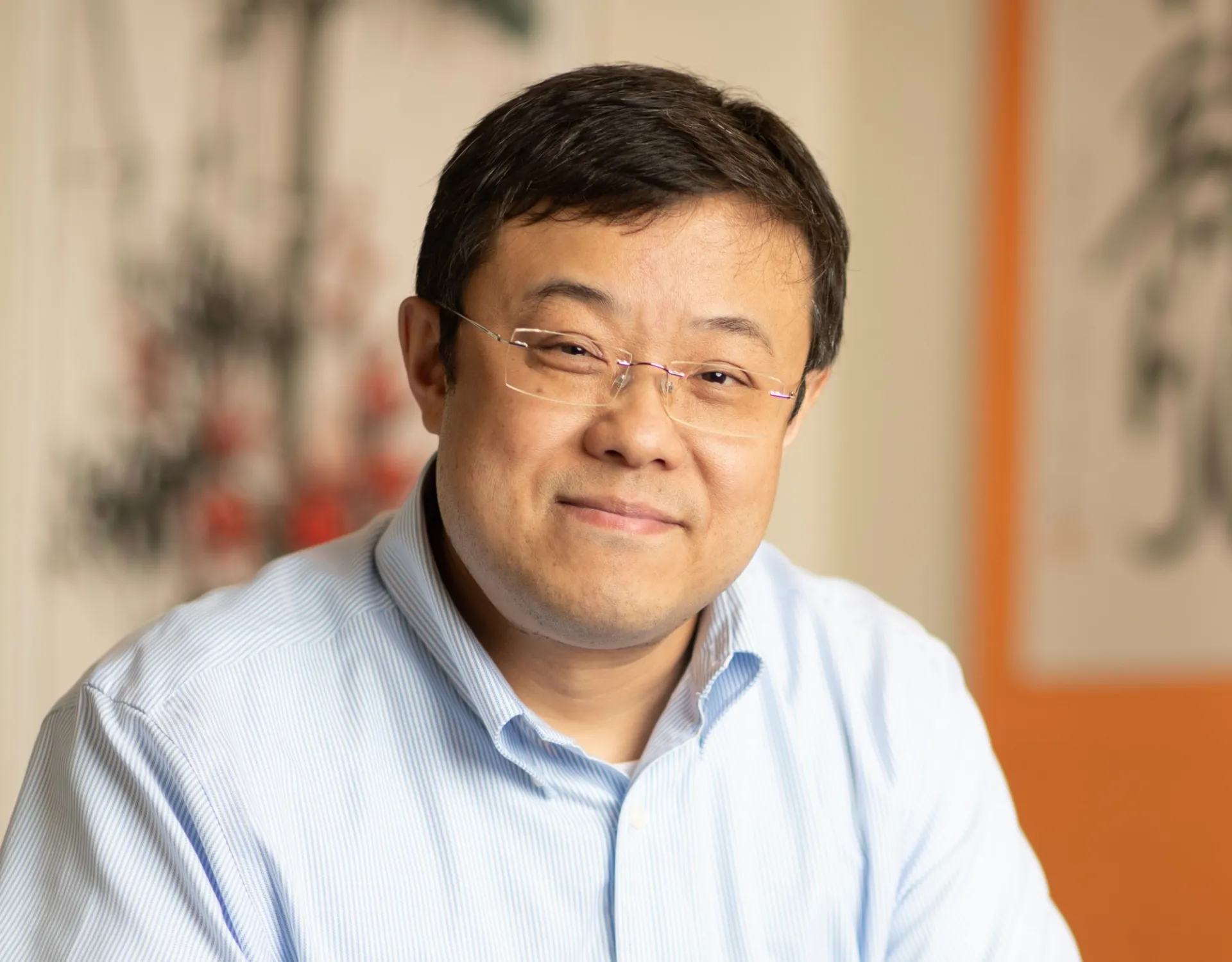
Kai He is Professor of International Relations at the School of Government and International Relations, Griffith University, Australia. He served as a non-resident Senior Scholar at the United States Institute of Peace (2022-2023), an Australian Research Council (ARC) Future Fellow (2017-2020), and a postdoctoral fellow in the Princeton-Harvard China and the World Program (2009-2010). He is a co-editor of “Cambridge Elements in Indo-Pacific Security,” a short-book series published by Cambridge University Press. He has authored or co-authored seven books and edited or co-edited eight volumes. His new books include The Upside of U.S.-Chinese Strategic Competition: Institutional Balancing and Order Transition in the Asia Pacific (co-authored with Huiyun Feng, Cambridge University Press, 2025) and International Organizations and Peaceful Change in World Politics (co-edited with T.V. Paul and Anders Wivel, Cambridge, 2025). He received the 2025 James Rosenau Award from the International Studies Association.
His peer-refereed articles have appeared in European Journal of International Relations, European Political Science Review, International Affairs, International Studies Review, International Politics, Political Science Quarterly, Review of International Studies, Security Studies, Cooperation and Conflict, Contemporary Politics, Ethics & International Affairs, Asian Survey, The Pacific Review, Journal of Contemporary China, The Chinese Journal of International Politics, Asian Security, Asian Perspective, Australian Journal of Political Science, Australian Journal of International Relations, International Relations of the Asia Pacific, Issues and Studies, Strategic Studies Quarterly, East Asia, Asia Policy, Cambridge Review of International Affairs, and Journal of Contemporary East Asian Studies.
He received several internationally competitive fellowships and grants, including the Princeton-Harvard China and the World Program Postdoctoral Fellowship (2009-2010), a Lynde and Harry Bradley Foundation Research Fellowship (2009-2010), an EAI fellowship (2011-2012) from the East Asia Institute in Seoul, an Asia Studies Fellowship (2012) from the East-West Center in Washington D.C., and visiting fellowships (2014/2017) from the S. Rajaratnam School of International Studies, Nanyang Technological University, Singapore, and policy-oriented research grants from the Korea Foundation, South Korea (2016/ 2019). His research projects are funded by the MacArthur Foundation, USA (2016-2018) and the Australian Research Council (2017-2020; 2021-2023).
Photo Credit: https://academic.oup.com/isq/article/70/2/sqag033/8675835