CWP Faculty Director to lead new SIPA undergraduate major at Columbia University
New Undergraduate Major Launched In Global Affairs And Public Policy
The new interdisciplinary major will be available to Columbia College and Columbia General Studies students
NEW YORK, NY — July 7, 2026 — Columbia University’s School of International and Public Affairs (SIPA) today announced the launch of an undergraduate major in Global Affairs and Public Policy (GAPP), a rigorous, interdisciplinary program that will be open to students in Columbia College and the Columbia School of General Studies. Course offerings and the major declaration process both open in the 2026–27 academic year.
For 80 years, SIPA has trained diplomats, policymakers, and public servants at the graduate level, producing alumni who lead foreign ministries, international institutions, and government agencies worldwide. The new major brings that tradition to bear on undergraduate education for the first time, offering a course of study taught by the same distinguished scholars and experienced practitioners who lead SIPA’s renowned graduate programs.
“This is an enormously exciting moment for SIPA,” said SIPA Dean Keren Yarhi-Milo. “This major offers Columbia undergraduates the same rigorous, intellectually demanding education that has shaped generations of the world’s leading policymakers. Building on the breadth and depth of Columbia’s Core Curriculum and excellence across the arts and sciences, the major provides Columbia College and Columbia General Studies students with the knowledge, analytical tools, and practical skills to enable them to address complex policy challenges at every level, from their own communities to the global stage. We can’t wait to see what this next generation of policy leaders will accomplish.”
The 32.5-credit major is built around an integrated foundation in political science, economics, history, ethics, data science, and regional studies. Students will learn how different political systems, economic frameworks, historical contexts, and leadership choices shape policymaking at the local, national, and international levels. They will develop both quantitative and qualitative skills in policy analysis and policy advocacy, and engage with competing approaches to addressing public challenges.
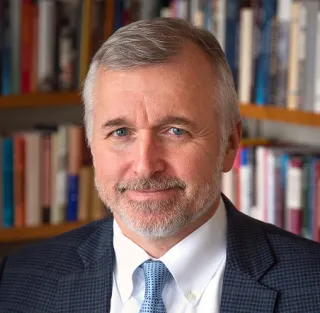
Professor Thomas Christensen, a leading scholar of international relations, former deputy assistant secretary of state, and veteran undergraduate educator, will serve as the major’s inaugural director of undergraduate studies.
“What distinguishes this major is the manner in which it brings together theory and practice in the study of global affairs and public policy,” said Christensen.
Additionally, students may choose electives across SIPA’s full range of policy domains. These offerings will be phased in over the program’s first several years, and will include: Geopolitics and Diplomacy, International Economic Policy, Data Science for Policy, Governance and Development, Science Policy and Communication, Energy and Environmental Policy, Regional Studies, and US Social and Public Policy. This breadth of curriculum allows students to build a deeper expertise in the policy areas most relevant to their ambitions — whether in government, international institutions, the private sector, or civil society.
A hallmark of the major is the faculty-led Policy Practicum, which gives students the opportunity to work directly with external clients, applying their classroom learning to real policy challenges before they graduate. The curriculum is further strengthened by access to practitioners and senior policymakers whose perspectives and experiences complement and enrich students’ classroom and real-world learning.
Foundation courses open in fall 2026, with additional offerings in spring 2027. Students may declare the GAPP major by entering a lottery that will take place in two rounds between December 2026 and March 2027. Undergraduates will also have access to dedicated advising and recitation sections to ensure distinctive experiences for both undergraduate students and SIPA’s longstanding graduate student community.
Students completing the major may pursue the existing 4+1 pathway: four years of undergraduate study plus one additional year at SIPA, earning a Master of International Affairs (MIA) or Master of Public Administration (MPA) in five years rather than the customary six.
The major will launch at a moment when significant resources are being invested in SIPA’s instructional capacity. A gift from the Mike and Sofia Segal Foundation will underwrite two new endowed faculty chairs — one in AI and data science for policy, and one in environmental, resource, and/or energy economics — as well as new lecturer roles for foundational and elective courses on global affairs and public policy, and enhanced administrative and programmatic support. These investments will benefit both undergraduates in the major and SIPA’s academic community as a whole.
More details about the GAPP major are available at https://www.sipa.columbia.edu/sipa-education/undergraduate.
Thomas J. Christensen is Professor of Public and International Affairs and Director of the China and the World Program at Columbia University. He arrived in 2018 from Princeton University where he was William P. Boswell Professor of World Politics of Peace and War, Director of the Princeton-Harvard China and the World Program, and faculty director of the Masters of Public Policy Program and the Truman Scholars Program. From 2006-2008 he served as Deputy Assistant Secretary of State for East Asian and Pacific Affairs with responsibility for relations with China, Taiwan, and Mongolia. His research and teaching focus on China’s foreign relations, the international relations of East Asia, and international security. His most recent book is Lost in the Cold War: The Story of Jack Downey, America’s Longest-Held POW (Columbia Univ. Press, 2022). His earlier book, The China Challenge: Shaping the Choices of a Rising Power (W.W. Norton) was an editors’ choice at the New York Times Book Review, a “Book of the Week” on CNN”s Fareed Zakaria GPS, and the Arthur Ross Book Award Silver Medalist for 2016 at the Council on Foreign Relations. Professor Christensen has also taught at Cornell University and MIT. He received his B.A. with honors in History from Haverford College, M.A. in International Relations from the University of Pennsylvania, and Ph.D. in Political Science from Columbia University. He has served on the Board of Directors and the Executive Committee of the National Committee on U.S.-China Relations, as co-editor of the International History and Politics series at Princeton University Press, and as a member of the Academic Advisory Committee for the Schwarzman Scholars Program. He is currently the Chair of the Editorial Board of the Nancy B. Tucker and Warren I. Cohen Book Series on the United States in Asia at Columbia University Press. Professor Christensen is a life member of the Council on Foreign Relations and a Non-Resident Senior Scholar at the Brookings Institution. He was presented with a Distinguished Public Service Award by the United States Department of State.