"China's Ocean Culture And Consciousness" By CWP Alum Tabitha Grace Mallory & Andrew Chubb
China’s primary cultural identity tends to be associated with land-oriented, agrarian civilization, despite its lengthy coastline and history of maritime activities. But for the 21st century, as the Chinese central authority has developed a comprehensive national ocean strategy, it has purposefully crafted an identity of China as a maritime great power. Chinese agencies refer to this work as promoting ocean soft power (提升海洋强国软实力)via ocean consciousness propaganda (海洋意识宣传), ocean education (海洋教育) and ocean culture (海洋文化). Based on analysis of Chinese-language sources back to the 1980s, this article examines the origins, planning and implementation of China's state-constructed maritime identity. The article explains the roots of ocean culture and traces how an ocean consciousness campaign expanded from the military to the population in the 1990s, the systemisation of which has culminated in a five-year plan and a National Ocean Consciousness Index. Practical implementation unfolds in the recasting of fifteenth-century navigator Zheng He as a cultural icon; the state's appropriation of Mazu mythology; and use by local governments to foster economic growth. This effort is primarily domestically oriented but has significant international implications. The narrative produced is likely to shape China’s role in the global commons, on issues from marine environment and natural resources to polar affairs, boundary disputes and maritime security
https://doi.org/10.1016/j.marpol.2022.105229 - https://www.sciencedirect.com/science/article/abs/pii/S0308597X22002767
Tabitha Grace Mallory is an affiliate faculty member of the Henry M. Jackson School of International Studies and specializes in Chinese foreign and environmental policy. She is currently conducting research on China and global ocean governance and has published work on China’s fisheries and oceans policy. Dr. Mallory is CEO of the consulting firm China Ocean Institute and has consulted for organizations such as the United Nations Foundation, the World Wildlife Fund, the World Bank, and the Organisation for Economic Co-operation and Development (OECD). She previously served as a postdoctoral research fellow in the Princeton-Harvard China and the World Program, and has also worked for The National Bureau of Asian Research and for the U.S. government. Dr. Mallory holds a Ph.D. (with distinction) and an M.A. in international relations from the Johns Hopkins University School of Advanced International Studies (SAIS), a certificate from the Hopkins-Nanjing Center, and a B.A. in international studies and Mandarin Chinese from the University of Washington. She serves on the board of directors of the China Club of Seattle, and is a member of the National Committee on U.S.-China Relations and the Washington State China Relations Council.
Andrew Chubb is a British Academy Postdoctoral Fellow, undertaking a three-year investigation of the role of domestic public opinion in international crisis diplomacy in the Asia-Pacific. A graduate of the University of Western Australia, his work examines the linkages between Chinese domestic politics and international relations. More broadly, Andrew's interests include maritime and territorial disputes, strategic communication, political propaganda, and Chinese Communist Party history.
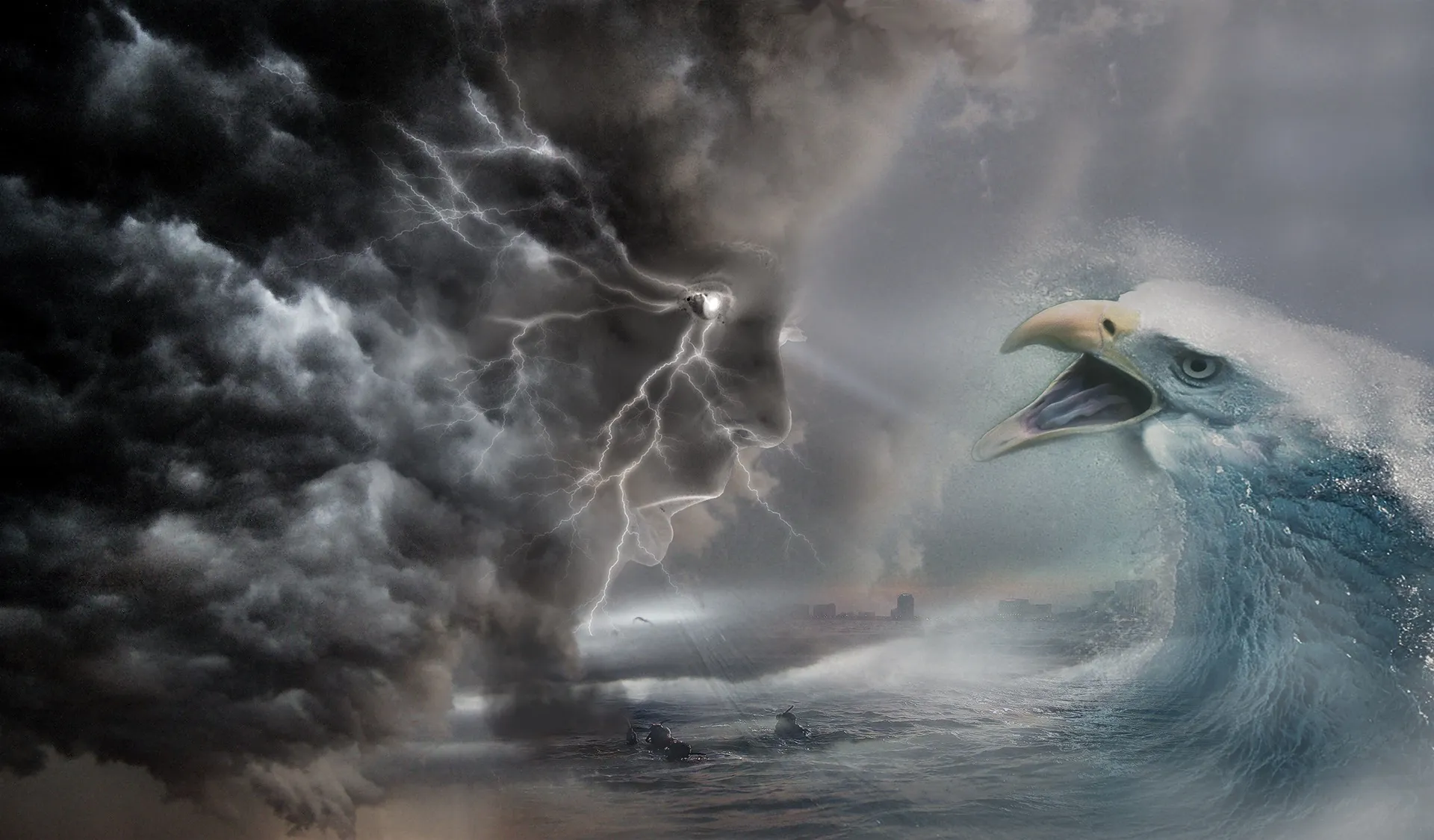
Photo Credit: https://pixabay.com/users/thommas68-2571842/