
"Can they control the weather? How the secretive history of weather weapons fuels conspiracy theories" - by CWP alum Justin Canfil
In the wake of the devastation caused by hurricanes Helene and Milton, online conspiracy theories about weather control have flourished. FEMA Administrator Deanne Criswell described the storm of disinformation as “absolutely the worst I have ever seen.” At the vanguard of conspiracy theories is Republican Congresswoman Marjorie Taylor Greene (GA-14), who tweeted, “Yes they can control the weather” to her 1.2 million followers shortly before Hurricane Milton hit.
Rep. Greene’s post sparked questions and an immediate backlash, including from fellow Republicans. But the news cycle quickly picked up the story, prompting President Biden to issue a statement calling the claims “stupid” and “beyond ridiculous.” Undeterred, Greene has doubled down several more times. It may be tempting to dismiss these claims, given Rep. Greene’s track record of touting baseless and hateful conspiracy theories. But in this case, as with many conspiracy theories, there is a small kernel of truth to her vastly misleading claims about hurricane control.
Although it may sound like science fiction, the US government once engaged in serious research into weather weapons and other hostile environmental modification technologies. The US eventually halted its pursuit of weather weapons—not because using weather modification as a weapon was impossible, as is often assumed, but because of the possibility that such a terrifying technology was a “Pandora’s box” that might fall into the wrong hands.
By Justin Key Canfil | November 22, 2024
Justin K. Canfil is an Assistant Professor of Emerging Technologies and International Relations at Carnegie Mellon University and a Stanton Nuclear Security Fellow at the Council on Foreign Relations (CFR). His research and writing has appeared in War on the Rocks, Lawfare, The Diplomat, and the Journals of Peace Research, Cybersecurity, International Affairs. An international relations specialist by training, Canfil’s research broadly concerns the impact of emerging technologies on international law, arms control, and international security. While at CFR, he is completing a book manuscript that explains how arms controllers engineer against technological creativity, and why these efforts succeed or fail. Canfil has held postdoctoral fellowships at the Belfer Center for Science and International Affairs at the Harvard Kennedy School, Princeton’s Center on Contemporary China, and the Columbia-Harvard China and the World Program. He holds a PhD in Political Science from Columbia University and received an exaugural (2019-2020) US Fulbright Scholarship to China.
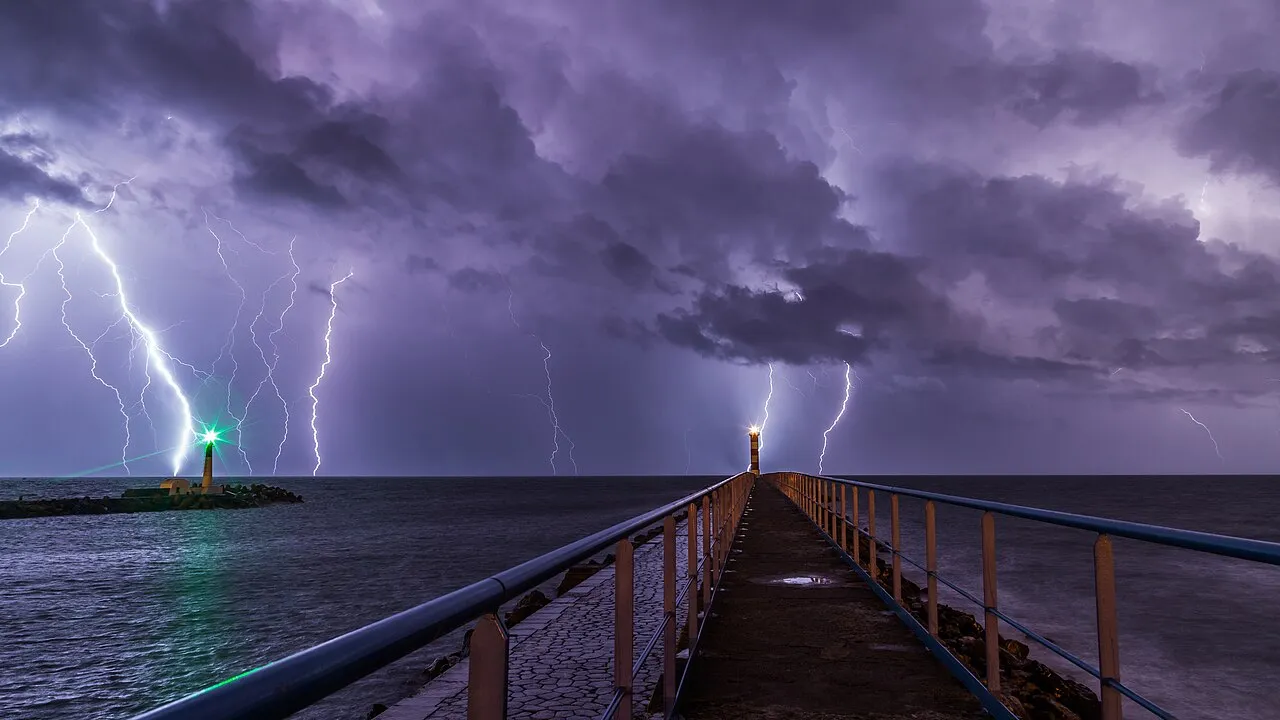
Photo Credit: By Maxime Raynal from France - Orage PLN, CC BY 2.0, https://commons.wikimedia.org/w/index.php?curid=42048641